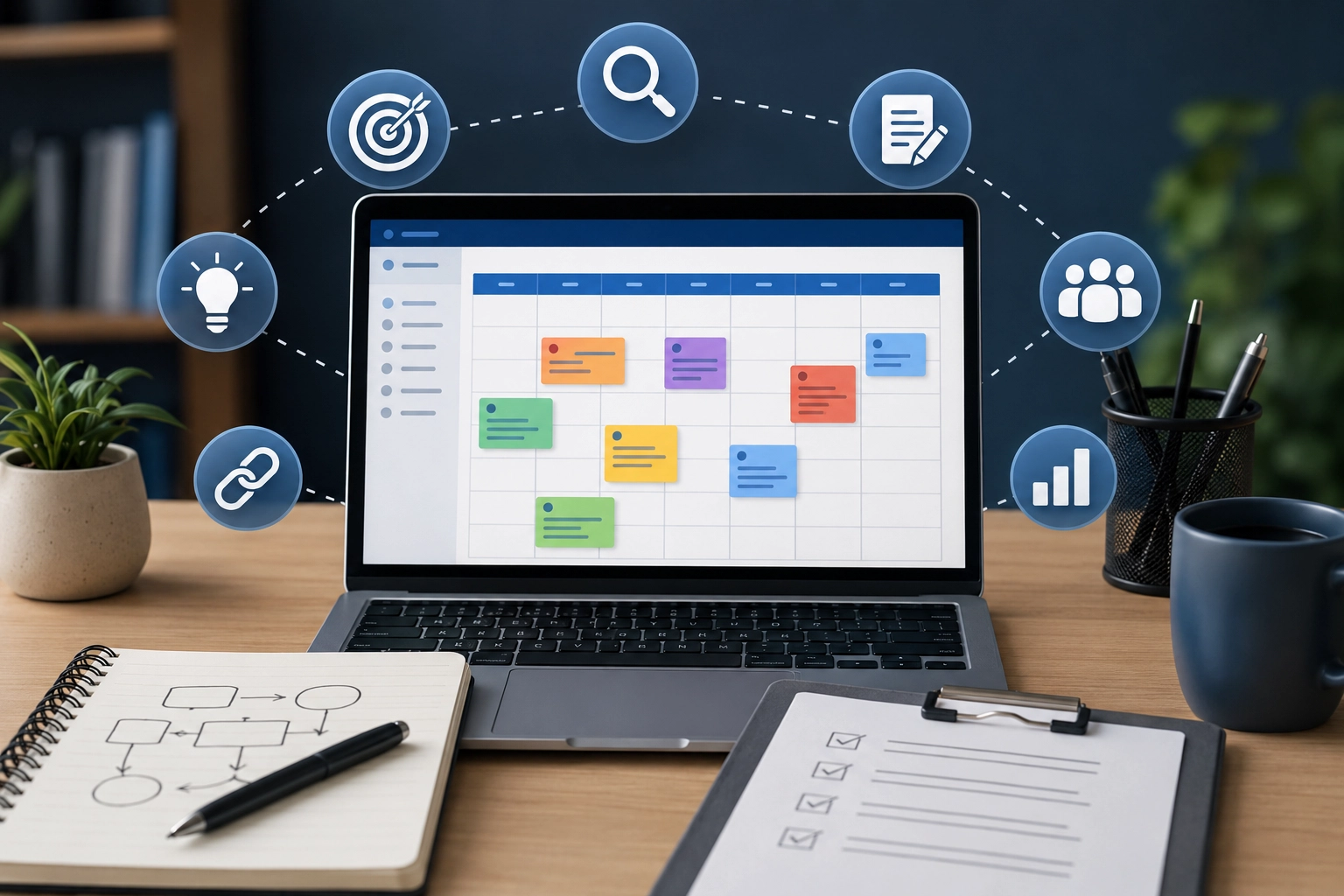
Understanding how do companies create a post calendar for SEO requires looking beyond publication dates. An effective editorial plan maps each article to customer needs, the buyer journey, internal linking opportunities, and measurable goals so every piece has a defined purpose. At SSinvent, this process is approached as a structured planning method that combines technical SEO, content strategy, and website organization to support clear information architecture.
Key Takeaways
- Businesses create search-focused plans by integrating keyword research, search intent, business goals, and publishing dates into a single system.
- A strong editorial workflow groups related topics by service, buyer journey stage, and internal linking opportunities.
- Each entry should include a target keyword, content type, owner, status, and review date.
- Monthly planning helps teams manage blog posts, evergreen content, seasonal topics, and content updates.
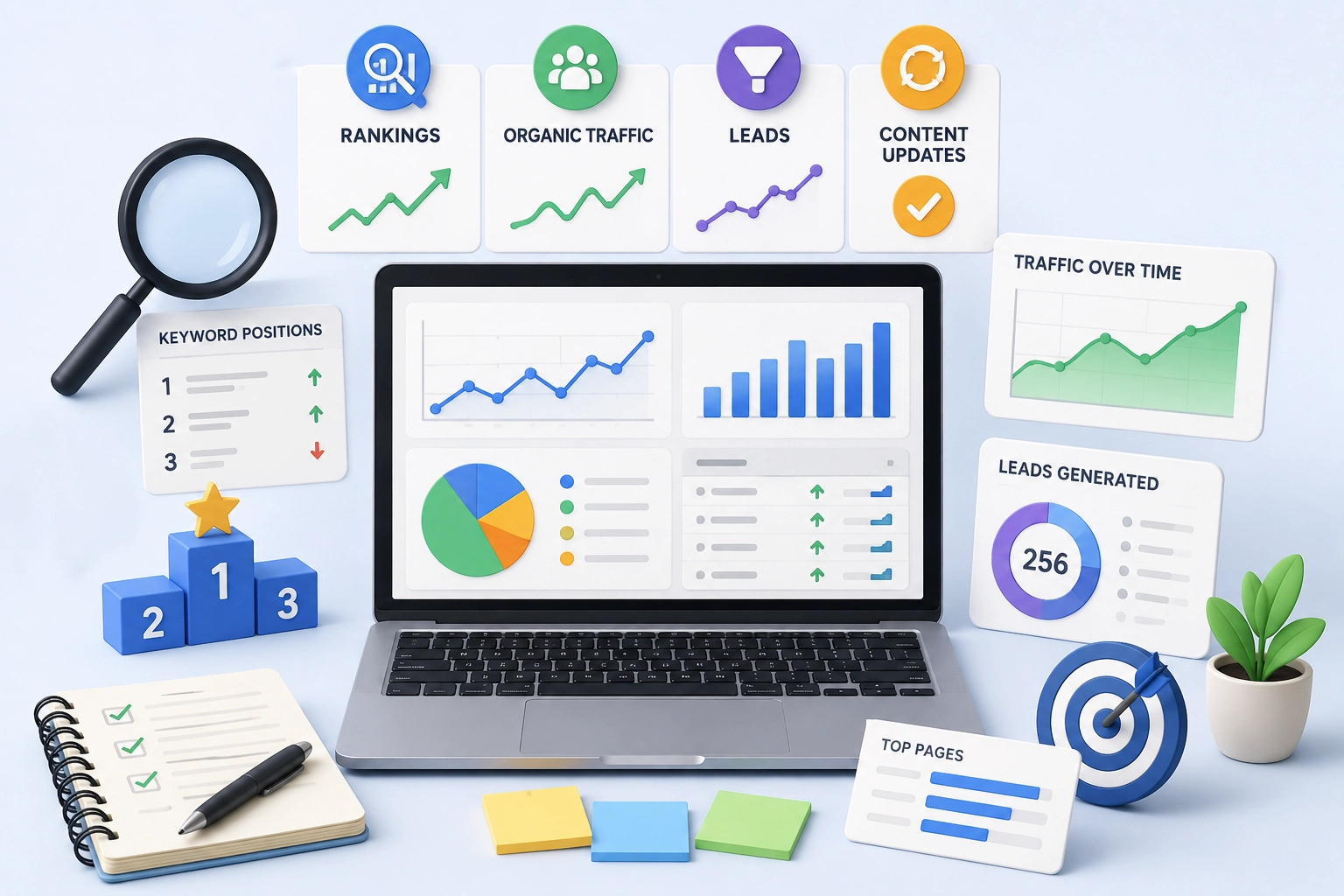
- Performance tracking should review rankings, organic traffic, leads, and content quality over time.
How Companies Create an SEO Content Plan
Define Business Goals
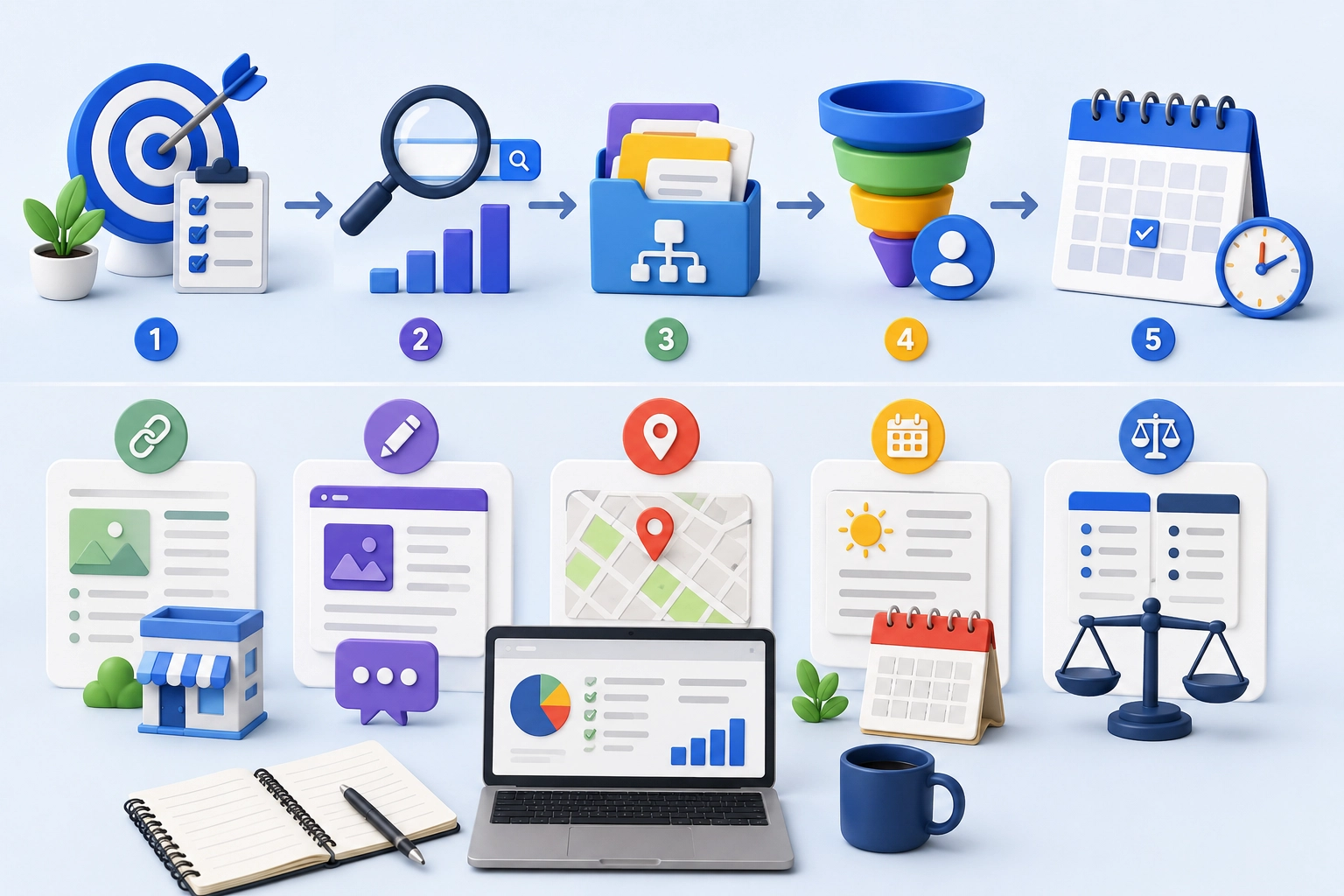
A business should start by defining what the content must support. Goals may include service page growth, lead generation, brand searches, product education, or local visibility. This step keeps the content strategy connected to business needs rather than to isolated blog ideas.
Research Keywords and Intent
Keyword research shows what users search for and what they expect to find. Teams should review keyword difficulty, search volume, customer questions, and ranking pages. Rodrigo César and Christopher Cáceres approach this step as a technical and editorial review because keyword intent affects structure, depth, and format.
Group Topics by Service
Content teams should group topics around core services, products, or audience needs. This makes it easier to create an SEO content calendar that supports service pages with related blog posts. Strong groups also help search engines understand topical connections across the site.
Map Content to the Buyer Journey
Content should match different decision stages. Early-stage users may need definitions, guides, and evergreen content, while later-stage users may need comparisons, pricing context, or process explanations. This helps each article serve a clear search purpose.
Set Publishing Dates
Publishing dates turn research into planned content. A content tracker should show when drafts, edits, approvals, and publication tasks happen. This supports strategic planning and reduces last-minute content gaps.
Content Schedule Ideas for Search Growth
Service Page Support Ideas
Service page support topics explain problems, methods, costs, benefits, and decision factors linked to the main service. These content pieces can answer informational queries and guide users toward deeper site pages. Internal links should connect each article to the most relevant service page.
Blog Topic Ideas
Blog topics should come from real user questions, sales objections, search data, and competitor gaps. Useful blog posts can explain processes, compare options, or answer common concerns. The goal is to create a content calendar that supports both visibility and user understanding.
Local Search Ideas
Local topics can focus on city pages, service areas, nearby search behavior, and location-specific questions. For example, a brand may plan articles around local regulations, service availability, or customer needs in a target market. These topics help content resonate with your audience when geography affects intent.
Seasonal Content Ideas
Seasonal content helps teams plan around demand changes during the year. A tax firm, travel brand, home service provider, or event-based business may need different topics by month, especially when planning content around event SEO. This makes the editorial calendar more useful for marketing strategy and resource planning.
Comparison Content Ideas
Comparison topics help users evaluate options. These may compare tools, services, methods, costs, or timelines. They often work well when users are closer to a decision and need clear criteria.
What to Include in the Content Tracker
Target Keyword
Each entry should include one main target keyword. The keyword guides the title, headings, search intent, and supporting terms. It also helps team members avoid overlap between pages.
Search Intent
Search intent explains why the user made the query. The page may need to inform, compare, guide, or help the user take the next step. Matching intent improves clarity and reduces irrelevant content.
Content Type
Planning systems include different types of content, such as guides, service pages, FAQs, comparisons, case studies, and social media posts. The format should match the search need and the channel. A long guide may work for organic search, while a short post may support distribution.
Internal Links
Internal links help users and crawlers move through related pages. Each article should link to relevant service pages, supporting articles, and conversion pages when appropriate, especially when related resources cover topics such as hidden-content SEO. This structure helps organize your content into a connected topic system.
Owner and Status
A tracker should list the owner, editor, designer, developer, and, when needed, the approval status. This keeps tasks clear and prevents delays. Many teams manage this in a Google Sheet because it is simple to update and share.
How to Organize Monthly Content
Weekly Publishing Plan
A weekly plan shows how many pieces will go live and which topics have priority. It should account for research, writing, editing, design, and upload time. This keeps content production realistic.
Topic Clusters
Topic clusters connect a main page with supporting articles. For example, one service page may have related guides, FAQs, and comparison articles around it. This structure helps users explore a subject and gives search engines a clearer context.
Review Dates
Review dates help teams update old articles before they lose accuracy or relevance. A review may include new data, better headings, stronger internal links, or refreshed examples. Ensuring that your content stays current is part of long-term quality control.
How to Measure Content Performance
Rankings
Rankings show whether pages gain visibility for target queries. Teams should track movement by keyword, page, and content group. Ranking data should guide updates, not replace human review.
Organic Traffic
Organic traffic shows whether users find and visit the content through search. A page may rank but still need stronger titles, better alignment with intent, or clearer introductions. Traffic data helps identify which topics need improvement.
Leads
Lead tracking connects content to business value. Teams can review form fills, calls, consultations, downloads, or other actions. This helps show which content pieces support real user decisions.
Content Updates
Updates keep content useful after publication. Teams may add new examples, remove outdated claims, improve headings, expand weak sections, or review how dynamic content and SEO affect page quality. This turns the publishing workflow into an ongoing system rather than a one-time article list.
Common Content Planning Mistakes
Random Topic Selection
Random topics weaken focus and waste production time. Businesses should avoid choosing ideas only because they sound interesting. Each topic should connect to search demand, audience needs, and business goals.
Missing Search Intent
A page can miss results when it targets a keyword but answers the wrong need. For example, a user looking for a checklist may not want a long opinion article. Clear intent mapping helps every article serve the right purpose.
Weak Internal Links
Weak internal links make it harder for users and crawlers to understand page relationships. A strong plan assigns links before publication, not after the article is live. This makes each piece of content part of a larger search and content system.
Consult SSinvent to review your content plan, improve your publishing workflow, and build a clearer strategy for search growth.