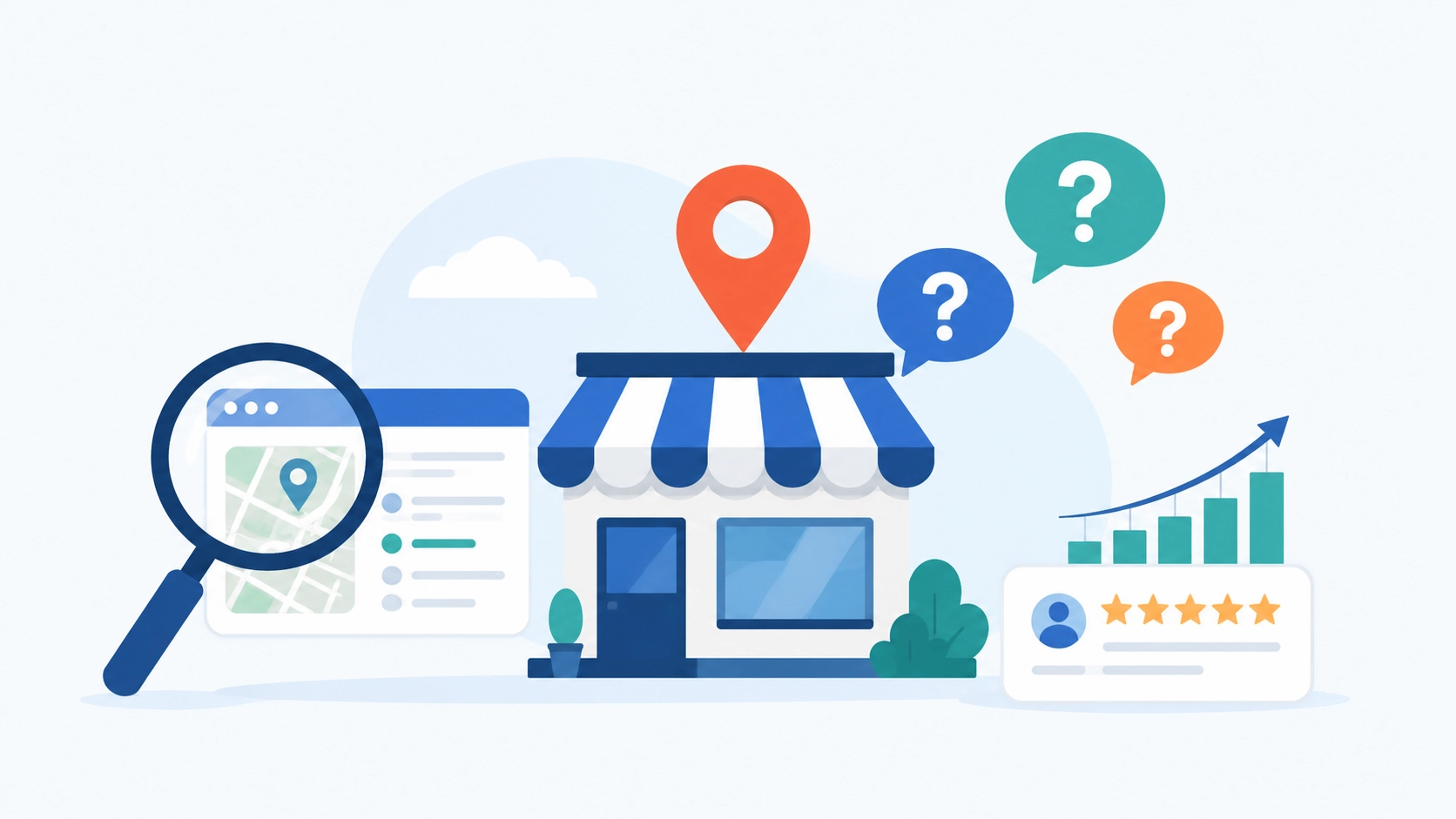
A complete review should check profile accuracy, NAP consistency, review management, mobile usability, click-to-call actions, direction requests, map views, conversion signals, and discovery details often collected through an SEO client questionnaire.
Businesses with multiple physical locations need unique landing pages, while service-area businesses should use the correct hidden-address setup instead of a P.O. Box.
At SSinvent, Rodrigo César and Christopher Cáceres approach this topic through technical SEO, content marketing, strategic backlinks, and web development so each search factor can be evaluated in context.
Quick Answers
- Best first step: Optimize your Google Business Profile, as it supports map visibility, calls, directions requests, and user trust.
- Most important data check: Keep your business name, address, and phone number consistent across your website, directories, maps, and profiles.
- Best content asset: Create unique location pages for each real market or physical branch, rather than copying the same page with different city names.
- Best technical improvement: Add LocalBusiness schema so search engines can read your business details, services, address, and page context more clearly.
- Best tracking setup: Measure rankings, website traffic, phone calls, form submissions, direction requests, map views, and lead quality.
Local SEO Questions and Answers
The following questions for local SEO cover the main areas that affect search visibility, traffic, and lead generation. Each answer explains a practical factor without promising specific ranking outcomes.
1. What Is Considered Local SEO?
Local SEO is the process of improving how a business appears in searches tied to a city, service area, neighborhood, or physical location. It includes Google Business Profile, website pages, reviews, citations, links, and technical signals. The goal is to help search engines understand where the business operates, what it offers, and why it matches a nearby search.
2. Why Does Local SEO Matter?
Location-based visibility matters because users often search when they are ready to act. They may want directions, pricing, availability, reviews, or a nearby provider. A strong online presence can support qualified traffic, phone calls, form submissions, and foot traffic. For stores, clinics, contractors, agencies, and service businesses, visibility in local search results can connect demand with real actions.
3. How Do Local Rankings Work?
Nearby search rankings depend on relevance, distance, and prominence. Relevance means the business matches the query; distance means the business is near the searcher or the target area; and prominence means the business has visible trust signals. Google also reviews business categories, website content, citations, reviews, links, and user behavior.
4. What Is the Most Important Ranking Factor?
An optimized and active Google Business Profile is one of the most important assets for map visibility. It gives Google structured information about the business name, category, location, hours, services, and contact details. It does not work alone, since website quality, reviews, proximity, links, and citations also affect local search rankings.
5. What Is the Local Pack?
The Local Pack is the group of map-based results that appears near the top of many location-based searches. It often shows three businesses, their ratings, addresses, hours, and direct action buttons. Users can click to call, visit the website, request directions, or open the full map view.
6. How Should You Optimize Google Business Profile?
A Google Business Profile should be complete, accurate, and active. The business name, address, or service area, phone number, website URL, hours, categories, services, photos, and description should reflect the business’s actual information. Avoid adding keywords that are not part of the actual business name, as this can violate platform guidelines.
7. Which GBP Fields Matter Most?
The most important fields include the primary category, secondary categories, service areas, business hours, website link, phone number, services, products, photos, and business description. The primary category is especially important because it tells Google what the business mainly does. Photos, hours, and accurate contact information also improve user trust.
8. How Do Reviews Affect Rankings?
Reviews can affect trust, click behavior, and local search rankings. Google may consider review quantity, quality, recency, and sentiment when comparing businesses. Reviews with natural service details can also help reinforce relevance when customers mention specific services or locations.
9. How Should You Handle Negative Reviews?
A business should respond to negative reviews with a calm, specific, and professional answer. The response should acknowledge the concern, avoid private details, and offer a clear next step when appropriate. Good review management shows users that the business pays attention and handles problems responsibly.
10. What Is a Local Citation?
A citation is an online mention of a business name, address, and phone number. Common examples include Yelp, Apple Maps, Bing Places, chamber directories, niche directories, and industry profiles. Citations help search engines verify that a business exists and operates in a specific area.
11. Why Does NAP Consistency Matter?
NAP consistency means the business name, address, and phone number match across major listings. Inconsistent data can confuse users and weaken trust signals. A citation audit should happen after moves, rebrands, phone changes, website migrations, or ownership changes.
12. How Do You Find Local Keywords?
Keyword research starts with the services, cities, neighborhoods, problems, and phrases that customers use. A digital marketer can compare search volume, intent, competition, and search result types to choose practical terms. Useful formats include service-plus-city keywords, neighborhood phrases, “near me” searches, and informational queries.
13. Should You Use Near Me Keywords?
Near me keywords help explain user intent, but they should not be forced into every sentence or heading. Google often understands “near me” through the user’s location, profile data, map signals, and website information. A page can target this behavior naturally with service areas, contact details, directions, and location-specific content.
14. How Do You Match Local Intent?
Matching intent means placing each keyword on the page that best answers the search. A service keyword may need a dedicated service page, while a comparison or educational query may fit a blog post. This supports content strategies that connect search behavior with useful page types.
15. Do Location Pages Still Work?
Location pages can work when each page serves a real audience and contains unique information. A page for Austin should not duplicate the content of a page for Dallas, except for the city name. Useful local SEO landing pages explain services, coverage, local context, FAQs, contact options, and proof that the business serves that market.
16. What Should Location Pages Include?
A strong location page should include the service, target area, business details, customer needs, directions, contact options, internal links, and a clear call to action. It should also use title tags and meta descriptions that accurately summarize the page. Clear snippets can improve click-through rates when they match user intent.
17. Which Local Links Matter Most?
The best links usually come from relevant, trusted, and contextually connected websites. Examples include area news sites, community organizations, sponsorship pages, trade groups, partner businesses, and industry publications. Strategic backlinks can support authority when they come from real relationships and useful content.
18. Does Schema Help Local SEO?
Schema markup helps search engines read business details in a structured format. The LocalBusiness, Organization, FAQ, and Breadcrumb schemas can clarify addresses, services, reviews, page relationships, and business identity. Schema does not guarantee rankings, but it can reduce ambiguity.
19. Why Does Mobile UX Matter?
Many users search for nearby businesses on mobile devices before calling, navigating, or booking. A slow page, crowded layout, or broken form can reduce engagement even when the page ranks. Mobile UX should support fast loading, readable text, visible buttons, click-to-call links, and simple navigation.
20. How Should You Track Results?
Tracking should connect rankings, traffic, clicks, calls, forms, direction requests, and conversions. Google Search Console, Google Analytics, call tracking, rank tracking, and Google Business Profile insights can show different parts of performance. A clear report should separate visibility metrics from lead quality and revenue impact.
21. What Common Mistakes Hurt Visibility?
Common problems include incomplete profiles, weak website pages, poor category choices, inconsistent NAP data, slow pages, missing service information, and duplicate listings. Low-quality reviews, unclear location signals, and outdated citations can also hurt performance. Some businesses rely too much on social media while neglecting search pages and profile accuracy.
22. What Local SEO Interview Questions Matter?
Local SEO interview questions should test knowledge of Google Business Profile, citations, reviews, schema, location-based content, keyword mapping, and ranking factors. A qualified candidate should explain how each signal supports search visibility and user trust.
This applies to in-house roles, freelancers, agencies, and SEO companies, especially when a business is reviewing questions to ask when hiring an SEO company for location-based campaigns.

23. What Should You Fix First?
Start with the issues that block trust, crawling, indexing, or user action, using crawl data and log analysis for SEO when technical access allows deeper review.
Fix incorrect business information, incomplete profile fields, broken contact paths, missing service pages, duplicate listings, and major mobile problems first. Then review content quality, citations, reviews, schema, and backlinks.
Final Checklist
Google Business Profile Checklist
- Confirm the business name is accurate.
- Choose the correct primary category.
- Add relevant secondary categories.
- Check the address or service area.
- Verify the phone number and website link.
- Update business hours and holiday hours.
- Add services, products, photos, and a clear description.
- Monitor reviews and respond professionally.
- Keep profile details aligned with the website.
Website Optimization Checklist
- Create a clear page for each important service.
- Build unique location pages for real markets or branches.
- Match each page to one clear search intent.
- Write accurate title tags and meta descriptions.
- Add internal links between related pages.
- Check mobile layout and page speed.
- Add relevant schema markup.
- Track rankings, calls, forms, direction requests, and lead quality.
- Review pages regularly for outdated information.
Need Help with Local SEO?
If your business needs a clearer view of its search visibility, start with a structured local SEO audit. SSinvent can help review your Google Business Profile, website, citations, content, backlinks, and tracking setup to identify what needs attention first. Contact the team to discuss your current local SEO strategy and the next steps for improving rankings, traffic, and leads.