Success takes more than making a page for every market. Each page should include unique information and clearly explain where a business operates. Search engines look at content quality, geographic signals, internal links, business information, and local listings when deciding which pages appear in local search results.
At SSinvent, page strategy is often discussed as part of broader conversations about multi-location websites, service coverage, and search visibility.
Key Takeaways
- Location-focused pages help businesses target specific cities, neighborhoods, and service regions with content that matches local search intent.
- Businesses with multiple offices should use a clear website structure and unique content for each market so search engines understand page relevance.
- Office pages and service area pages serve different purposes, and the best choice depends on whether a business has a physical presence in the market.
- Strong supporting signals such as reviews, Google Business Profiles, structured data, maps, and consistent business information help strengthen geographic associations.
- Creating unique content for each market is important. Pages that only change place names often provide little value for users or search engines.
What Are Local SEO Landing Pages
These pages are built for a specific city, neighborhood, or geographic market. Their goal is to connect a business with people searching for products or services in that place. They provide details that help search engines understand where a company operates and who it serves.
Unlike general service pages, these market-specific pages focus on one place. This helps search engines connect the content with relevant search results. Businesses with multiple offices often use them to organize information by city or service region.
Why These Pages Matter
These pages help show where a business operates. Search engines use geographic signals to decide which pages match nearby searches. When a page clearly focuses on a market or service region, it becomes easier to connect that page with the right audience.
These pages also make information easier to find. Instead of sending users to a broad service page, businesses can provide details that apply to a specific market. This helps users find answers more quickly.
Benefits for Visibility and Leads
Market-specific pages help businesses target keywords linked to cities and service regions. Content, structured data, internal links, and Google Business Profiles all help strengthen geographic signals. These elements help search engines understand how a page fits within local search results.
People looking for nearby services often want information about the place where they live or work. A dedicated page can answer questions about coverage, availability, and nearby services. This creates a better experience for potential customers.
Local SEO Landing Pages vs SEO Location Pages
Many people use these terms interchangeably, but they do not always mean the same thing. The main difference is that a location page is tied to a real office or physical location, while a local SEO landing page can target a city or service area even when a business does not have an office there. Understanding this distinction helps businesses choose the right strategy and avoid creating misleading pages.
Location Pages Explained
Location pages support a physical location that customers can visit or contact the business at. These pages usually include an address, phone number, business hours, directions, and details about the office. Businesses with a brick-and-mortar presence often connect these pages to Google Business Profiles.
Because these pages represent a real office, they help search engines verify the connection between the business and the targeted market. They are commonly used by retailers, dental offices, law firms, and other businesses with multiple locations.
Service Area Pages Explained
Service area pages target places where a business works but does not maintain a physical location. They focus on the geographic area served rather than an office address. These pages are common for contractors, home service companies, and businesses that travel to customers.
A service area page should explain how the business serves that market without implying an office is located there. The goal is to provide useful information about services, coverage, and local needs within that community.
When to Use Each
Use a location page when customers can visit a physical office in that city. Use a service area page when the business serves a market but operates from another location. If a company has offices in some cities and serves nearby communities without offices, it can use both page types together.
The most important rule is accuracy. Pages should reflect how the business actually operates, so users and search engines can clearly understand the relationship between the company and the targeted market.
Multi-Location Website Architecture
Businesses serving multiple markets need an easy-to-use website structure. A clear structure helps users move between cities and services. It also helps search engines understand how pages connect to one another.
A common setup uses a main locations page linked to individual market pages. Each page can link to related services and supporting content. This helps organize the website and makes navigation easier.
- /locations/
- /locations/austin/
- /locations/dallas/
- /locations/houston/
The goal is quality, not quantity. A smaller group of useful web pages often works better than hundreds of nearly identical pages.
How to Create Location Pages
Building effective market pages takes planning. Each page should have a clear purpose, target audience, and geographic focus. The goal is to provide useful information for people searching within that region.
Rodrigo César and Christopher Cáceres have often discussed the importance of matching content with user intent. This helps improve content quality and keeps pages focused on real user needs.
Research Local Keywords
Keyword research shows how people search in a city or region. City names, service terms, and local phrases can reveal target keywords. These keywords help shape page content.
Research should also consider user intent. Some users want information, while others are ready to contact a business. Understanding intent helps create more useful content.
Create Unique Local Content
Every page should contain information specific to the targeted market. This may include service details, community references, market conditions, or common concerns. The content should explain what makes that place different.
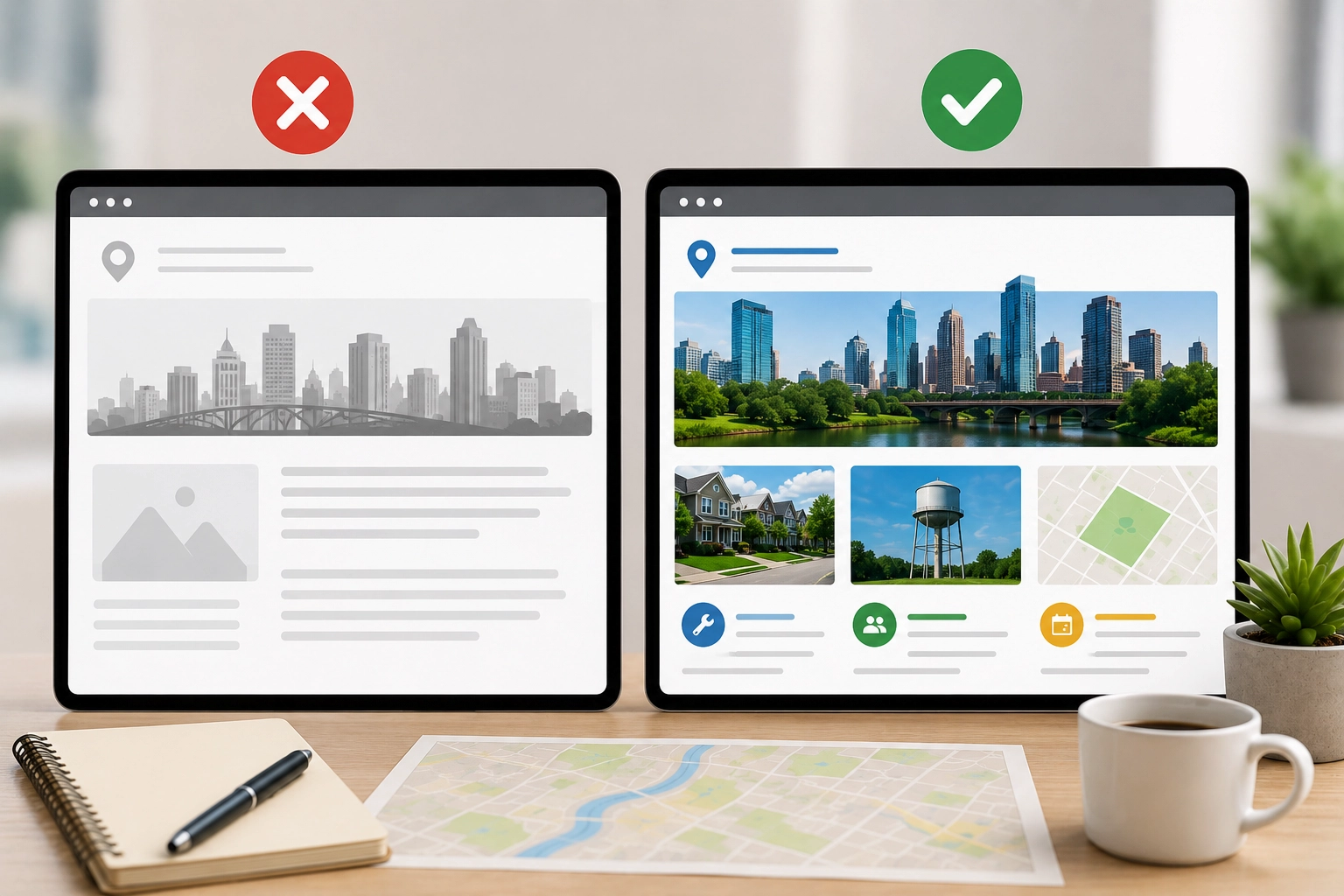
Many businesses create pages by changing only the city name. This often creates nearly identical content across multiple markets. Users may not find anything useful that relates to their situation.
A better approach is to include information that truly differs from one market to another. Examples include local regulations, neighborhood details, seasonal factors, and common customer questions. These details help make each page unique.
Rodrigo César and Christopher Cáceres have noted that content should reflect real differences between markets. Pages become more useful when they explain how products or services apply to a specific community.
Add Local Trust Signals
Trust signals help show that a business serves a market. Examples include reviews, certifications, community references, and accurate contact information. These elements support credibility and provide social proof.
Users often review this information before reaching out. Strong trust signals help them understand whether a business serves their needs.
Implement Local Schema
Schema markup gives search engines clear details about a business and its services. This structured data helps search engines understand organizations, services, and service regions. It also supports a better understanding of page content.
How Google Business Profiles Support Location Pages
Google Business Profiles and geographic pages often work together. A profile helps users find a business in maps and Google searches. A dedicated page provides detailed information about services, coverage, and the market served.
The information should match across both places. Business names, addresses, phone numbers, categories, and service descriptions should stay consistent. This helps search engines understand the relationship between listings and websites.
Businesses with multiple offices should connect each profile to the correct page on the website. This creates stronger geographic signals and improves clarity for users.
What to Include on Every Page
Business Information
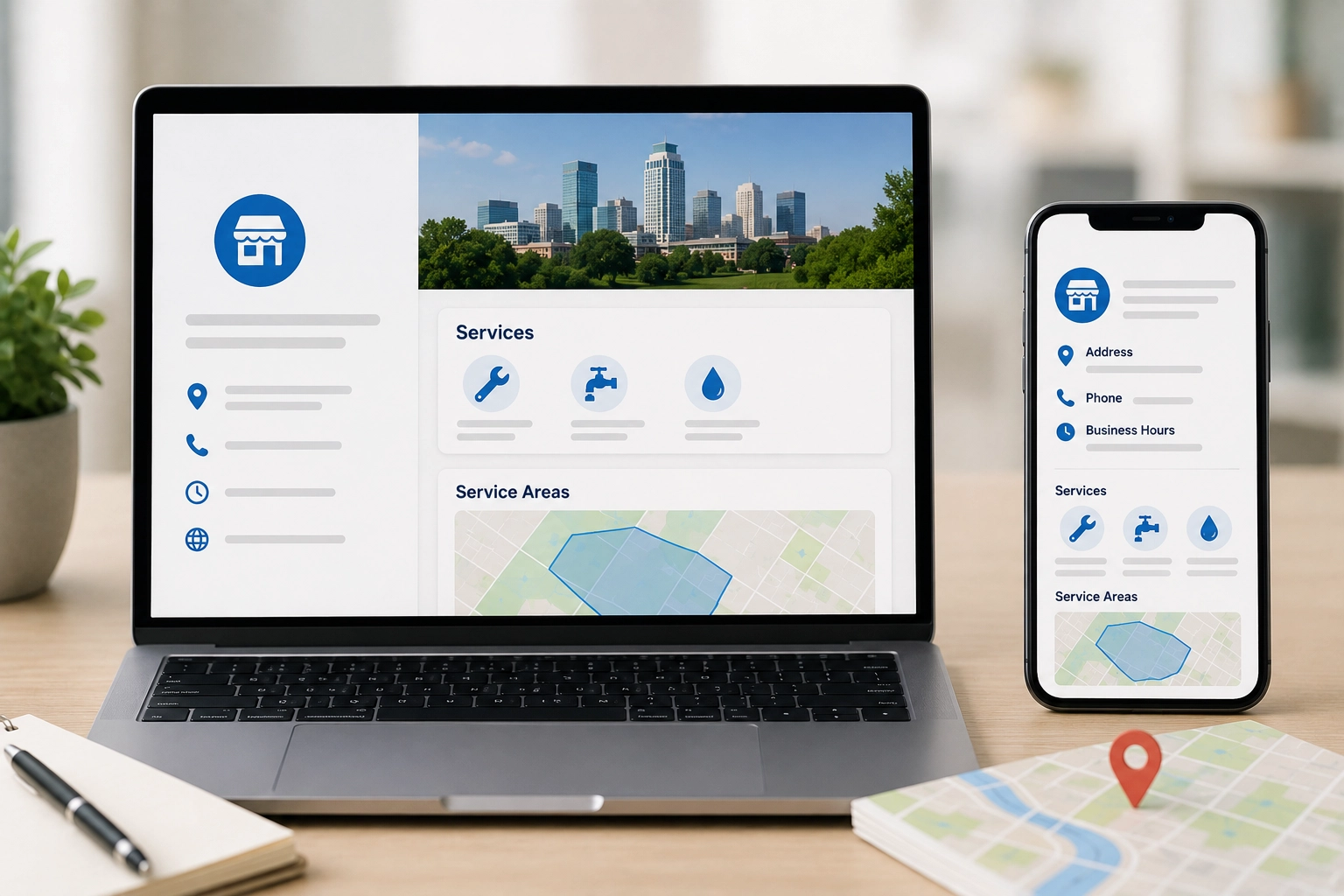
Basic information should be easy to find. This includes business details, service descriptions, contact information, and coverage regions. Accuracy is important.
Reviews and Testimonials
Reviews help users learn about customer experiences. They can demonstrate community relevance by relating to the market being discussed. Reviews also contribute to social proof.
Maps and Service Areas
Maps show where services are available. They can display office locations, service boundaries, and coverage regions. This information reduces confusion and improves clarity.
Additional Local Signals
Search engines consider more than just content when judging relevance. They also review supporting signals that connect a business to a place.
- Reviews from local customers
- References to neighborhoods or service regions
- Local citations
- Maps and directions
- Google Business Profiles
- Consistent business information
These signals help strengthen visibility without relying only on target keywords.
Common Local SEO Mistakes
Duplicate Location Pages
Duplicate content happens when a business changes only the city name on a page.. This creates little value for users. It can also make it harder for search engines to understand why one page should rank over another.
Thin Content
Thin content provides limited information. Pages with only a few sentences often fail to answer user questions. More complete content usually provides better value.
Keyword Stuffing
Keyword stuffing happens when keywords appear too often. This can make content difficult to read. Keywords should appear naturally within useful explanations.
Weak Local Signals
Pages without community references, reviews, service information, or geographic context may struggle to show relevance. Strong supporting signals help connect businesses with the places they serve.
Frequently Asked Questions