

The answer to “Does local SEO have the highest ROI for roofing contractors?” depends on campaign costs, competition, close rates, job value, and sales follow-up.
Paid ads can generate leads quickly, but traffic often stops when the budget ends. Map and website visibility can grow over time and continue to attract prospects without paying for every click, although content, reviews, technical work, and profile updates still require investment.
SSinvent compares total costs with qualified leads, booked jobs, collected revenue, and gross profit rather than relying on rankings alone.
Key Takeaways
- Search visibility can yield strong long-term returns by reaching nearby homeowners who already need a contractor.
- Effective campaigns combine Google Business Profile work, useful service pages, reviews, technical fixes, and trusted backlinks.
- Contractors should track qualified leads, booked jobs, revenue, gross profit, and total costs rather than focusing solely on traffic.
- Paid ads can create demand faster, while organic assets may continue to deliver value after the initial work is complete.
- Results depend on competition, service area, job value, sales follow-up, website quality, and the company’s ability to take on new work.
Yes, Search Visibility Often Delivers Strong Returns
Search marketing works well when it connects a nearby contractor with a homeowner in urgent need. Someone searching for a roof leak, storm inspection, or a replacement quote has higher purchase intent than someone who sees a general social post. This intent can boost conversion rates when the website and business profile align with the customer’s needs.
The value can grow over time because strong pages and map listings may continue to generate calls. Paid campaigns stop sending traffic when spending ends, whereas organic assets can continue for longer. These assets still need support through content updates, technical care, review work, and link building.
Why Nearby Service Searches Convert
Homeowners often search by service, need, and location. Searches such as “emergency roofer near me,” “hail damage inspection,” and “roof replacement in Austin” show a clear need in a set area. This intent links search engine optimization to lead generation rather than to broad brand awareness.
Searchers also want fast access to useful details. They look for a phone number, hours, reviews, project photos, coverage areas, and a clear next step. A contractor that shows these details can make it easier for the user to call or request a quote.
When Other Channels Perform Better
Another channel may work better when a company needs leads right away, has low brand awareness, or enters a crowded market. Google Ads and Local Services Ads can place the business above standard results while map and website visibility are still growing. These tools can also support short campaigns after storms or during busy seasons.
Referrals may cost less when a company has strong ties with past clients, builders, property managers, or insurance contacts. Direct mail may also work in small areas after a clear storm. The best channel depends on timing, profit margin, sales capacity, and lead quality.
How Search Helps Roofers Win Leads
Search visibility supports the path from first view to first contact. This process shows how SEO helps roofing companies win more local leads by connecting active search demand with clear service information.
A homeowner may see a company in the map pack, visit its website, read reviews, and compare service pages before calling. Each step should use clear, consistent details that make the contractor easy to judge.
A full plan connects the business profile, roofing websites, service content, site health, and trust signals. This builds the company’s online presence across map results and standard listings. It also helps search engines understand the site’s services, target areas, and best pages.
Google Maps and Business Profile
A Google Business Profile is often the first place a user sees a local business. It can show reviews, photos, hours, categories, services, directions, and call buttons in the search results. Correct details can build trust and support local ranking signals when they match the website and other listings.
To optimize your Google Business Profile, use the right categories, clear service text, recent photos, and correct hours. The profile should show the real service area and should not list places the company does not serve. Clear, accurate details matter more than frequent posts with little value.
Reviews, Service Pages, and Trust
Reviews help homeowners assess communication, cleanup, timing, trust, and quality of work. A steady flow of detailed feedback can support trust and map visibility when customers describe the service they received. Contractors should not write fake reviews or offer rewards that break platform rules.
Service pages explain what the company does and which problems it can solve. A roof repair page should cover common causes, inspection steps, repair choices, timing, and cases where replacement may make more sense. Clear pages help users compare providers without leaving the site to find basic facts.
Technical Work, Content, and Backlinks
Technical work helps search engines crawl, index, and understand a site. Fast load times, mobile use, secure pages, clear menus, structured data, and correct internal links help users and search systems. Contractors can use these elements to make a roofer website SEO-friendly. Weak site health can hurt results even when the written content is useful.
Content should answer real customer questions without repeating city names across thin pages. Good page SEO links one search need with clear facts, useful headings, internal links, and a direct next step. Suppliers, trade groups, chambers, local news sites, and industry websites can provide trusted backlinks and citations.
A roofing SEO agency or roofing SEO company should explain how these parts work together. Strong roofing SEO services often include audits, content plans, profile work, citation cleanup, call tracking, and link building. The goal is to create one system that supports trust, online visibility, and trackable leads.
ROI of Local SEO for Roofing Contractors
The ROI of local SEO for roofing contractors depends on profit, not traffic alone. Impressions and search positions can show reach, but they do not prove that a campaign creates business value. Contractors need to connect search activity with good calls, estimates, booked jobs, collected revenue, and gross profit.
A useful model starts with clear lead tracking. The company should know which leads came from map results, organic pages, paid search, referrals, and other sources. Without that split, the final number may overstate or understate a channel’s value.
How Much Does Roofing SEO Cost?
SSinvent’s SEO strategies typically range from $1,500 to $3,500 per month. The final cost depends on content volume, website condition, target locations, and overall project complexity. Some markets require more work because competition, search demand, and existing authority vary by city.
No agency can guarantee a set return or ranking. Based on its internal client data, SSinvent typically sees returns reach about five times the initial investment within 12 to 14 months, though some campaigns perform above or below that level. Results depend on lead quality, close rates, job value, sales follow-up, and the contractor’s ability to handle new work.
Lead Value and Close Rates
Lead value changes based on the requested service and the company’s close rate. A roof repair call may lead to a smaller job but close quickly, while a replacement lead may have a higher value and a longer sales process. Contractors should measure value by booked work rather than giving every inquiry the same amount.
A useful report should include campaign cost, qualified leads, estimates, sold jobs, revenue, gross profit, and close rate by source. These numbers help the company find weak points in the sales path. They may reveal poor lead quality, missed calls, slow quotes, pricing issues, or weak follow-up.
A Practical Calculation Example
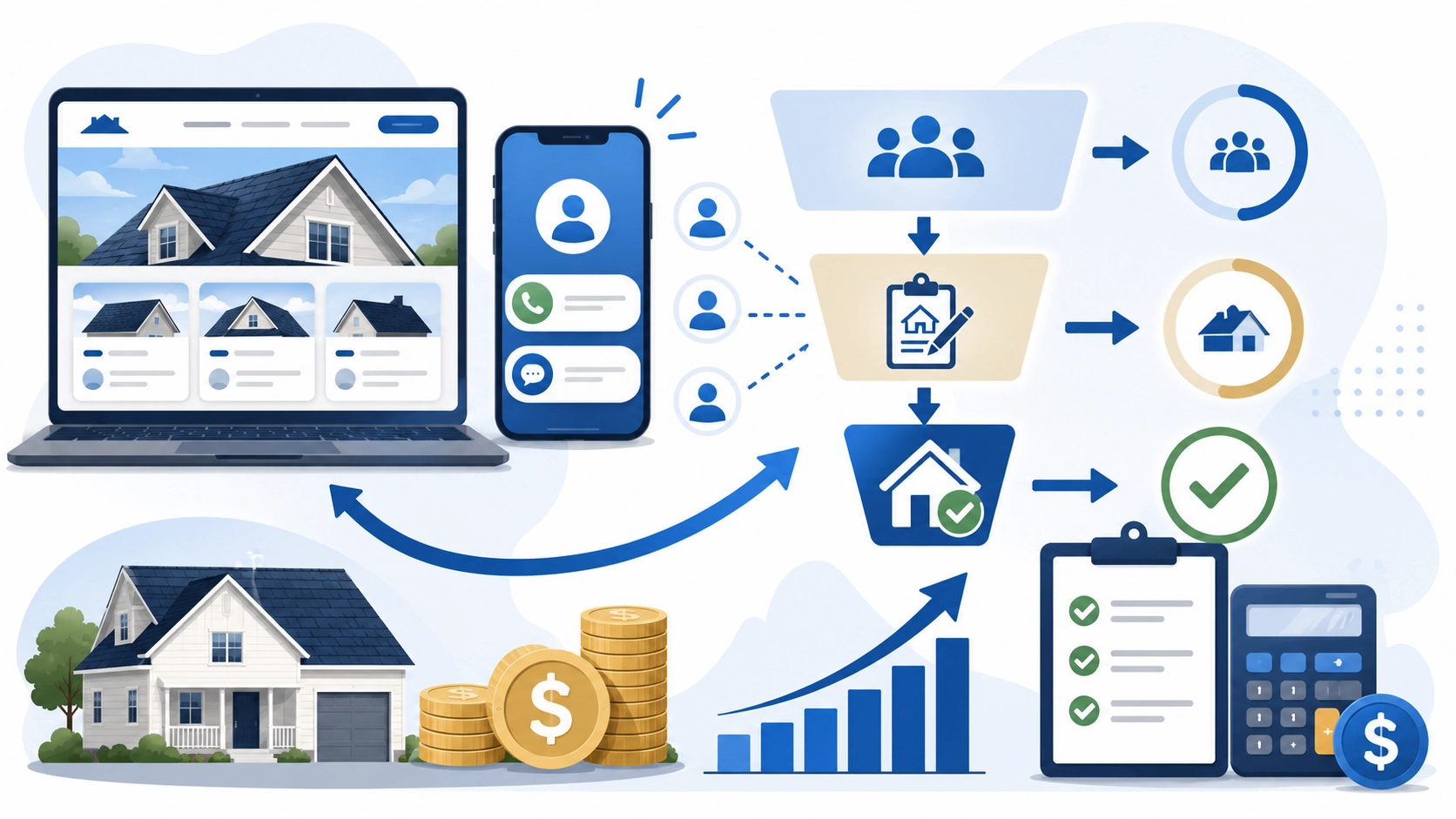
Assume a contractor spends $36,000 over twelve months on content, tracking, profile work, and technical fixes. During that time, the campaign creates 180 qualified leads, 72 estimates, and 24 booked jobs. If those jobs bring in $360,000 in collected revenue at a 35 percent gross margin, the gross profit tied to the campaign is $126,000.
The calculation is ($126,000 – $36,000) ÷ $36,000 × 100, which equals 250 percent. Based on these sample numbers, the campaign generated $2.50 in gross profit above cost per $1 spent. This example shows the math and does not promise the same result for another company.
Real results change based on job value, season, competition, sales speed, reviews, website quality, and team capacity. A company that misses calls or delays quotes may see poor returns even when the traffic is good. Each contractor should replace the sample numbers with verified business data.
Data Sources, Assumptions, and Limits
Good reporting should combine analytics, Google Search Console, call tracking, CRM records, and accounting data. Each tool answers a different question, so one dashboard rarely shows the full customer path. Call recordings and lead stages can also separate real prospects from spam, vendors, and job seekers.
Lead tracking also has limits because a homeowner may find the company on maps, return through a brand search, and call later from the website. First-touch and last-touch models may give credit to different sources. Rodrigo César and Christopher Cáceres review this type of data as industry professionals by comparing several systems and listing their assumptions before drawing a result.
Organic Search Versus Other Channels
A fair comparison should include cost per qualified lead, cost per booked job, gross profit, speed, and the duration of the value. A cheap lead has little value if it falls outside the coverage area or never books an estimate. The review should also include staff time and the work placed on the sales team.
Organic search often grows more slowly but can build lasting visibility. Paid media can create demand faster, but it needs ongoing spend. Referrals and lead platforms depend on customer fit, lead sharing, reply speed, and the company’s sales process.
| Marketing Channel | Typical Speed | Cost Model | Lead Access | Long-Term Value |
|---|---|---|---|---|
| Organic Search | Slow to moderate | Monthly strategy and maintenance | Usually exclusive | Visibility may grow over time |
| Google Ads | Fast | Pay per click | Usually exclusive | Traffic stops when spending ends |
| Local Services Ads | Fast | Pay per lead | Usually exclusive | Requires continued spending |
| Shared Lead Platforms | Fast | Pay per shared lead | Often shared | Limited lasting value |
| Referrals | Unpredictable | Usually low direct cost | Exclusive | Strong trust but hard to scale |
Google Ads and Local Services Ads
Google Ads can target urgent searches and send users to set landing pages. It gives control over location, schedule, budget, and keyword targeting, but costs can rise when many companies bid on the same terms. Broad targeting or weak landing pages can also lower lead quality.
Local Services Ads focus on calls and messages from nearby users. They may charge per lead instead of per click, but access, screening, dispute rules, and competition vary by market. Both paid options can support organic traffic rather than replace it.
Lead Platforms, Social Media, and Referrals
Shared lead platforms can create fast opportunities, but several providers may receive the same inquiry. This can lower contact rates and push companies to compete on price. Exclusive leads may work better, but the contractor should still review lead quality and contract terms.
Social media can support trust, show past work, and help with remarketing, but it often reaches users before they need a service. Referrals often convert well because trust comes from a past customer or business partner. Their main limitation is scale, because a contractor cannot control when a referral occurs.
Is This Channel Worth the Cost?
Search visibility is often worth the cost for a contractor with stable work, healthy margins, and room to take new calls. It becomes less useful when the company cannot serve more customers or lacks a clear follow-up process. The choice should be based on expected profit and team readiness rather than rankings alone.
The business should review its current online presence before starting a campaign. Strong reviews and a working website may support faster gains than slow pages, weak content, duplicate listings, and mixed business details. The starting point affects both the cost and the time needed.
Time to Results
Most roofing contractors should expect meaningful search gains within 3 to 6 months, while stronger lead and revenue growth often takes 6 to 12 months. A closer look at how long local SEO takes for roofing contractors explains why competition, website quality, and starting visibility can change this timeline.
Small technical fixes may improve indexing, map visibility, or clicks within a few weeks. New companies and businesses in highly competitive cities may need more time.
Early progress often appears through better indexing, higher impressions, stronger map placement, and more website visits. Later progress should be measured through qualified calls, booked estimates, sold jobs, and collected revenue. The timeline depends on competition, website quality, content, reviews, backlinks, and sales follow-up.
When Market Conditions Limit Results
Demand must exist in the target area. A company that serves a small group of people, offers a narrow range of services, or competes with many well-known brands may face a lower limit. Search demand also changes with weather, home age, insurance claims, and seasonality in the roofing industry.
Business limits can lower returns even when visibility improves. Missed calls, slow quotes, weak prices, limited crews, and low trust can break the path from search to revenue. Digital marketing cannot fix every sales or service issue on its own.
How to Measure and Improve Returns
Better results start with clear tracking. Contractors should measure actions that drive revenue rather than relying solely on traffic or keyword changes. Reports should show where demand starts, how prospects make contact, and what happens after each lead.
The company should review each channel on a set schedule and use the same terms each time. A qualified lead, booked estimate, sold job, and finished job should each have a clear status. Standard terms make each comparison more useful.
Track Maps, Organic Leads, and Revenue
Map calls and website calls should use separate tracking numbers when possible while keeping business details consistent for search engines. Forms should record the landing page, traffic source, campaign, and requested service. CRM records should link each lead to the quote value, sales stage, and collected revenue.
Contractors should compare map pack activity with standard organic results. A strong local ranking may drive direct calls without a website visit, while service pages may generate form submissions from users who need more details. Tracking both paths stops the company from giving too little value to either source.
Target High-Value Services
The content plan should reflect customer demand, revenue potential, and relevant roofing SEO keywords. High-value work may include full replacements, commercial systems, storm repairs, metal roofs, or complex repairs, depending on the company. The site should still cover smaller jobs when they can build trust, repeat work, or future replacement demand.
The best plan matches search demand with capacity, margin, and geographic reach. Contractors should update pages, profile details, reviews, and tracking as the business changes. This process gives the company a clearer view of long-term channel performance.
Talk With an SEO Specialist
A consultation can help you compare costs, competition, lead value, and expected timelines in your market. SSinvent can review your current search visibility and explain which areas may offer the strongest return.