SSinvent uses this type of structured keyword planning as part of search engine optimization, content strategy, and web development for roofing businesses.
Key Takeaways
- The best terms combine a service, location, urgency, cost factor, or material type.
- Contractors should group search terms by intent so service pages, location pages, blogs, and FAQs each have a clear purpose.
- High-intent phrases like “roof repair near me,” “emergency roof repair,” and “roofing contractor in [city]” usually fit landing pages or local service pages.
- Keyword mapping helps prevent overlap between pages and keeps each page focused on one search need.
- Performance should be measured through clicks, calls, form submissions, landing page engagement, and lead quality, not rankings alone.
Keyword Priority Snapshot
Compare search volume, CPC, intent, page type, and planning priority for high-value terms.
| Keyword | Monthly Volume | CPC | Intent | Best Page Type | Priority |
|---|---|---|---|---|---|
| roof repair near me | 49,500 | $21.72 | Transactional | Local service page | High |
| emergency roof repair | 5,400 | — | Urgent service | Emergency page | High |
| roofing companies near me | 90,500 | $24.07 | Transactional | Location page | High |
| roof replacement cost | 49,000 | — | Cost research | Cost guide | High |
| commercial roofing | 22,200 | $21.62 | Commercial | Commercial page | High |
| commercial roofing contractors near me | 9,900 | $33.48 | Transactional | Commercial location page | High |
| metal roofing | 60,500 | $5.60 | Commercial | Material service page | Medium |
| roof inspection | 22,000 | — | Service | Service page | Medium |
| roof repair cost | 4,400 | $8.86 | Informational | Cost guide | Medium |
| roofers near me | 60,500 | $22.44 | Transactional | Location page | High |
Best Terms to Target
A strong SEO strategy starts with targeted keywords that match real service needs. Contractors should not focus solely on search volume, as broad phrases can attract users with weak intent. The best terms help potential customers find the right page at the right stage.
The data table above provides a broad overview, while this section explains how to use those terms. Service terms should support service pages, local terms should support city or service-area pages, and informational phrases should support blogs or FAQs.
Service-Based Search Terms
Roofing services keywords describe what a company offers, such as roof inspection, roof maintenance, roof leak repair, flat roof service, and storm damage repair. These relevant keywords help search engines connect service pages with users searching for roofing help. Emergency, repair, replacement, commercial, cost, and material terms should each be supported by a clear page type.
SEO Keywords for Roofing Marketing
SEO keywords for roofing marketing connect content planning with lead quality. A page ranks higher when it answers the query clearly, uses natural language, and supports the searcher’s next step. Buyer-intent terms often include service, cost, location, emergency, company, or contractor, while research terms often include how, why, signs, causes, or guide.
Local Search Terms
Local terms connect services with geographic demand. These searches often include city names, neighborhoods, ZIP codes, or “near me” wording. Examples include roofers near me, roofing companies near me, roof repair near me, commercial roofers near me, and residential roofers near me.
City-based phrases work well for local landing pages. A page can target “roof repair in Austin” while explaining local weather, common roof types, and service availability. Google Business Profile content should also use accurate service terms, categories, and descriptions that match the website.
How to Choose the Right Terms
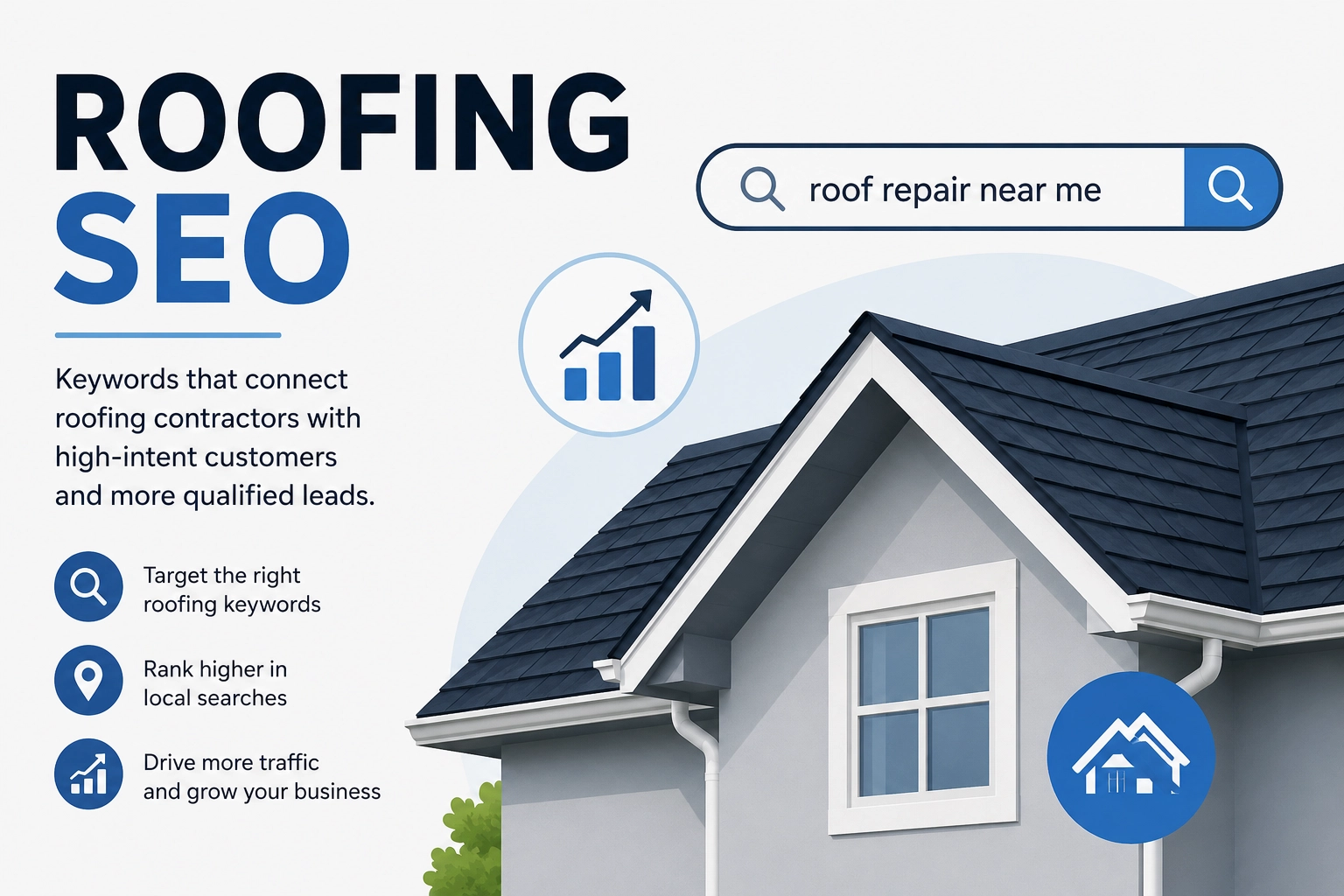
Keyword choice should depend on intent, relevance, competition, and page purpose, which is why structured keyword research services can help organize terms before content is created.
Search volume matters, but it should not be the only factor. A low-volume local phrase can be more useful than a broad term with weak service intent.
For example, “roof repair near me” works best for a local service page because the user likely needs help soon. “Roof replacement cost” fits a cost guide because the user is comparing price factors before contacting a contractor. “How long does a roof last” fits a blog or FAQ because the user is still researching.
Where to Use Search Terms
A term plan becomes useful when it guides page structure. Use specific keywords in titles, headings, opening copy, body content, image descriptions, and internal links when they fit naturally. Forced repetition can hurt readability and make the page less useful.
Service pages should target core offers, while location pages should connect those offers to a city or service area. Blog posts and FAQs can answer research questions, then link to related landing pages. Social media can reuse these educational topics, and content syndication SEO can support broader distribution, but website content should remain the main source.

How to Measure Performance
Measure performance by connecting each target term to a specific page and lead action. Review impressions, clicks, click-through rate, calls, form submissions, and engagement by landing page in Google Search Console, GA4, and call tracking software. A term has stronger value when it brings qualified visitors who contact the company, view service pages, or move from a blog post to a local service page.
Agency Support
A roofing SEO agency can help when a site needs keyword research, content planning, technical fixes, or tracking setup. Agency work should focus on transparent strategy, page structure, and measurable site actions. It should not rely on fixed-ranking promises or broad claims.
Common Mistakes
Many companies weaken their content strategy by skipping service intent and local relevance. The most common mistakes include:
- Targeting broad phrases before building strong service and location pages.
- Repeating terms too often instead of writing naturally for users.
- Ignoring local intent, such as city names, service areas, and “near me” searches.
- Skipping page mapping, which can make several pages compete for the same search term.
- Prioritizing low-buyer-intent topics like DIY roof repair, supplies, jobs, or general definitions over service-focused searches.
FAQs