

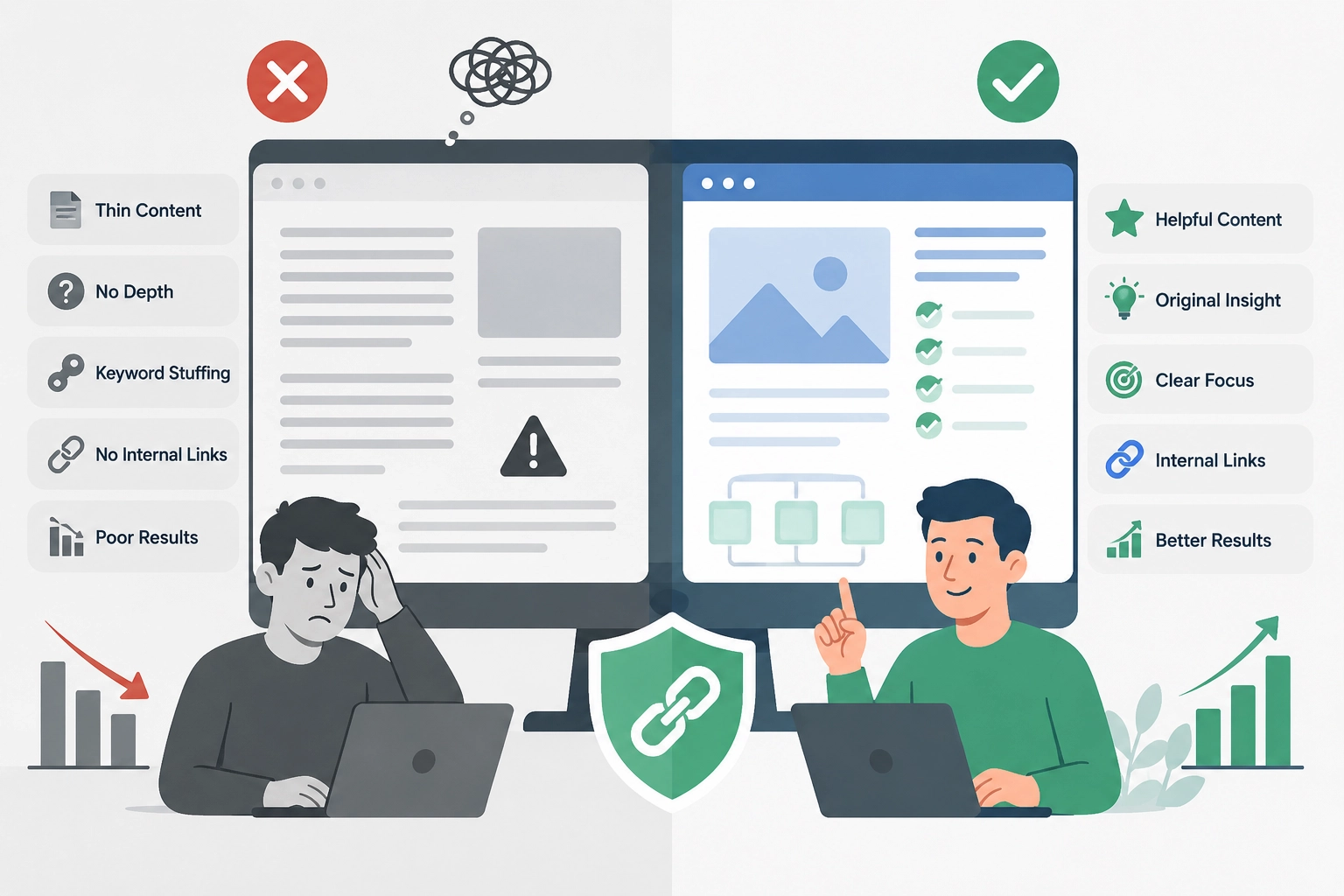
The best results come from a clear SEO strategy. This includes keyword research, helpful content, clean headings, strong internal links, a clear meta description, and regular updates. Articles should answer user intent first.
At SSinvent, Rodrigo César and Christopher Cáceres connect this work to technical SEO, content marketing, strategic backlinks, and web development.
Key Takeaways
- Blogging helps SEO when each article answers a clear search query, uses relevant keywords, and connects to the wider website.
- Publishing more content is not enough. Articles need useful information, clear headings, internal links, optimized metadata, and original insight.
- Blog posts can support search visibility through topical authority, backlinks, fresh content, indexed pages, and better coverage of informational searches.
- Weak content can hurt results when it is thin, generic, over-optimized, or disconnected from the rest of the website.
- Strong results need tracking. Review organic traffic, keyword rankings, indexed pages, internal link clicks, and assisted conversions.
Do Articles Actually Help with Search Visibility?
Articles can help by giving your site more ways to answer search queries. A service page may focus on one main topic. Supporting posts can explain related questions, comparisons, definitions, and use cases. This helps Google and other search engines understand how pages on your website connect to a broader topic.
A content section does not improve rankings just by existing. The content must be useful, clear, and matched to search intent. It also needs internal links, topic depth, and a sound technical structure.
What the Data Shows
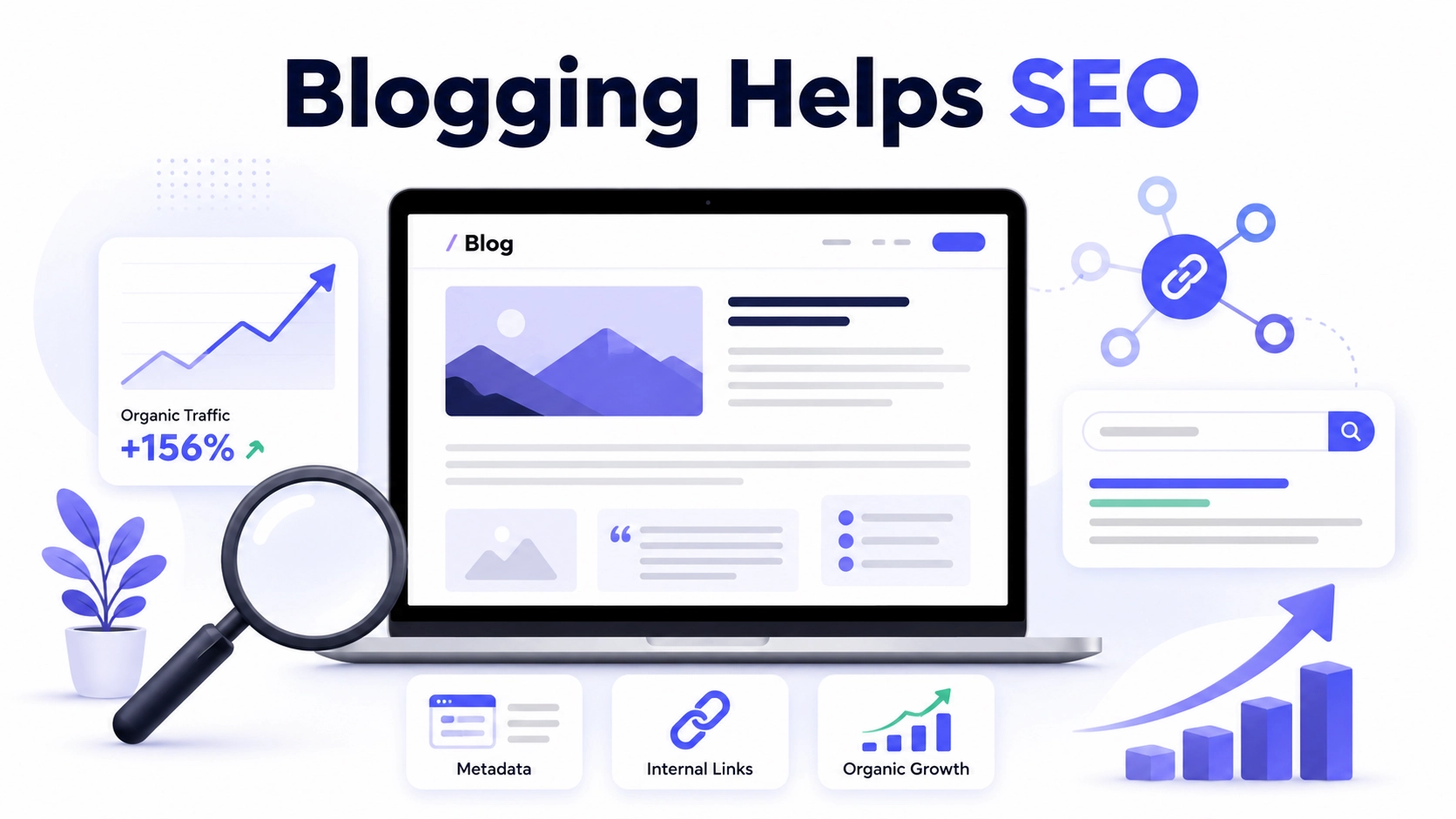
Recent industry data shows that written content can still work, but results depend on quality and strategy. Orbit Media’s 2025 survey found that around 80% of marketers report that publishing articles yields results, while fewer report strong results.
This supports a balanced view: content can help search performance, but only when it answers real questions, adds value, and connects to a clear plan.
What Is SEO Blogging?
SEO blogging means creating articles that help users and search engines. It includes keyword research, clear headings, useful explanations, internal links, and optimized page elements such as the title tag, meta description, images, and alt text. The goal is not to repeat target keywords as much as possible. The goal is to answer a specific search need better than competing pages.
A strong content plan connects each article to a larger topic, service, or business goal. For example, a technical search engine optimization service page can link to articles on crawl errors, indexation, internal linking, Core Web Vitals, content structure, and platform-specific topics such as Divi and SEO. This creates a topic cluster. It works better than a group of disconnected articles.
Example of a Topic Cluster
A topic cluster connects one main page with several related articles. For example, a search engine optimization service page could link to articles on crawl errors, internal linking, indexing, metadata, and content updates. Each page answers a specific question and links back to the main topic. This helps users learn in steps and helps search engines understand the relationship between pages.
How Articles Support Organic Search
Search Intent and Keywords
Articles help websites target informational searches that may not fit on service pages. A business may use a keyword research tool to identify real questions and develop SEO blog topics aligned with user intent.
Then it can create blog posts for search topics that match user intent. This helps the site target specific keywords without forcing them into sales pages.
Authority, Links, and Structure
One page rarely proves deep knowledge on a topic. A group of related resources can show better coverage over time. This works best when the content is accurate, original, and well-connected. Internal links also help search engine algorithms understand page relationships.
Useful guides, statistics, examples, original insights, and related visibility assets, such as directory listings and SEO, can support link building. Other sites are more likely to reference content that explains a topic clearly. This does not mean every article will be ranked highly. Strong resources are still more linkable than thin pages.
Search Results and Clicks
Well-structured articles can appear in search engine results pages in different formats. These may include featured snippets, People Also Ask results, image results, AI summaries, or enhanced results, which is why understanding whether rich snippets help SEO can support a stronger content strategy.
Clear answers, lists, tables, and visual elements can make content easier to understand. A clear title and meta description can also help users choose your page.
AI Overviews and Zero-Click Search
AI Overviews and zero-click results can reduce the frequency of users clicking standard organic listings. Ahrefs reported that AI Overviews reduced clicks to top-ranking content by 34.5% in its April 2025 study. This makes clear answers, structured sections, examples, and source-worthy insights more important. Articles should be useful enough to earn visibility even when users do not click every result.
When Content Does Not Help Search Performance
Thin content adds little value because it repeats what other pages already say. Generic posts often fail because they lack examples, depth, or a clear point of view. A page may be indexed but still perform poorly. Users may choose a better answer from another site.
Writers should avoid keyword stuffing because it makes content hard to read. A post should serve one main purpose rather than cover many unrelated topics. Without internal links, useful content may not support the full SEO strategy. It may also fail to guide readers to the next helpful page.
How to Build Search-Friendly Articles
Start with a clear topic and match it to a real user need. Use relevant keywords in a natural way. Organize the page with one H1, clear H2s, and helpful H3s. Add examples or expert notes when they make the topic easier to understand.
Before publishing, check that the article answers the main query early. Make sure it includes internal links, descriptive alt text, and a clear meta description. Editors should also confirm that the page includes original insight and avoids keyword stuffing. These steps help optimize blog posts without making them feel forced.