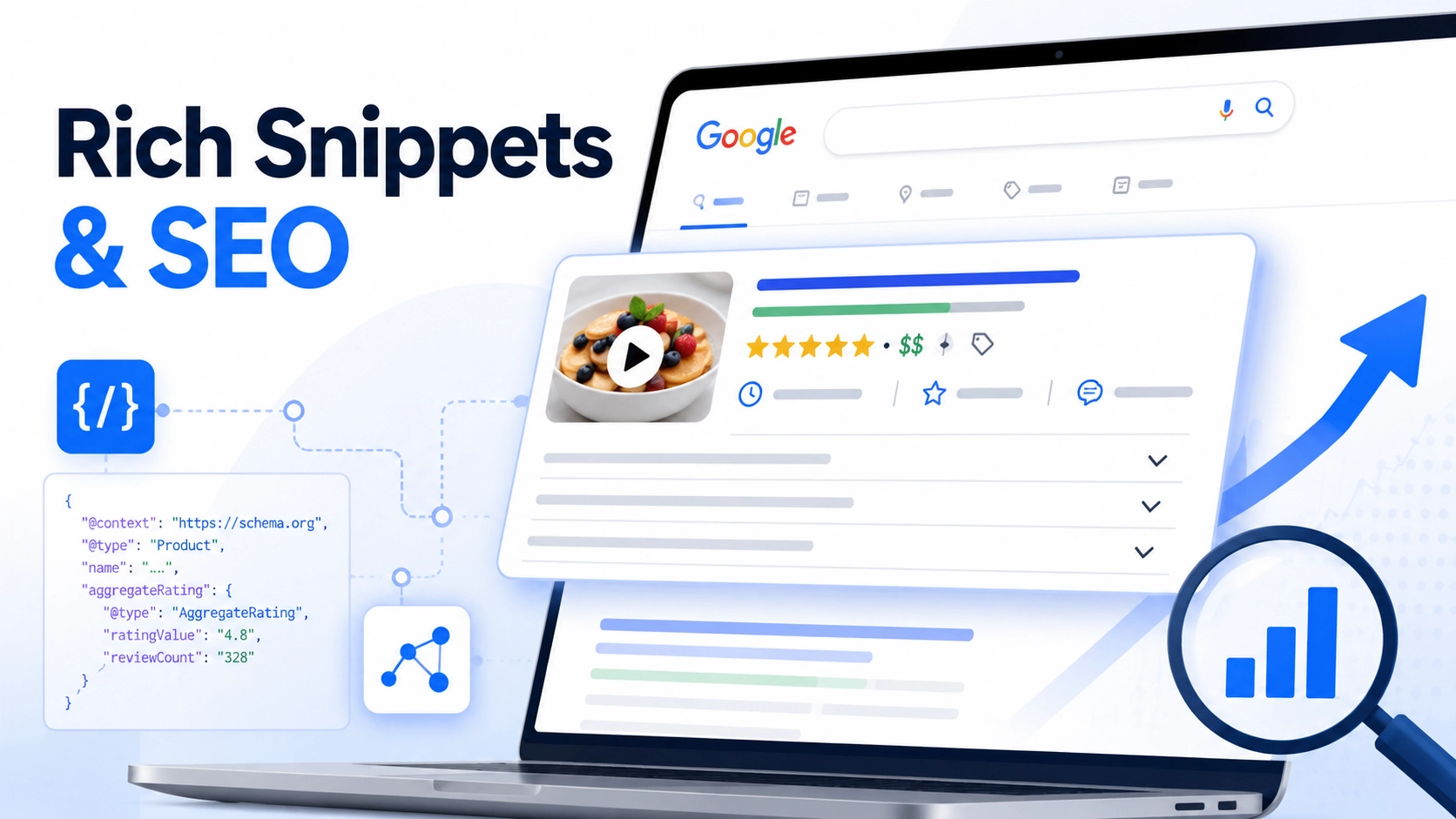
The main limit is that structured data only makes a page eligible for enhanced results, and Google decides whether to show them. Setup usually requires choosing the right schema type, adding accurate JSON-LD or other structured data markup, testing with Google’s Rich Results Test, and monitoring performance in Search Console.
SSinvent evaluates this process as part of a broader technical optimization, in which markup, content structure, and page quality must work together.
Key Takeaways
- Enhanced search listings can support organic visibility by making results clearer, more useful, and more noticeable on the results page.
- They are not direct ranking factors, and structured data does not guarantee higher rankings or improved search visibility.
- Structured data markup helps Google understand web pages and may make them eligible for rich results when the content is accurate, visible, and relevant.
- The best setup starts with the right schema type, accurate JSON-LD markup, testing with Google’s Rich Results Test, and monitoring in Search Console.
- These features work best on pages with strong content, clear search intent, technical health, and measurable search demand.
Yes, They Help Search Performance Indirectly
Enhanced listings do not work like a direct ranking signal. They help search engines understand web pages better and may qualify a page for Google’s rich results. When a result looks clearer and more useful, users may choose it more often than a standard blue link.
How They Benefit Organic Search
They can show additional search details such as star ratings, prices, availability, cooking times, event dates, or FAQs. These details can make a result more eye-catching and visually appealing without directly changing the page’s ranking position. When the information matches search intent, it may support higher click-through rates and more qualified visits.
What They Do Not Guarantee
Structured data does not guarantee rankings, traffic, or enhanced display. A page must still have relevant content, technical health, strong usability, and a clear match to the search query, especially when elements like affiliate links for SEO require clear context and user trust.
Google may also choose not to show enhanced details even when the markup is valid, especially if the page has thin content SEO issues that limit usefulness or relevance.
What Are Rich Snippets in SEO?
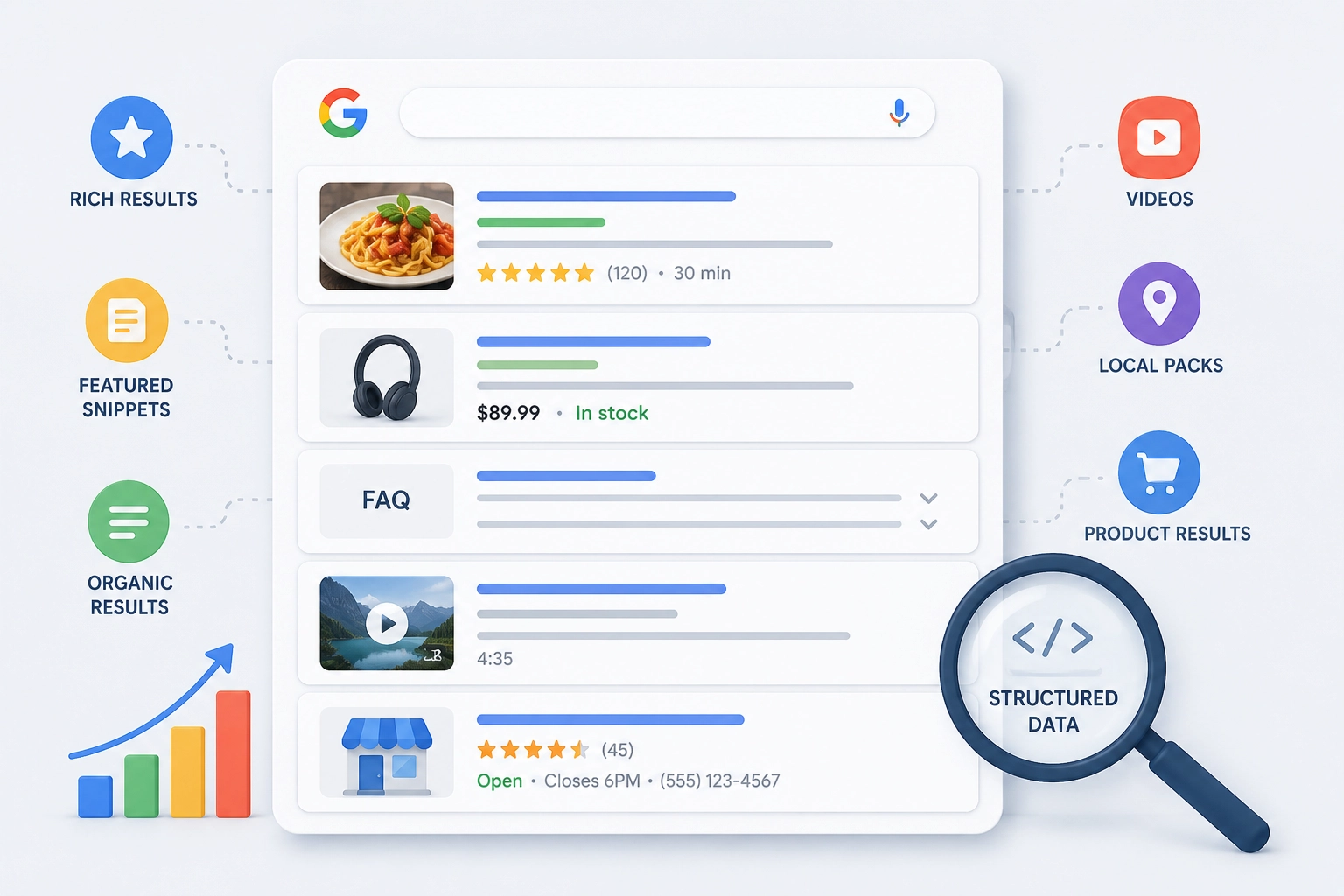
Rich snippets are enhanced search listings that display extra information from a page. They are part of the broader set of search results, which includes rich results, featured snippets, standard organic listings, videos, local packs, and product results. Their purpose is to give users more context before they click.
Structured Data and Schema Markup
Structured data markup is code that describes page content in a format search engines can read. Website owners often use Schema.org vocabulary to label products, reviews, recipes, articles, videos, services, and local businesses. This helps Google determine which type of rich snippet may fit the page.
JSON-LD and Page Context
JSON-LD is the format Google commonly recommends for structured data. It can describe key details without altering the page’s visible design. For example, a recipe snippet may include ingredients, cooking time, ratings, and image details, while alt text can help SEO by giving search engines a clearer context for visual content.
Rich Snippets vs. Featured Snippets
These two search features are different. A rich snippet enhances a regular organic result with extra details from structured data. A featured snippet pulls an answer from a page and displays it near the top of the search results.
Enhanced Listings Add Context
Enhanced listings may show review stars, product price, stock status, event dates, or a video snippet. These additions help users evaluate a result before visiting the page. They work best when the marked-up information is visible, accurate, and central to the content.
Common Rich Snippet Types
Different pages need different structured data. A product page, recipe page, article, video page, and local business page should not use the same markup by default. The chosen schema should match the main content and user intent.
Product, Review, and Recipe Snippets
Product snippets can show price, availability, ratings, and review information. Review snippets may show star ratings when the markup follows Google’s rules and reflects visible content. A recipe snippet can show cooking time, ratings, images, and other details to help users compare recipes more quickly.
FAQ, Article, and Local Business Snippets
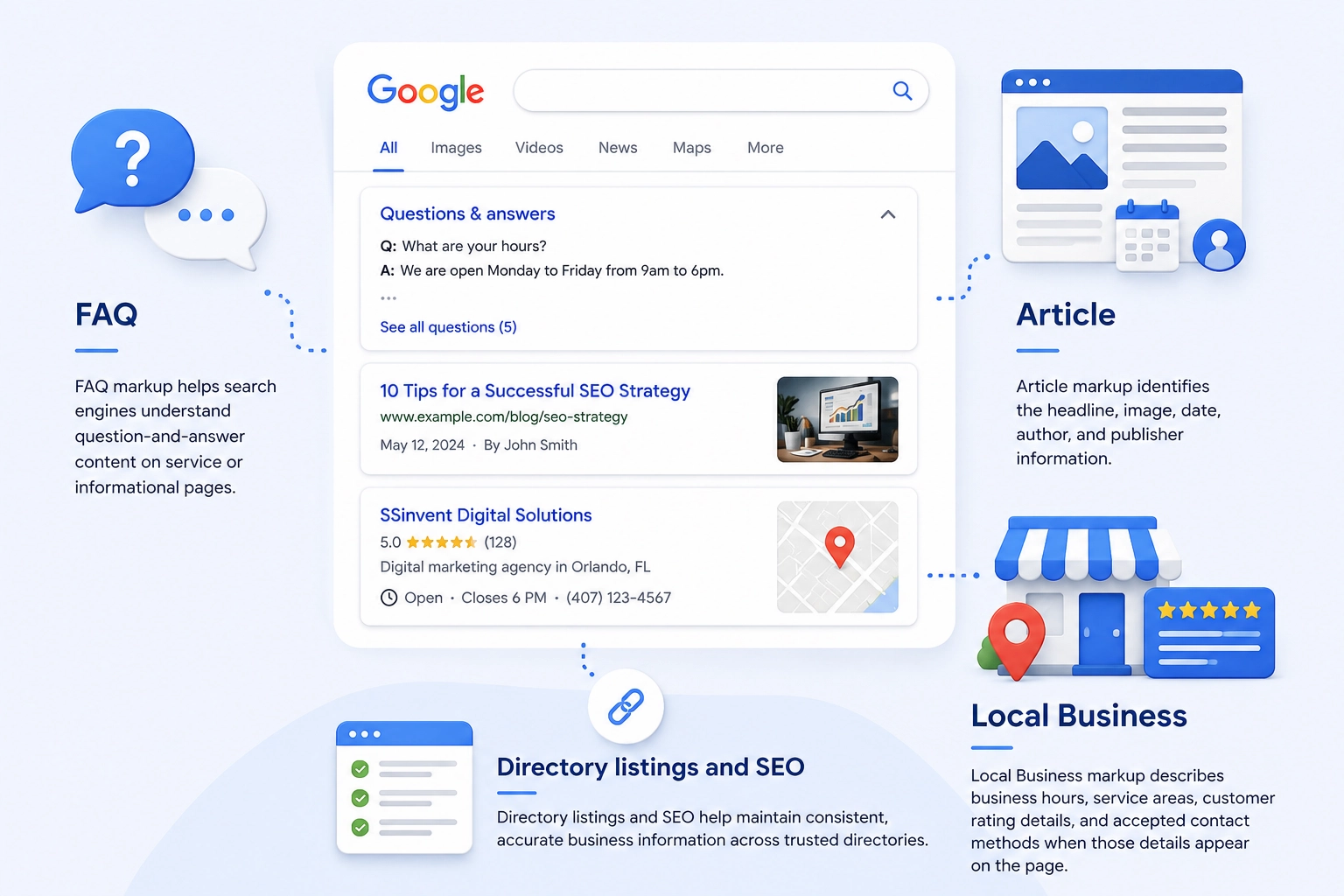
FAQ markup can help search engines understand question-and-answer content on service or informational pages. Article markup can identify the headline, image, date, author, and publisher information.
Local Business markup can describe business hours, service areas, customer rating details, and accepted contact methods when those details appear on the page, while directory listings and SEO can support consistency across trusted business profiles.
Which Pages Should Use Structured Data First
Not every page needs markup at the same time. Start with pages that already have search demand, clear content, and a valid reason to show extra details in Google Search. Product pages, review pages, recipe pages, local service pages, and detailed blog posts often make the most sense.