

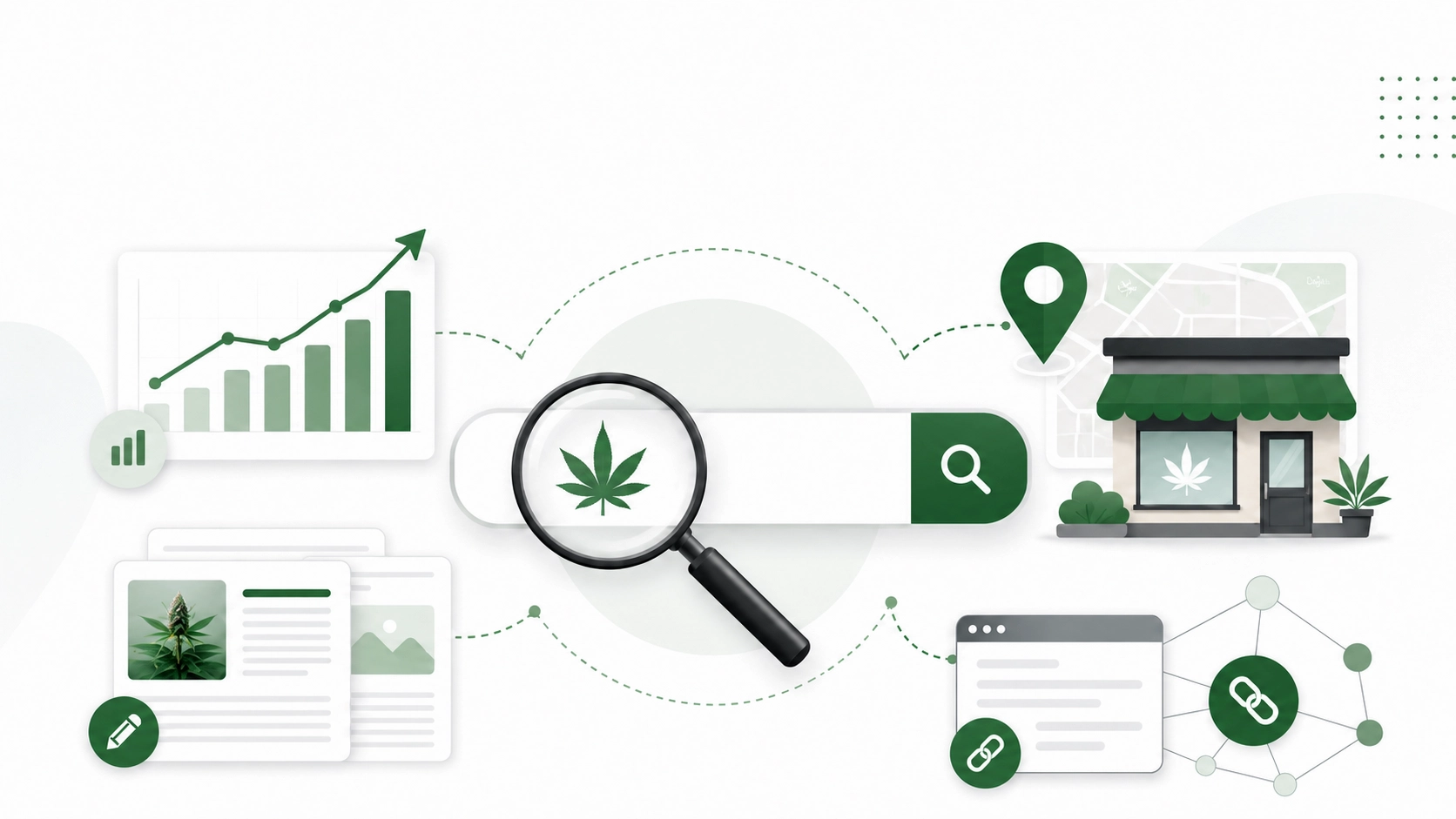
This makes the approach different from carpet-cleaning SEO, where local service intent is less constrained by cannabis-specific rules. SSinvent integrates keyword research, page SEO, content planning, site fixes, local search, and backlinks into a single, clear system.
For cannabis dispensaries, this can include Google Business Profile updates, local pages, reviews, citations, and product pages. For brands, it can include guides, service pages, internal links, schema, and backlink outreach.
Key Takeaways
- A cannabis SEO strategy should connect keyword research, page SEO, technical fixes, local visibility, content planning, backlinks, and tracking.
- Brands and dispensaries often need organic traffic because paid advertising and social media can be subject to platform limits.
- Local visibility matters because users often search by location, product type, hours, delivery, or “near me” terms.
- Content should use clear, careful language, especially when discussing products, health topics, and local rules.
- Strong search performance starts by matching each keyword to the right page type, such as a blog post, product page, service page, FAQ, or local page.
What Is a Cannabis SEO Strategy?
This strategy is a plan that helps a regulated website rank in search. It uses targeted keywords, site structure, content creation, backlinks, local signals, and technical fixes. The goal is not just more website traffic. The goal is to attract more traffic from people who are interested in your product, service, or location.
Why This Industry Needs a Different Approach
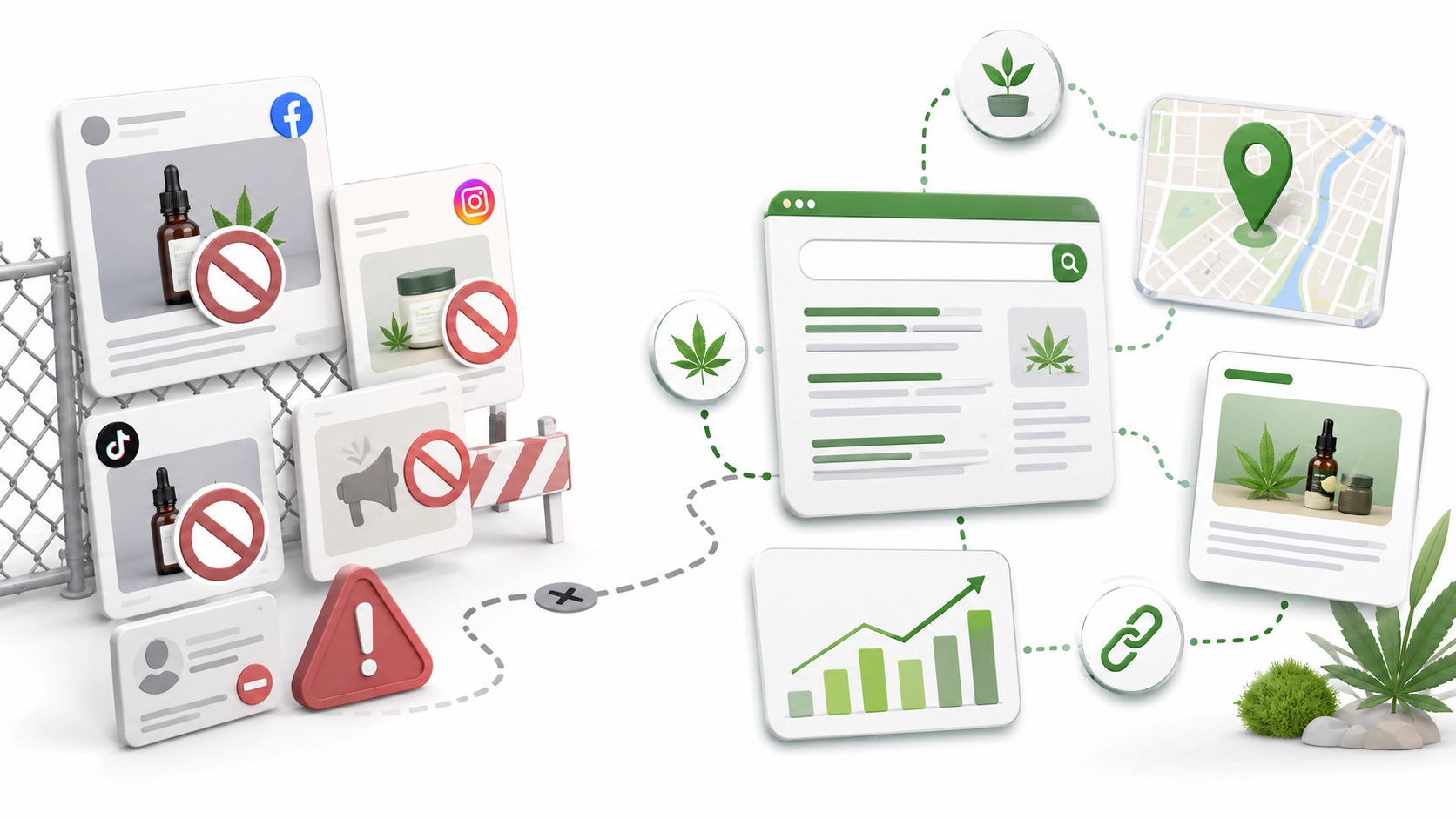
Cannabis marketing has limits that many other fields do not face. Search engines, ad platforms, and large networks can have rules for CBD, hemp, THC, and related products. This makes search engine optimization for cannabis more useful. It can help brands get found when paid advertising is limited.
Advertising Restrictions and Compliance Limits
These businesses cannot depend only on ads. Pages should avoid unsupported health claims, unclear product language, or wording that may break local rules. Search content should explain the topic clearly. It should stay factual and careful.
Local Search and Buyer Intent
Many searches in this field are local. A user may look for a nearby dispensary, store hours, delivery rules, or a product type. A strong plan separates local, sales, and learning intent. This helps each page answer one clear need.
Review the Search Results First
Before choosing keywords, review the pages that already rank. This shows what Google may be rewarding for that search. Look at page type, headings, depth, examples, FAQs, and intent. This step helps you build pages that match what users expect.
A good review should show whether top pages are guides, service pages, product pages, local pages, or directories. It should also show missing topics, weak sections, internal links, and backlink patterns. Use those gaps to improve your page. Do not copy another site.
Keyword Research for Cannabis Brands
Keyword research shows what users search for. It also shows what type of page should answer each search. A site should not target every term on a single page. Some terms need service pages, some need product pages, and others need guides.
Search Intent and Keyword Mapping
Search intent shows what the user wants to do. They may want to learn, compare, buy, visit, or check details. Keyword mapping assigns each term to one main page. This helps the site avoid overlap.
For example, the main topic fits a guide or service-support article. “Dispensary SEO agency” may be a good fit for a service page. “Best edible dispensary in Austin” may need a local page or product page.
Local, Product, and Regional Keywords
Local keywords include city, area, and “near me” searches. Product keywords may include flower, edibles, pre-rolls, CBD, THC, tinctures, and accessories. The right terms depend on the business and local rules. Some users search for “marijuana,” “weed,” “dispensary,” “cannabis store,” or “CBD shop.”
On-Page Optimization for Regulated Sites
On-page work helps each page explain its topic. It includes titles, headings, meta descriptions, URLs, image file names, internal links, schema, image alt text, and page copy. A page ranks higher more often when its structure matches search intent. No single heading or tag can promise rankings.
Titles, URLs, Internal Links, and Schema
A title tag should describe the page topic. It can include the main keyword when it fits naturally. URLs should be short and clear. Internal links and schema help search engines understand pages, business details, FAQs, products, reviews, and locations.
Product, Category, and Location Pages
Product pages should explain what the product is. They should also explain who it may help and what users need to know before taking action. Category pages should group related products or services. Location pages should describe a real city, area, or store rather than repeating the same text.
Content Strategy for Search Growth
Content strategy decides what to publish and why it matters. It can include guides, FAQs, product pages, service pages, local pages, and comparison pages. Creating content in clear groups helps users move from broad topics to specific answers. It also helps search engines understand the site.
Educational and Commercial Content
Educational content helps users learn. It may explain laws, product types, terms, store steps, or search basics. Commercial content answers decision-stage questions about services, products, prices, access, or store details. Both types should use clear language and avoid big claims.
Content Gaps and Topic Clusters
A content gap is a useful topic that your site does not cover yet. A topic cluster groups related pages under one main subject. For example, a dispensary may build clusters around local search, delivery questions, product types, and store rules. This makes the site easier to use and understand.
Local Visibility for Cannabis Businesses
Local SEO helps these businesses appear in location-based searches. It matters for dispensaries, delivery services where allowed, clinics, consultants, and local brands. The goal is to keep business details clear and easy to check. This supports both users and search engines.
Google Business Profile and Reviews
Google Business Profile should list the correct name, category, address, hours, phone number, website, and photos. Reviews, citations, and NAP details also support local trust. NAP means name, address, and phone number. The profile should match the website and avoid keyword stuffing.
Local Pages That Drive Leads
A local page should explain the place, services, products, audience, and next step. It should answer real questions about access, parking, hours, delivery rules, or service area. Each local page should have its own reason to exist. Thin city pages can hurt quality.
Technical SEO and User Experience
Technical work helps search engines crawl, render, index, and understand the site. User experience helps visitors move through the site with less friction. Both affect how well the search works. A strong site should be easy to scan, load, and use.
A website should load quickly on mobile devices. Many local and product searches occur on mobile devices. Clear menus, readable text, working links, and simple page paths help users finish tasks. Broken links, duplicate URLs, blocked pages, and thin pages should be fixed before the site grows.
Backlinks and Digital Authority
Backlinks help search engines find and assess websites. In this niche, link quality matters more than link count. Good links may come from industry sites, local groups, trade groups, suppliers, partners, or event pages. These links should make sense for the topic.
PR, partnerships, and real mentions can also support authority. The goal is not to get links at any cost. Link building should help users find useful sources. It should also support topic relevance and trust.
Measuring Search Results
Tracking shows whether the work brings the right users. Rankings alone are not enough. A site also needs to track organic traffic, leads, user actions, and lead quality. A lower-volume keyword can be more useful than a high-volume term if it matches buyer intent.
Google Search Console can show searches with many views but few clicks. It can also show pages in positions 4–10 and searches without a strong matching page. Analytics tools can show what users do after they land on the site. Together, these tools help find title issues, content gaps, weak links, and conversion problems.
Common Cannabis SEO Mistakes
This work can fail when the site targets the wrong intent. It can also fail when pages are thin or when the business depends only on third-party directories. Learning, local, and buyer searches need different pages. Treating them the same can hurt clarity.
Compliance also matters. Claims, product copy, and location details should comply with the applicable rules. Content should explain topics clearly. It should not make promises the business cannot support.