

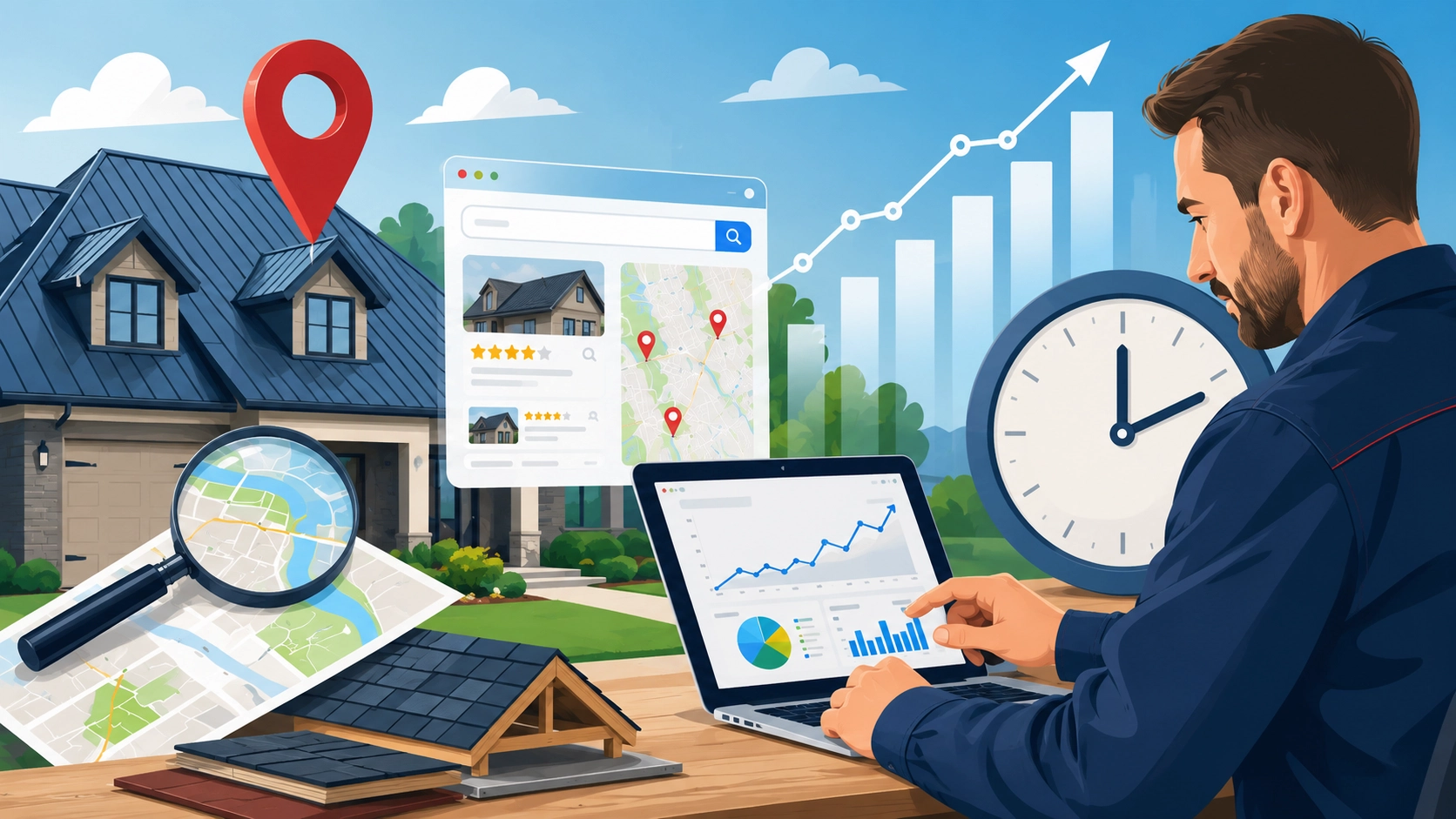
A new site in a crowded city usually needs more time than an established roofing company with accurate listings and trusted links. SSinvent reviews these factors through technical audits, content analysis, and search performance data.
Key Takeaways
- Most companies see early movement within three to six months.
- Competitive rankings and steady leads often take six to twelve months.
- Website health, competition, content, reviews, and backlinks affect the timeline.
- Google Maps visibility may improve before organic rankings.
- Progress should be measured through impressions, rankings, calls, forms, and booked jobs.
Expect Early Results in 3–6 Months
A three-to-six-month range is a practical benchmark, not a guaranteed deadline. Early progress may include better indexing, more Google Maps impressions, and movement for specific roofing services. Competitive positions often take longer because search engines need time to crawl updates, assess relevance, and compare pages with established competitors.
Results also appear in stages. A roofing business may see impressions before clicks, clicks before inquiries, and inquiries before booked work. Tracking each stage prevents the company from judging progress only by final sales during the first few months.
Months 1–3: Build the Foundation
The first phase focuses on technical repairs, keyword mapping, business data, and measurement. The team should confirm that important pages can be crawled and indexed, fix broken URLs, improve mobile usability, and connect analytics tools. It should also review the Google Business Profile GBP listing, business categories, service areas, contact details, and landing page links.
Content planning begins during this stage. The site needs a clear services page for each core offering, including roof repairs, roof replacements, inspections, emergency work, and storm-damage support. These pages help Google understand what the company offers and where it operates.
Months 4–6: Gain Search Traction
During months four through six, updated pages may begin ranking for specific services and nearby areas. Map visibility may improve when business information stays consistent, customers leave new reviews, and the profile includes current photos and service details. Some companies also begin receiving non-branded visits from users who did not know the business name.
This stage shows which pages need adjustment. A page may earn impressions but few clicks, or attract traffic without producing calls. Those patterns guide changes to titles, internal links, content, and contact paths.
Months 7–12: Grow Qualified Leads
Between months seven and twelve, the site has more history, content, and performance data. Strong pages can achieve higher positions for commercial terms, while the business profile may appear across a wider range of Google searches. Lead generation may become more consistent when rankings, reviews, geographic relevance, and website usability reinforce one another.
Useful blog posts can also support commercial pages. Articles about insurance questions, repair timing, shingle options, and metal roofs can answer early research needs and direct potential customers to relevant services. The goal is to address real questions, not publish content only to increase volume.
Why Timelines Vary
Website History and Technical Health
An older website does not always rank faster, but a clean history can help. A domain with useful pages, stable ownership, and relevant links gives search systems more evidence to evaluate. A site with duplicate pages, blocked content, poor links, or long inactivity may need corrective work before growth becomes visible.
Technical health affects access and usability. Slow pages, poor mobile layouts, redirect chains, and weak internal linking can limit the visibility of important URLs. Rodrigo César and Christopher Cáceres assess these issues separately from content because a useful page cannot perform well when search systems cannot reach or interpret it.
Competition and Service Area
Competition changes by city, service, and query. A contractor targeting one suburb may face fewer established businesses than a company trying to rank across a large metropolitan area. Broad terms such as “roofer near me” usually require more authority than phrases tied to one service and location.
A larger service area also creates more content needs. Each location page should include original project examples, service details, and useful geographic context. Repeating the same copy across many city pages provides little value to users and can cause multiple URLs to compete for similar terms.
Content and Authority Strength
Content must match the question and decision behind each query. A page about emergency leaks should explain likely causes, inspection steps, limits, and next steps instead of repeating a single target phrase. Clear answers improve relevance and help readers judge whether the service fits their needs.
Authority comes from accurate business data, credible mentions, useful links, and a consistent online presence. Links from suppliers, trade groups, chambers, community organizations, and relevant publications can provide context. A small number of relevant references often provides more value than many unrelated links.
Local SEO for Roofers with Google My Business
Optimize Your Business Profile
A complete profile gives users key information before they visit the website. The company should choose accurate categories, list core services, upload current photos, define service areas, and keep hours up to date. The profile should link to the page that best matches the user’s need instead of sending everyone to a general homepage.
The listing must reflect the actual business and comply with Google’s rules for names, locations, and service areas. Adding keywords to the business name when they are not part of its real identity can increase the risk of suspension. Accurate information also supports a stronger digital marketing foundation.
Compare Maps and Organic Rankings
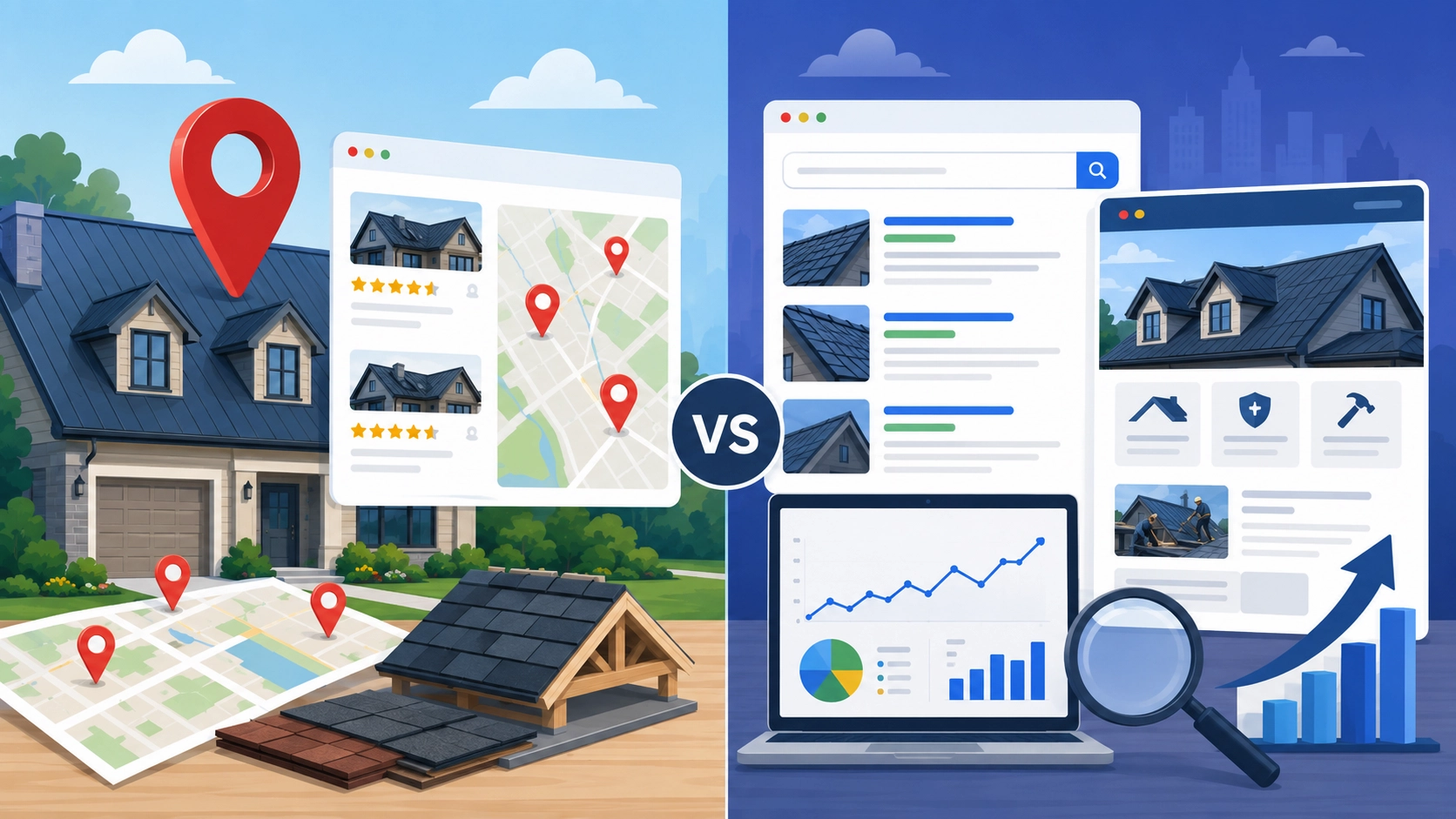
Map results and organic listings use related but different signals. Proximity, relevance, reviews, and profile data influence map visibility, while website content, links, technical quality, and page relevance have more influence on organic positions. A company may improve in one channel before it sees movement in the other.
Reports should separate these channels. More map views may appear before stronger website rankings, especially for searches made near the business location. Separate data for profile actions, map visibility, organic clicks, and conversions shows where progress is occurring.
Build Reviews and Trust
Reviews help users compare providers and can support geographic relevance. A steady review process looks more natural than a sudden burst followed by months of silence. The company should ask real customers for honest feedback and respond in a clear, professional way.
Reviews should describe real experiences rather than repeat target keywords. Comments about communication, inspections, cleanup, or repair quality give future customers useful context. The business should not create false reviews or offer incentives that could mislead users.
How Does Search Visibility Win More Leads?
Target High-Intent Searches
High-intent roofing SEO keywords often combine a service, location, urgency, or material. Examples include emergency repairs in a city, hail inspections near a neighborhood, or replacement options for a specific roof type. These phrases usually belong on focused service and location pages rather than broad informational articles.
SEO for roofing companies works best when each high-intent query maps to a single, clear page within the broader digital marketing plan. A person asking how long shingles last may need education, while someone searching for an inspection may be ready to hire. Matching each query with the correct page type improves clarity for users and search systems.
Convert Traffic Into Calls and Jobs
Traffic does not automatically become work. Understanding how SEO helps roofing companies win more local leads requires connecting search visibility with clear service pages and contact options.
Each commercial page should explain the service, coverage area, process, common questions, and contact options without making visitors search for basic details. Clear phone links, short forms, visible hours, and specific calls to action reduce friction.
The site should build trust through accurate licensing, project photos, service details, and, when relevant, policies. Conversion tracking should record calls, forms, booked inspections, and qualified jobs instead of treating every visit as equal. This data separates useful traffic from visits that do not match the company’s services.
How to Speed Up Results
Fix Technical and Indexing Issues
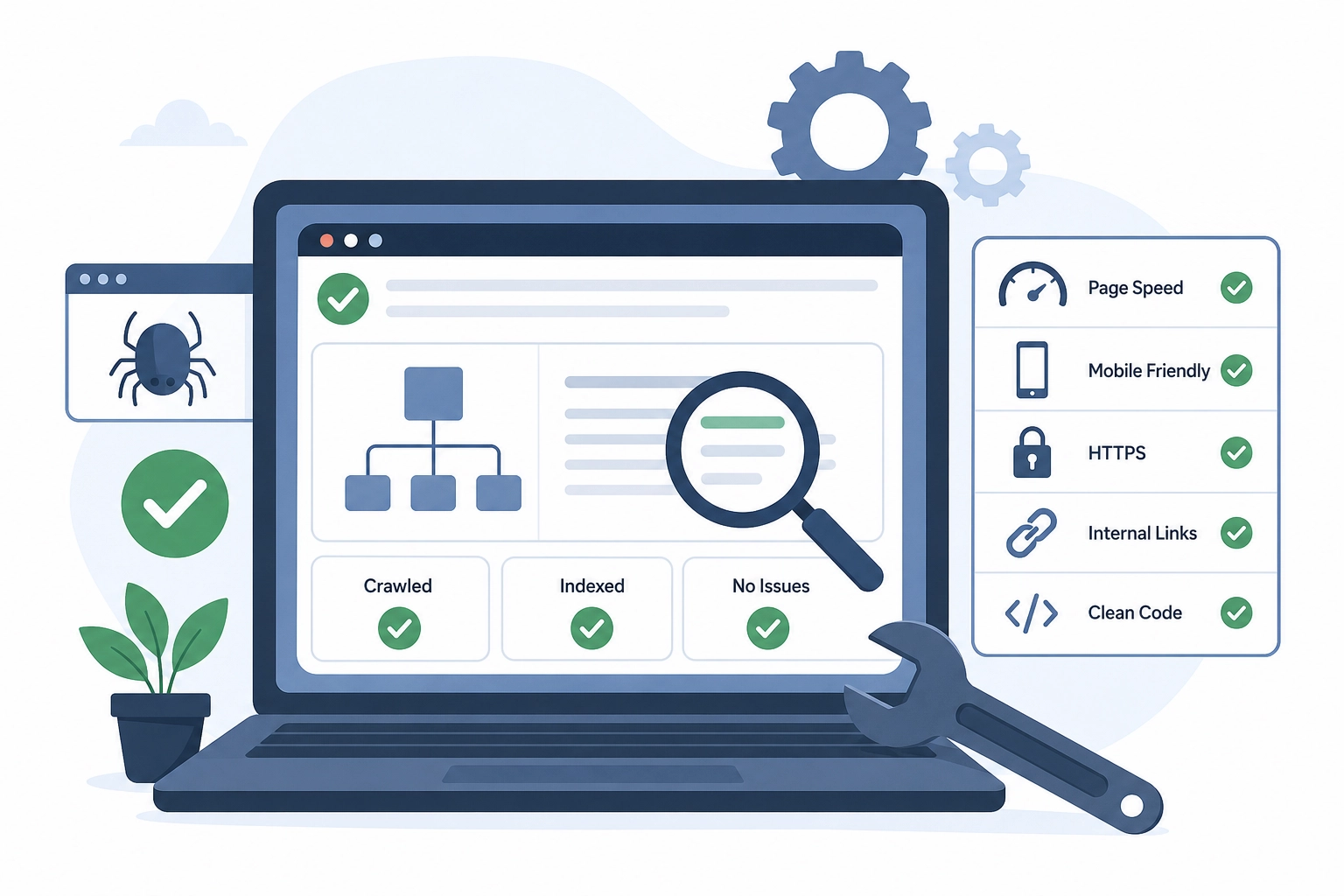
The team should confirm that important URLs return the correct status code, use proper canonical tags, and appear in the XML sitemap. It should also check whether robots rules, noindex tags, JavaScript, or duplicate URL versions block discovery. Search Console can show which pages Google has found, crawled, and indexed.
A clear plan to make a roofing website SEO-friendly includes fast-loading core pages, readable mobile layouts, and clear internal links.
Technical work should focus on issues that affect access or user experience, not minor scores with little practical effect. Fixing a blocked commercial page matters more than changing a small metric on a page that already performs well.
Publish Service and Location Pages
Each main offer needs a page that answers the needs behind that search. A page for repairs should differ from one for replacement, inspections, or storm response. The copy should explain the problem, process, materials, limits, and next steps in language homeowners can understand.
Location pages need original geographic value. They may include coverage details, weather-related risks, common roof types, permit considerations, and examples of completed projects, when available. Thin pages that only replace one city name with another may compete with each other.
Build Citations and Relevant Links
Citations confirm core business information across directories and nearby platforms. The name, address, phone number, website, and hours should match the real business. Correcting inconsistent listings reduces confusion for users and search systems.
Relevant backlinks provide context when they come from suitable sources. Supplier relationships, trade memberships, sponsorships, nearby news, and community partnerships may create legitimate mentions. The company should avoid paid link networks and unrelated sites created only to influence rankings.
How to Track Performance
Rankings, Traffic, and Map Visibility
Track rankings by service and location rather than relying on a single broad keyword. Search Console can show impressions, clicks, average position, and query growth, while profile data can show calls, website visits, and direction requests. Rank tracking should use consistent locations because results vary by the searcher’s location.
Traffic quality matters more than raw volume. A small increase from commercial terms may be more useful than a large increase from unrelated questions. Segmenting branded, non-branded, map, and organic traffic makes reports easier to interpret.
Calls, Forms, and Booked Jobs
Calls and forms show whether visibility creates inquiries, but each lead still needs qualification. Track the requested service, location, source, and final outcome when possible. This process separates real opportunities from spam, job applications, vendor calls, and requests outside the service area.
Booked jobs provide the clearest business signal, but they may appear later than gains in ranking. Sales follow-up, pricing, scheduling, and call handling also affect the outcome. Reports should not attribute every sale or missed opportunity solely to search performance.
Signs the Campaign Is Stalling
A campaign may be stalling when key pages remain unindexed, impressions stay flat, and target URLs show no movement after sustained work. Other signs include traffic from irrelevant queries, duplicate pages competing for one term, and map visibility limited to branded searches. These patterns require diagnosis rather than an automatic increase in publishing.
The review should examine technical access, keyword targeting, content quality, internal links, profile accuracy, citations, reviews, and backlink relevance. It should also compare current competitors because the market may have changed. A structured audit can show whether the problem comes from weak execution, unrealistic targeting, or insufficient time.