
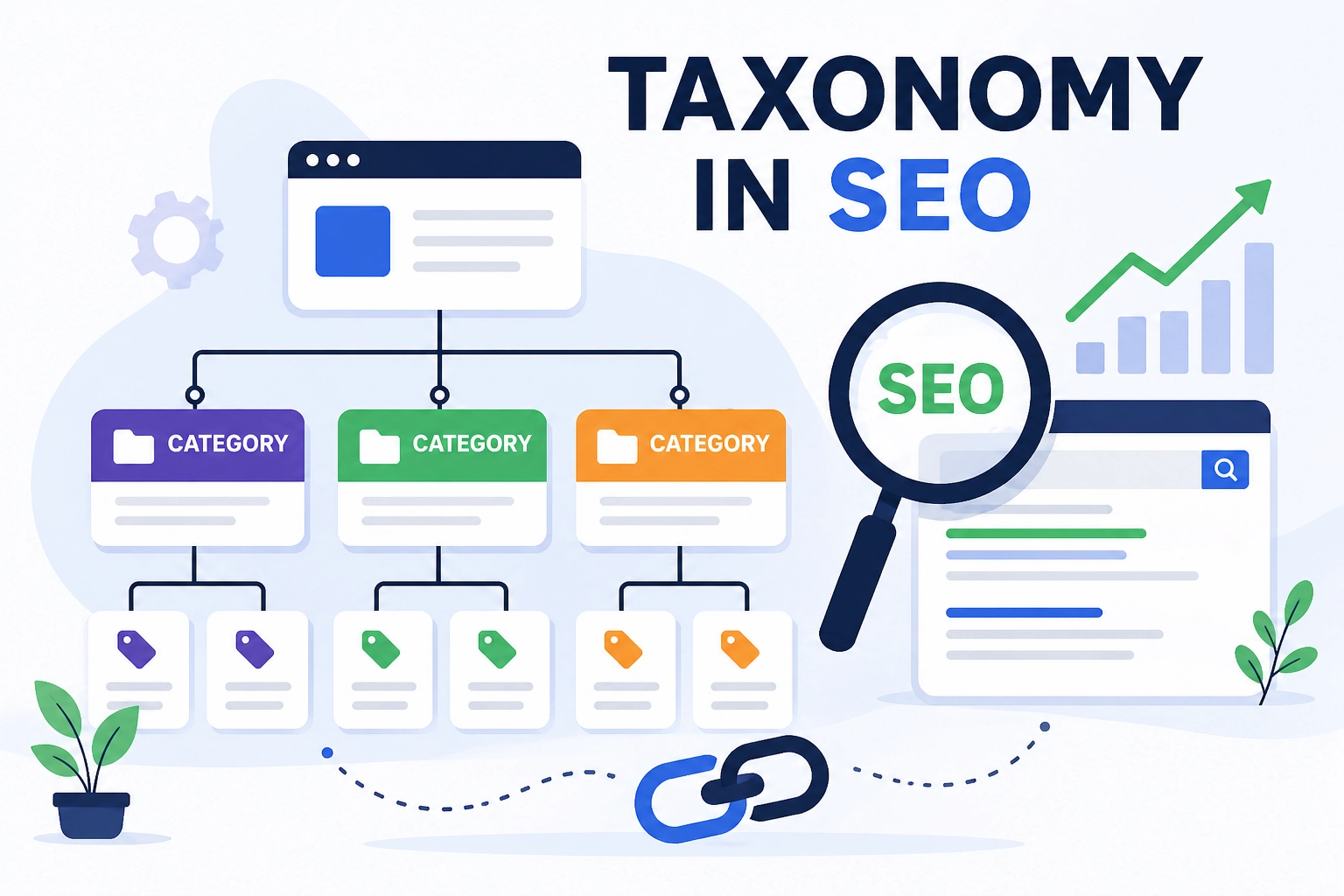
A strong taxonomy groups content based on how people search. It helps users and search engines navigate your site and find relevant keywords faster. This setup improves clarity and enhances the user experience, especially when supported by SEO data science for analyzing content relationships. It also helps search engines understand how pages relate to each other.
At SSinvent, taxonomy is part of a structured SEO approach focused on clarity and scale.
Key Takeaways
- Taxonomy in SEO organizes content using categories, tags, and hierarchical taxonomy, helping users and search engines understand page relationships and improving crawlability.
- A clear SEO taxonomy structure makes it easier to navigate your site and find relevant content across category pages and blog posts.
- Different types of taxonomy, such as flat, faceted, and network taxonomies, serve different needs depending on site size and structure.
- A strong taxonomy reduces duplicate content, improves indexing, and supports internal linking across pages.
- Well-optimized taxonomy pages with clear content and metadata help improve search engine rankings.
Taxonomy Meaning in SEO
Taxonomy in SEO is the system used to organize content on a website. It categorizes content into groups so users and search engines can understand it. This includes category pages, tags, and other content groupings.
For example, blog posts may sit under top-level categories like “SEO” or “Content Marketing.” Each page connects to a main topic while still covering a specific idea. This makes content easier to manage and find.
Is Taxonomy Important for SEO?
Yes, taxonomy is important for SEO. It helps search engines crawl and index your pages and groups related pages, which improves how the content is understood. This leads to better relevance and clearer signals for search engine rankings.
It also helps users move through your site with ease. When users can find content fast, they stay longer and explore more. This improves engagement and supports better performance.
Impact on Crawlability and Indexing
A hierarchical taxonomy creates clear paths for search engines. It moves from top-level categories to deeper pages in a logical way. This helps search engines find and index important content.
If the structure is unclear, some pages may not be indexed. A consistent system ensures all key pages are visible. This improves how content appears in search results.
Impact on User Navigation
A clear structure helps users find content quickly. Category pages guide users to related topics. This reduces confusion and improves how users interact with the site.
When users can navigate your site easily, they are more likely to stay longer. This helps them explore more content and better understand your topics.
SEO Taxonomy Structure and Framework
A taxonomy structure shows how content is grouped and linked. It includes hierarchical taxonomy, internal linking, and clear content organization. These elements work together to build a strong system, which can be clearly explained through an effective SEO presentation.
Sites may use a mix of flat, hierarchical, and network taxonomies. Each type of taxonomy serves a different role. The right choice depends on how complex the site is.
Hierarchy and URL Structure
A hierarchical taxonomy organizes content from broad topics to detailed pages. For example, commerce sites may group products into categories and subcategories. This creates clear relationships between pages.
URLs should match this structure. Simple and clear URLs help users and search engines understand each page. This improves clarity and indexing.
Internal Linking and Site Depth
Internal linking connects pages across the site and supports broader strategies, such as link building, for enterprise sites. It helps share authority and link related topics. Category pages often link to other pages within the same topic.
Keeping pages close to the homepage improves access. Pages that are too deep may not get enough attention. A clear linking system helps users and search engines move through the site.
Taxonomy Sequence and Site Flow
Taxonomy sequence shows how users move from one page to another. A clear flow helps users go from general topics to specific pages. This improves both navigation and understanding.
For example, users may start on category pages, then move to subcategories, and finally reach a specific web page. This path makes content easy to follow.
Types of SEO Content Taxonomy
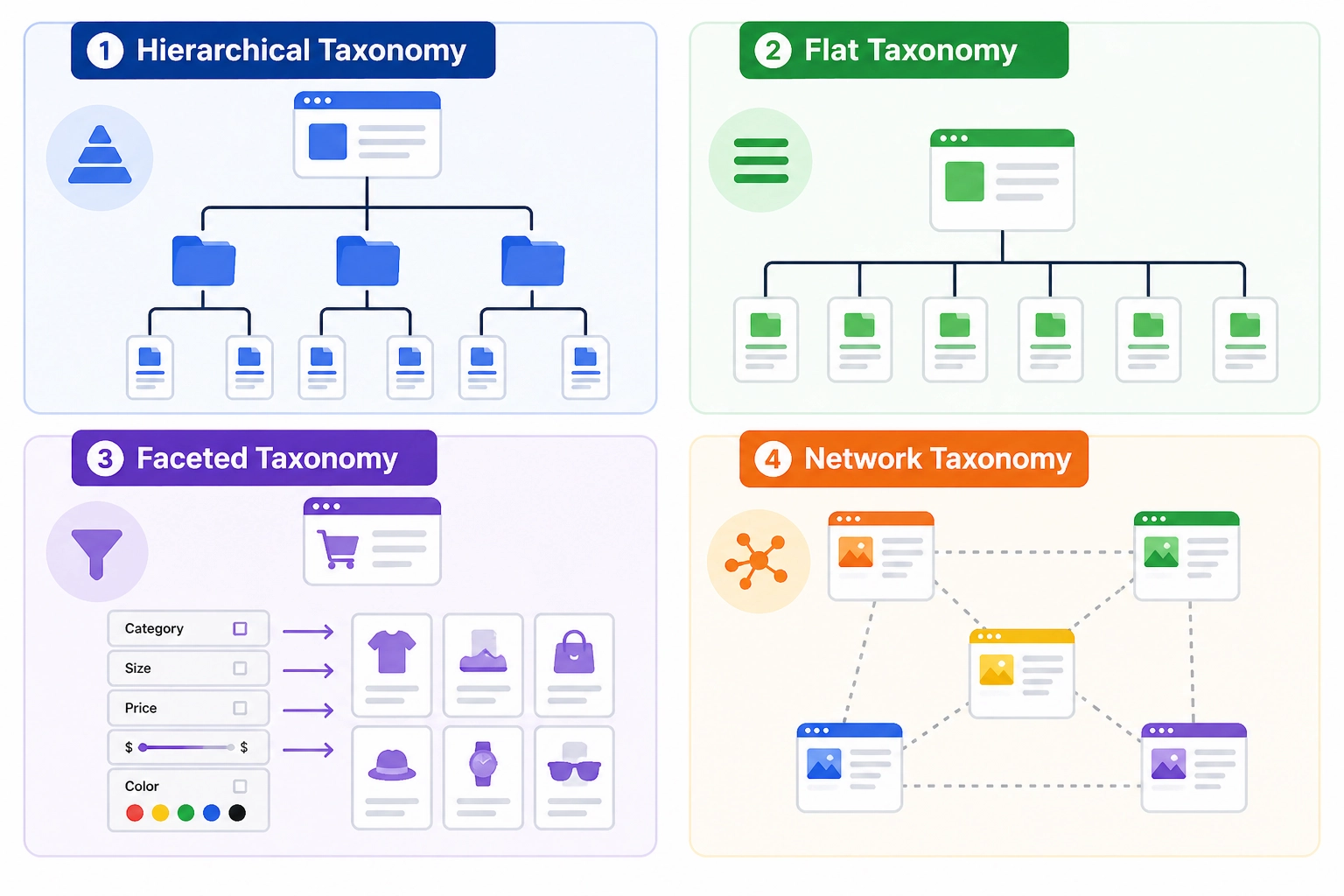
There are different ways to organize content using taxonomy. Each type of taxonomy defines how pages are grouped and connected.
- Hierarchical taxonomy – Organizes content in levels, from broad topics to specific pages, helping users and search engines follow a clear structure.
- Flat taxonomy – Keeps content at the same level without a deep hierarchy, making it simpler but less structured.
- Faceted taxonomy – Lets users filter content by attributes like size, price, or category, improving navigation but requiring control to avoid duplicate pages.
- Network taxonomy – Connects related content across different sections, linking pages that share topics even if they belong to different categories.
When to Use Categories vs Tags in SEO
Categories define the main topics on a site, while tags connect related content across those topics. This helps organize content clearly without causing confusion. Categories group content into stable themes, while tags add extra detail and link similar pages.
Use categories for broad topics that do not change often. Use tags to connect related content across different sections. Avoid using too many tags, as this can reduce clarity and create overlap.
For example, blog posts may belong to one category and include several tags for related topics. This structure helps users find more content easily and improves how pages are connected.
Custom Taxonomies
Custom taxonomies let sites create their own content groups. This is useful for large or complex websites. It allows more control over how content is organized.
For example, commerce sites may group products by brand or type. This helps users filter and find items faster.
How to Create SEO Taxonomy
Creating a taxonomy requires planning and consistency. You need to define categories, group content, and connect pages. Each step should align with how users search and can be refined through SEO experimentation to test structural changes.
Rodrigo César and Christopher Cáceres note that taxonomy should follow real search behavior. This helps build a structure that matches user needs.
Step-by-Step Setup
- Identify main topics and define top-level categories
- Group related content under each category
- Add relevant keywords to each section
- Link pages to each other
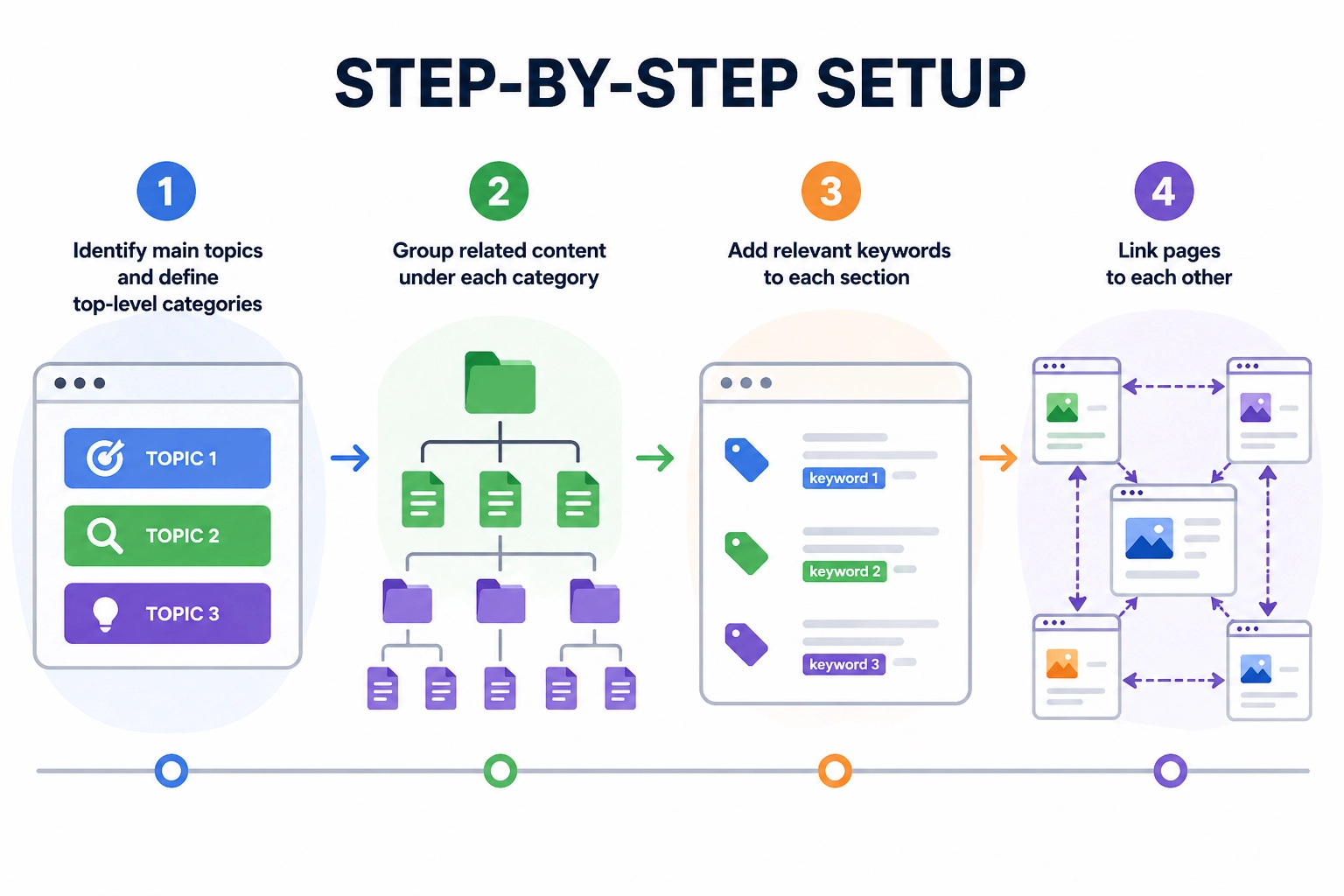
This process builds a system that can grow over time.
Advanced Taxonomy Example for Large Sites
Large sites often create too many pages through filters and categories. This can lead to duplicate content and wasted crawl budget.
A common fix is to index only main category pages. Use canonical tags or noindex for filtered pages. This keeps the structure clean and focused.
In a site with over 10,000 pages, reducing indexed filter pages helped improve crawl efficiency and allowed search engines to focus on high-value category pages. A simple rule is to avoid indexing pages that do not target real search demand.
Taxonomy SEO Best Practices
Best practices help keep taxonomy clean and useful. They ensure content stays organized and easy to access. This reduces errors and improves performance when guided by clear frameworks like SEO formulas.
Keep Structure Simple
Avoid too many categories or deep levels. A simple structure is easier to use and manage. It helps users and search engines understand your site.
Avoid Duplicate and Thin Pages
Pages with little or repeated content can hurt performance. Each category page should provide clear value. This helps with indexing and relevance.
Control Indexation
Not all pages should be indexed. Some filtered pages do not add value. Managing indexation helps search engines focus on key content.
Follow these rules:
- Index strong category pages
- Avoid indexing duplicate pages
- Use noindex for low-value pages
- Use canonical tags when needed
How to Optimize Taxonomy Pages
Optimizing taxonomy pages helps them perform better. These pages should act as content hubs. They should not be simple lists.
Add Unique Content
Each category page should include original text. This helps users understand what the page covers. It also helps search engines.
Optimize Metadata
Titles and descriptions should match the topic. Use relevant keywords to improve clarity. Metadata helps pages show correctly in search results.
Handle Pagination and Filters
Pagination and filters are common in large sites. They must be managed to avoid duplicate content. Proper setup improves crawling.
Faceted Navigation SEO Risks and Control
Faceted taxonomy allows users to filter content. This improves usability but can create many similar pages. These pages may cause duplicate issues.
Use these controls:
- The index is only useful for filtered pages
- Block low-value combinations
- Use canonical tags
- Apply noindex where needed
Common SEO Problems Caused by Taxonomy
Poor taxonomy creates issues for both users and search engines. It can reduce visibility and make navigation harder.
Common problems include:
- Duplicate pages from filters or tags
- Wasted crawl budget
- Weak internal linking
- Confusing site structure
Taxonomy SEO FAQs