
SEO Questions and Answers for Interviews

SEO questions and answers help candidates explain how search engines work. They show how websites gain visibility. They also explain how SEO supports business goals.
These SEO questions often cover keyword research, technical SEO, content quality, link building, local SEO, SEO tools, reporting, and problem-solving.
Multisite for SEO: Build a Strategy That Works
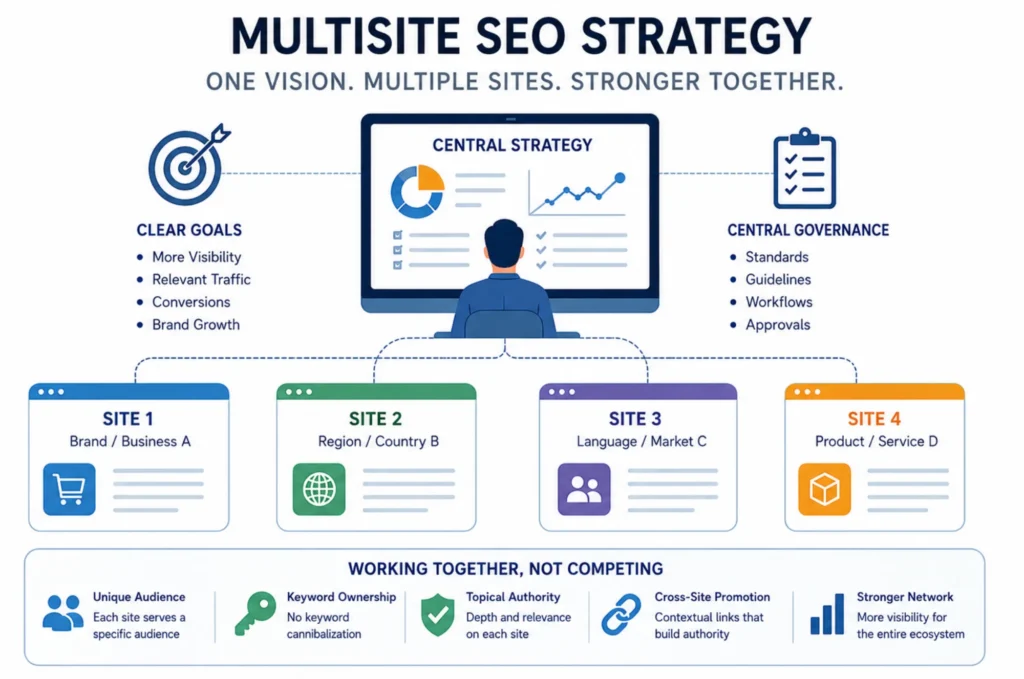
A multisite structure lets you centrally manage multiple websites while optimizing each one independently for search engines.
This makes multisite SEO the right approach for franchises, distinct brands, and localized or multilingual targeting, where a single domain would either create keyword conflicts or fail to send the right geographic and audience signals. Done correctly, it scales your digital presence without fragmenting the authority you’ve already built.
How AI Overview Will Change SEO and Search Strategy

AI Overviews will change SEO. They place AI-written summaries, citations, and follow-up links above many organic results. Understanding how AI Overview will change SEO now requires tracking visibility, clicks, citations, branded demand, and conversions instead of relying on rankings alone.
Key Metrics for Local SEO Success for Your Business

Local SEO success depends on tracking metrics that link visibility to customer action, not just rankings. The key metrics for local SEO success include local pack rankings and Google Business Profile engagement. They also include customer reviews, citations, website traffic, conversions, and backlinks.
Each metric shows a different part of how your business appears to local customers. Understanding these metrics helps you see what works and what needs improvement. It also shows how search visibility leads to real leads and sales.
Hidden Keywords SEO: Meaning, Risks, and Alternatives

Hidden keywords are words or phrases placed on a page where search engines can detect them, but website visitors may not see them. The term hidden keywords SEO often refers to an outdated tactic that uses concealed text, links, code, or metadata to influence rankings.
Are Keywords Still Relevant in SEO for Modern Search?

Yes, keywords remain relevant because they help connect search queries with useful content. Modern search engine optimization uses keywords to identify topics, understand search intent, and organize information, but exact repetition is no longer the main focus.
Church SEO: How to Help People Find Your Church Online

Church SEO is the practice of optimizing your website and online presence to rank higher in Google search results for local terms like “[city name] church” and “churches near me.” The goal is straightforward: help unaffiliated Christians and local seekers discover your church when they search online.
Unlike paid advertising, church SEO builds lasting visibility that continues bringing visitors month after month without additional spending. This guide shows you the specific tactics that actually move the needle for church discovery.
SEO for Charities: How to Grow Visibility

Charities increase their visibility by making their websites easier for search engines and users to understand. A strong SEO plan for charities helps donors, volunteers, beneficiaries, and partners find the right pages through organic search rather than paid ads.
The main steps include keyword research, mobile-friendly design, clear donation and program pages, useful content, internal links, and technical SEO fixes.
Voice Search Local SEO for Local Businesses

Local businesses that show up in spoken search results are not winning by accident. Voice search local SEO is the practice of making your business the answer when someone asks Google, Siri, or Alexa for a nearby service.
The signals that drive those results are the same ones that feed AI Overviews: an accurate Google Business Profile, consistent NAP data across directories, LocalBusiness schema, and a fast mobile site. AI assistants draw on structured, trustworthy sources, so businesses with messy listings, missing hours, or slow pages are skipped regardless of how good their service actually is.
SEO Vocabulary Guide: The Key Terms You Need to Know
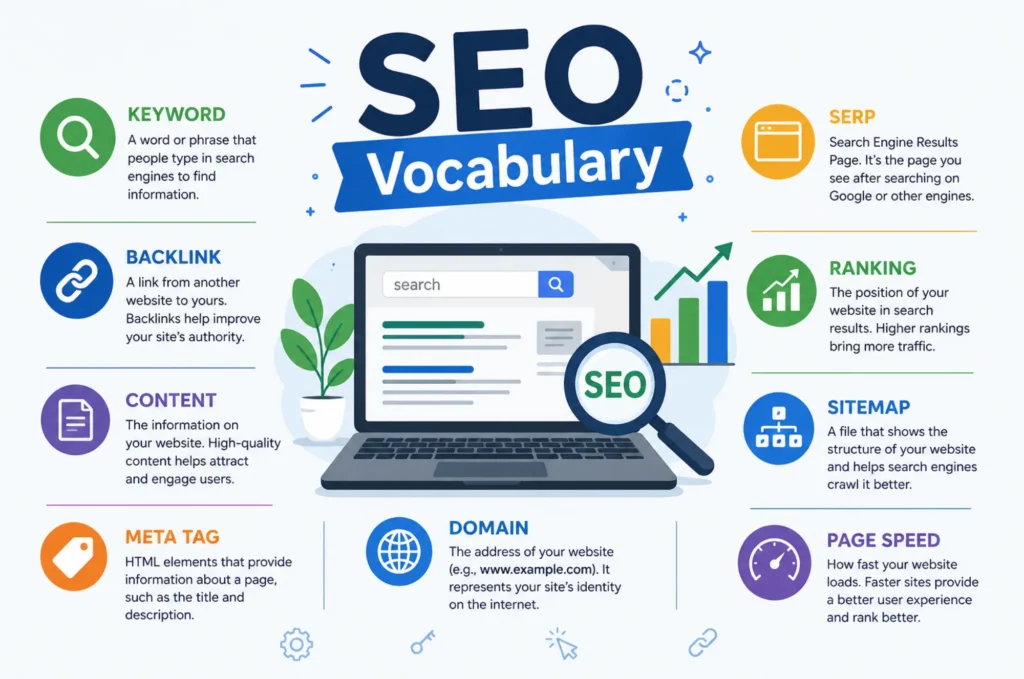
Search engine optimization has its own language, and knowing it changes how you read a report, evaluate a strategy, or brief a developer. The core seo vocabulary falls into three functional areas: on-page SEO, which covers content and page structure; off-page SEO, which covers backlinks and external authority signals; and technical SEO, which covers how search engines crawl, index, and interpret a site.
Each area has its own set of terms, and understanding how they connect is what separates a surface-level overview from a working knowledge you can act on.