

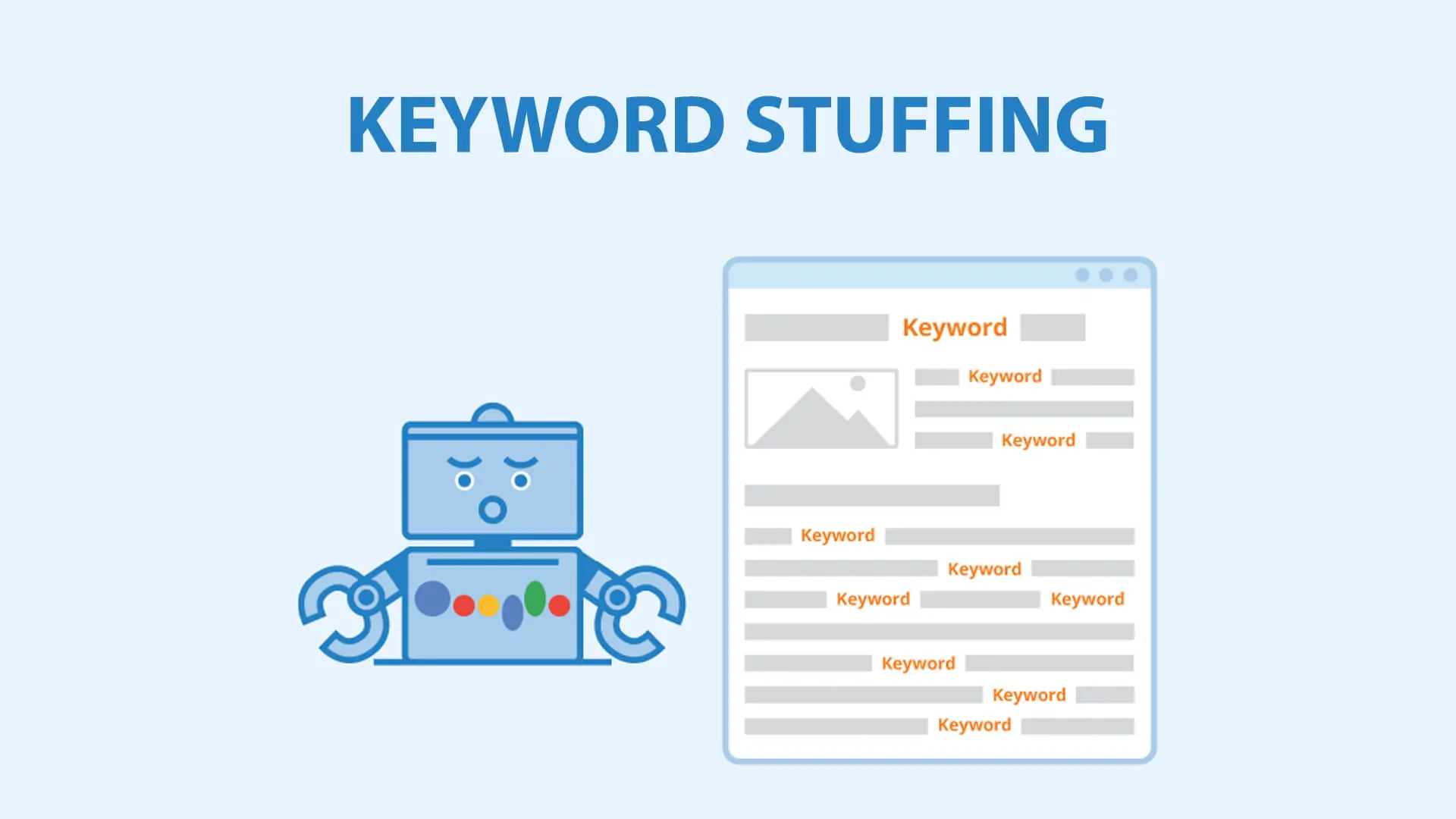
SEO keyword stuffing is not a long-term strategy because it weakens both clarity and user experience. At SSinvent, Rodrigo César and Christopher Cáceres approach it as a technical writing and quality issue, not as a shortcut for rankings. Google’s broader guidance favors helpful, reliable pages that are easy to read, well-organized, and built for people.
Key Takeaways
- SEO keyword stuffing is the repeated use of search terms in ways that feel forced or unnatural, often in copy, metadata, URLs, or anchor text. It is a spam tactic that can weaken readability, trust, and search visibility.
- Keywords still matter, but they should support meaning rather than attempts to manipulate rankings. A page performs better when target keywords fit the topic, the sentence, and the user’s intent.
- You can spot keyword stuffing by reading the page aloud and checking for repeated phrases across headings, the page title, opening copy, alt text, and links. If the wording distracts from the message, the page likely needs revision.
- The best way to avoid keyword stuffing is to focus on one clear topic per page, use relevant keywords naturally, and write for users first. Long-tail keywords can help expand coverage without repeating the same phrase on every line.
- Fixing stuffed content starts with removing forced repeats and rewriting around clarity, context, and usefulness. Strong pages use descriptive metadata and anchor text, maintain natural flow, and solve the reader’s problem instead of chasing keyword density.
What Is Keyword Stuffing in SEO?
It is the use of repeated or misplaced terms on web pages to manipulate how relevant a page appears in search results. In simple terms, it means the page stops reading naturally and starts sounding like a list of repeated search terms. That usually signals weak keyword optimization and low value for the reader.
Meaning and Examples
Keyword stuffing is not repetition alone. Some keywords in your content will repeat because a page has a topic, and relevant keywords often belong in headings, body copy, and image descriptions. The problem starts when those terms appear too often, too close together, or in places where they do not improve meaning.
A clear example of keyword stuffing is a page that repeats the same phrase in every sentence just to rank higher in search results. Older SEO habits treated keyword density as a target, but that can mislead writers when it replaces judgment, intent, and clarity. Pages with keywords do not rank higher in search results just because the phrase appears more often.
Copy, Metadata, and URLs
Stuffing keywords can appear in paragraph text, but it also appears in metadata and technical fields. Common examples include a page title, meta description, URL, alt text, or anchor text that repeats target keywords without adding value, which is why reviewing core on-page SEO elements matters. When that happens, the page looks built for search terms instead of readers.
Titles and URLs shape what users expect before they click. A long URL packed with search terms, or anchor text that sounds robotic, hurts clarity and user experience. The same problem appears when keywords in your content are pushed into every visible element with little variation.
Backlinks and Anchor Text
Keyword stuffing does not happen only on the page. It can also appear in backlinks when many external links use the same keyword-rich anchor text across multiple domains, which may appear to be an attempt to manipulate rankings. A safer profile uses descriptive and varied anchor text.
Some links can include target keywords, but not every link should match the exact same phrase. A natural profile usually includes branded anchors, partial matches, and plain-language links that help users understand the destination. That approach promotes clarity rather than stuffing your content or links with repeated terms.
Is Keyword Stuffing Bad for SEO?
Yes, keyword stuffing is bad for SEO because it often produces low-quality content and erodes trust. Unnatural repetition looks spammy, can reduce engagement, and may trigger ranking loss or review. The issue is not only visibility risk but also poor readability.
Pages built around stuffing your content with repeated phrases often fail to answer the real question behind the query. That lowers the value for users and makes the page less complete, less trustworthy, and less useful. Creating high-quality content means solving the reader’s problem, not forcing more keywords onto the page.
How Google Views Keyword Stuffing
Search systems do use search terms as a relevance signal, so keywords still matter. A page can be more relevant when its wording matches the query, and anchor text helps search engines understand linked pages. Still, the goal is not repetition for its own sake.

Google’s broader direction is clear: focus on creating useful, easy-to-follow, well-organized pages. The goal is not to avoid keyword use completely, but to avoid attempts to manipulate relevance signals with keywords. That is the difference between natural optimization and stuffing keywords.
How to Spot Keyword Stuffing
Start with a manual review. Read the page out loud and ask whether it sounds like normal expert writing or like a list of target keywords placed for search engines. If the same phrase appears so often that it distracts from the message, the page likely has a problem.
Another sign is forced repetition across key elements. You may see the same search terms repeated in the H1, page title, opening paragraph, image alt text, and internal links with very little variation. That pattern often indicates attempts at manipulation rather than a natural use of relevant, long-tail keywords.
Keyword Stuffing Checker Options
There is no perfect keyword stuffing checker, but there are useful review methods. Tools can compare body copy, headings, title tags, and metadata, and flag unusual keyword-density patterns. Those reports help when repetition is hard to notice during editing.
Still, keyword density should be treated as a signal, not a rule. A number cannot tell you whether the writing reads well, whether the anchor text sounds natural, or whether the page helps the reader. The best review combines tools with editorial judgment.
How to Avoid Keyword Stuffing
It starts with scope: focus on one main intent per page, supported by a limited set of target keywords and related terms. That makes it easier to write content that stays coherent and useful.
It also helps to focus on creating a single page around a single clear topic. When the subject is specific, relevant keywords often appear naturally without forcing pages to include keywords in every sentence. That is a better path than writing only to rank higher in search results, since many mistakes small business owners make when using SEO start with over-optimizing for keywords instead of intent.
Write for Users First
Good SEO starts with readable pages. Text should be easy to scan, broken into sections, and written with the reader’s goal in mind. That is the clearest reason to avoid keyword overload and write content for humans first.
Use Keywords With Intent
Good keyword optimization places important terms where they help comprehension. A primary phrase can appear in the H1, first paragraph, or page title, but only when it fits the sentence and purpose. Long-tail keywords also help cover related search terms without repeating the same wording in every line.
How to Fix Stuffed Content
Start by cutting forced repeats from the opening paragraph and headings. Then review metadata, URLs, alt text, and anchor text, since these areas often hide stuffing keywords even after the main copy is cleaned up. If several lines say the same thing, combine them into one clear statement.
After that, rewrite around meaning instead of phrase count. Replace repeated search terms with plain explanations and related wording that improves understanding. The goal is not to avoid using keywords completely, but to avoid keyword placement that undermines clarity and trust.
What Is the 80/20 Rule for SEO?
The 80/20 rule for SEO is a prioritization principle, not a Google rule stating that 20% of the work has 80% of the impact. In the context of keyword stuffing, most gains come from better structure, clearer writing, and stronger alignment with intent, not from small changes in keyword density.
Is SEO Dead or Evolving in 2026?
SEO is evolving, not dead. The shift is away from mechanical repetition and toward useful, readable, original pages that serve both users and search systems, which fits the broader direction of SEO 4.0. That is why stuffing your content has lost value, while better writing matters more.

SEO Keyword Stuffing Best Practices
Define the topic clearly, use target keywords where they help, and keep metadata, URLs, and anchor text descriptive. Review every page for natural flow, and if a sentence exists only to repeat search terms, rewrite it. That is the practical standard for avoiding keyword stuffing while still building strong web pages.