


SSinvent treats off-page search engine optimization as one part of a wider page SEO strategy that also includes technical and on-page work. This guide explains the main types, techniques, examples, risks, services, and ways to measure results.
Key Takeaways
- Off-Page SEO includes backlinks, brand mentions, reviews, local citations, digital PR, and other external signals that support authority and visibility.
- High-quality links depend on topical relevance, editorial context, source trust, natural anchor text, and real referral potential.
- Effective off-page SEO techniques include link-worthy content, personalized outreach, digital PR, expert contributions, and unlinked mention recovery.
- Local businesses should keep their business name, address, and phone number consistent while earning genuine reviews and relevant local links.
- Results should be measured through backlink quality, referring domains, brand mentions, referral traffic, conversions, reviews, and citation accuracy.
What Is Off-Page SEO?
Off-Page SEO includes external actions that help search engines understand how other websites, customers, publishers, and communities view a brand. People searching “what is off page seo” usually want to know how links, mentions, citations, and reviews affect visibility. Off-page optimization gives search systems more context about a website’s reputation, subject relevance, and connection to trusted sources.
How Off-Page Optimization Works
Off-page activity creates external evidence that a website or business is recognized within its subject area. Search engines can assess links, mentions, source relevance, public information, and broader reputation signals when organizing search results. These signals support useful content, but they cannot replace accurate pages, proper indexing, or a clear site structure.
A strong strategy focuses on quality, context, and relevance rather than volume. One editorial link from a closely related publication may provide more value than many links from unrelated websites. The same principle applies to reviews, local citations, interviews, and guest blogging.
How External Signals Build Trust
External references can support trust because they come from sources outside the website. A relevant citation may show that another publisher considers the page useful enough to reference. Consistent reviews, business details, and media coverage can also support a stronger online reputation.
These signals do not guarantee higher rankings. Their value depends on the source, topic, placement, wording, and reason for the reference. Off-page work should reinforce useful content rather than attempt to hide weak pages.
Is Off-Page SEO Still Relevant?
Yes. Off-Page SEO remains relevant because search engines need context beyond the content published on one website. External links, mentions, reviews, and citations can support brand awareness, organic traffic, referral visits, and topical recognition.
Search Authority and Brand Visibility
Links and mentions can help users discover a business across several websites. They may also lead to branded searches, further media coverage, and new citations. Metrics such as domain authority can help compare websites, but they are third-party estimates rather than direct Google ranking scores.
A useful review looks beyond one metric. It considers the source’s subject, audience, editorial standards, traffic, placement, and connection to the destination page. This approach produces a more accurate picture of potential value.
Referral Traffic and Business Growth
A relevant external link can send interested visitors directly to a service page, guide, or resource. For example, a regional property publication linking to an electrician’s generator guide may reach homeowners already researching that service. The referral can create value even when ranking changes are limited.
Off-page activity also builds relationships with publishers, journalists, trade groups, suppliers, and industry professionals. These connections may lead to interviews, research partnerships, expert contributions, or future citations. The audience connection matters more than the link alone.
Off-Page SEO and On-Page SEO
Off-Page SEO and on-page SEO support different parts of search performance. On-page work covers content, headings, metadata, internal links, images, and page SEO techniques. Off-page work focuses on external reputation, references, links, reviews, and public recognition.
The Basic Difference Between the Two
Website owners directly control on-page elements. Off-page activity depends on publishers, customers, platforms, and other external sources. Technical SEO supports both areas by improving crawling, indexing, speed, architecture, and structured data.
A complete strategy should not treat any one area as a replacement for the others. A useful page needs clear content before it can earn strong references. Search engines also need to access and process the page before external signals can support it.
How Both Support Search Performance
On-page content answers the query and explains the subject. Off-page signals provide outside context about the source and its reputation. Technical SEO helps search engines find, interpret, and index the page.
The best page seo strategy starts with accurate content and clear structure. It then uses external promotion to help relevant audiences discover that content. This order protects readability and reduces reliance on artificial link tactics.
Main Off-Page SEO Types
The main off-page SEO types include link-based activity, brand and reputation signals, local SEO, and community participation. Each type supports a different goal, such as authority, visibility, local relevance, or public trust.
- Link-based SEO includes backlinks, resource links, citations, and expert contributions.
- Brand signals include reviews, mentions, interviews, reports, and media coverage.
- Local SEO includes listings, local citations, customer reviews, and regional links.
- Community activity includes forums, groups, events, and social media platforms.

Link-Based SEO
Link-based SEO focuses on earning backlinks from relevant external pages. High-quality links can pass link equity, send referral traffic, and connect a page with a specific subject. Their value depends on editorial context, source quality, and relevance.
Brand and Reputation Signals
Brand references may appear with or without a clickable link. Reviews, podcasts, reports, interviews, and news coverage can improve brand awareness and help users verify a company’s reputation. Consistency across these sources helps create a clearer public identity.
Local Off-Page SEO
Local off-page work confirms where a business operates and which areas it serves. Listings should use a consistent business name, address, and phone number across trusted platforms. Local links and reviews can add further geographic context.
Social and Community Activity
Social and community participation can increase content discovery and direct visits. It may also lead to links, mentions, partnerships, and branded searches when the audience matches the topic. Social activity works best as distribution and relationship building, not as a substitute for useful content.
Core Off-Page SEO Techniques
The strongest off-page SEO techniques give publishers and users a clear reason to reference a website. Useful resources, targeted outreach, digital PR, expert participation, and community involvement usually produce better results than high-volume link requests.
Create Link-Worthy Content
Original research, calculators, templates, surveys, visual guides, and detailed resources can attract natural citations. These assets work best when they answer a common question or provide information that other websites cannot easily reproduce.
A controlled content syndication SEO strategy can extend the reach of these resources when publishers use clear attribution and link to the source. A useful resource gives publishers a clear editorial reason to link.
Earn Relevant Backlinks
Earning backlinks requires strong destination content and a relevant prospect list. One editorial link from a trusted industry source may be more useful than dozens of unrelated placements. The goal is to develop a natural backlink profile, not to collect the highest possible link count.
At SSinvent, backlink review begins with topical fit, real audience value, editorial quality, and the reason for the link. The team then checks whether the destination page supports the surrounding discussion. This process helps separate useful opportunities from placements that only appear attractive because of third-party metrics.
Build Mentions Through Digital PR
Digital PR uses original data, expert comments, research, and timely topics to earn coverage. A campaign may produce links, interviews, unlinked mentions, and branded searches. The subject should connect naturally to the organization’s real knowledge or work.
A strong campaign also gives the publisher something specific to use. This may include a statistic, a local data point, a clear explanation, or a useful expert quote. General promotional statements rarely provide enough editorial value.
Publish Expert Contributions
Guest blogging can help professionals share useful knowledge with a relevant audience. A careful article submission SEO strategy should prioritize relevant publications, editorial standards, and audience value rather than link volume.
Strong guest posts provide original insight and do not exist only to place a backlink. The author, publication, topic, and destination page should share a clear connection.
Rodrigo César and Christopher Cáceres work across technical SEO, content, strategic backlinks, and web development. Their subject experience can support expert contributions when the topic relates directly to their work. Any contribution should focus on evidence, process, and practical detail rather than promotion.
Engage in Relevant Communities
Professional groups, forums, and industry networks can reveal common questions and content gaps. Helpful participation may lead to natural mentions, collaborations, or referral visits. Repeated self-promotion usually reduces trust.
Influencer marketing can also support visibility when the creator’s audience matches the business. The partnership should use clear disclosures and accurate claims. Follower count alone does not prove relevance or traffic quality.
What Makes a Backlink Valuable?
A valuable backlink comes from a relevant, trustworthy page and appears in a natural editorial context. Its quality depends on the source, placement, anchor text, topic connection, and referral potential. A healthy backlink profile includes links from varied, relevant sources rather than repeated placements from weak websites.
- Topical relevance connects the linking page with the destination.
- Source quality reflects real content, authorship, and editorial standards.
- Editorial placement gives the link a clear purpose within the main content.
- Natural anchor text describes the destination without forced repetition.
- Referral potential shows that real users may follow the link.
A manual review should also check whether the page receives real traffic, whether the article matches the target audience, and whether the link supports the surrounding sentence. Third-party authority metrics can assist with screening, but they should not make the decision alone. Context remains the main quality test.
How to Build Quality Backlinks
Quality backlink building starts with research, a useful destination page, and a focused target list. The process should prioritize audience fit, editorial purpose, and realistic value rather than link volume.
Study Competitor Backlinks
Competitor research can reveal publications, associations, directories, resource pages, and content formats that attract links. The goal is not to copy every backlink. It is to identify patterns and find opportunities that fit the website’s own subject and audience.
Review each prospect manually. Check topical overlap, page quality, likely readership, placement type, and whether similar businesses appear naturally. Remove sites that publish unrelated content at scale or sell links without clear editorial standards.
Conduct Personalized Outreach
Outreach should explain why a resource fits a specific article or audience. A strong message identifies the relevant page, describes the reader benefit, and avoids vague praise. Short, accurate messages usually work better than generic templates.
The request should also match the opportunity. A broken-link suggestion needs a replacement resource, while a journalist request needs a clear expert response. Different outreach goals require different evidence.
Recover Broken Links
Broken-link outreach finds pages that reference missing or outdated resources. A suitable replacement should cover the same subject and provide equal or better value. The publisher still decides whether the new link belongs on the page.
This tactic works best when the replacement closely matches the original context. Sending a general service page to replace a detailed research guide usually creates a poor fit. Relevance should remain clear at the sentence level.
Reclaim Unlinked Mentions
A company may appear in articles, interviews, or resource pages without a clickable link. A polite request can ask the publisher to add one when it helps readers verify the source or access the referenced resource. Not every mention needs a backlink.
Teams should prioritize mentions where the link adds practical value. A product name, study, tool, or quoted source often creates a stronger case than a brief brand reference. The request should remain optional and factual.
Local Off-Page Optimization
Local off-page optimization helps local businesses confirm their location, service area, and reputation. The main priorities are accurate listings, customer reviews, local citations, and relevant regional links.
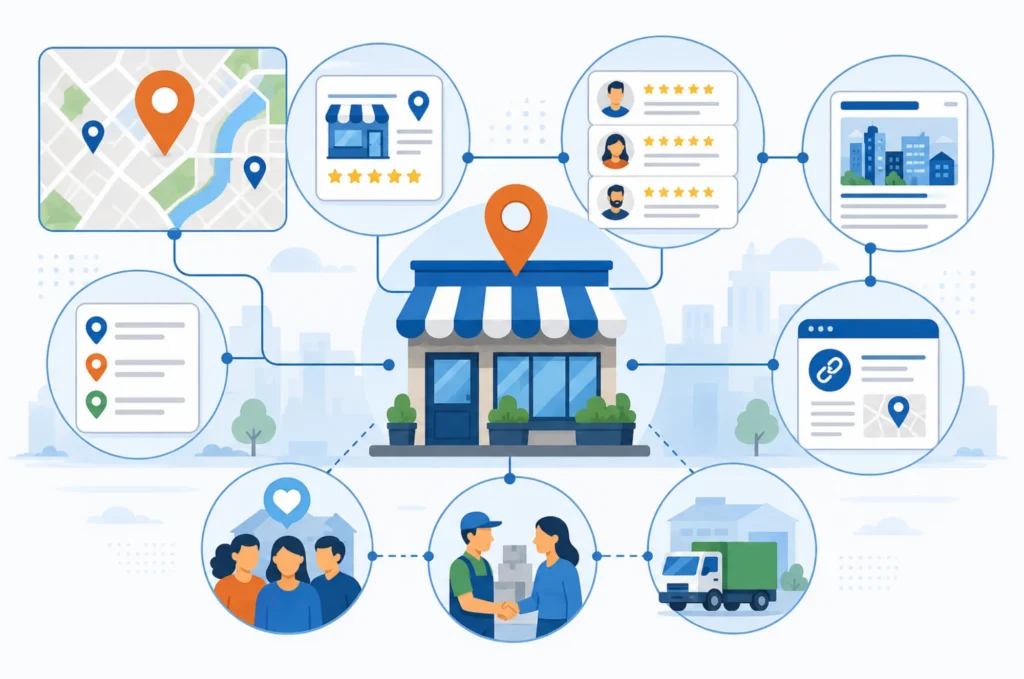
Improve Your Google Business Profile
Use the correct business name, category, hours, services, photos, and website link. The profile should reflect current operations and service areas. Accurate profile information also supports voice search and local SEO because search assistants rely on consistent business details. False locations and keyword-stuffed business names can create trust and policy problems.
Earn and Manage Reviews
Ask customers for honest reviews without controlling the wording. Businesses can also review how Google reviews help SEO by supporting local trust, visibility, and customer decision-making.
Responses should remain factual, respectful, and privacy-conscious. A steady pattern of genuine feedback is more credible than a sudden group of similar ratings.
Reviews can also reveal recurring service questions or customer concerns. Businesses can use that information to improve service pages and support content. Review management should focus on accuracy and customer care rather than keyword repetition.
Build Consistent Local Citations
Business listings should use the same name, address, and phone number. Duplicate, outdated, or conflicting listings can confuse users and search engines. Teams should correct the most visible and trusted sources first.
Gain Relevant Local Links
Local links may come from trade groups, suppliers, community organizations, regional publications, and professional associations. The relationship should be genuine and clearly explained. Paying for an unrelated link on a local website does not create meaningful relevance.
Off-Page SEO Examples
Common off-page SEO examples include a publisher citing original research, a contractor contributing safety advice, or a local business appearing in a regional directory. These actions happen outside the company website and can support visibility, trust, and referral traffic. Each reference should have a clear purpose for the reader.
A software company might publish survey data that journalists cite. A dentist might earn a local association link, while an electrical contractor might contribute expert guidance to a property publication. The strongest examples connect the source, subject, audience, and destination page.
Off-Page SEO Risks
Off-page SEO can create risk when links, mentions, or reviews are artificial, irrelevant, or misleading. Paid links, automated schemes, spammy guest posting, low-quality directories, and repeated commercial anchor text may weaken trust. A safer approach focuses on relevance, editorial value, disclosure, and accurate representation.
Teams should review sponsored placements carefully and use the proper link attributes when required. They should also avoid large groups of links from unrelated websites, repeated exact-match anchors, and pages created only to sell placements. A link should make sense even without an SEO benefit.
How to Measure Off-Page SEO
Measure Off-Page SEO through backlink quality, referring domains, brand mentions, referral traffic, reviews, and conversions. No single metric proves success, so teams should review trends over time and compare them with content, technical, and seasonal changes.
Track new and lost links, anchor text, destination pages, topical relevance, branded searches, and citation accuracy. Review whether referral visitors engage with the page, contact the business, or complete another useful action. This connects external visibility with real user behavior.
Reporting should separate activity from impact. The number of outreach emails or placements shows output, while referral traffic, conversions, visibility, and link quality show whether the work produced value. This distinction prevents link count from becoming the only goal.
Off-Page SEO Services
Off-page SEO services may include backlink research, prospect qualification, outreach, digital PR, citation work, review support, monitoring, and reporting. A provider should explain how it selects websites, handles paid placements, evaluates quality, and protects the client’s reputation.
Businesses may seek outside support when they lack research tools, outreach capacity, publisher contacts, or review processes. Provider selection should focus on transparency, relevance, sample reporting, communication, and process. Guarantees of specific rankings or fixed link quantities deserve careful review.
A credible provider should show how each placement connects to the target page and audience. It should also explain which tactics it will not use. Clear limits can be as useful as a list of services.
Off-Page SEO for AI Search
AI search systems may use external references to identify brands, entities, subjects, and trusted sources. Consistent mentions, credible citations, accurate business details, and clear authorship can help systems recognize relationships across the web. The exact effect varies by platform and query.
Websites should not create artificial mentions solely for AI visibility. Source quality, relevance, accuracy, and consistency remain more useful than volume. The same content and reputation standards that support search visibility also support clearer brand recognition.
Off-Page SEO Checklist
A monthly checklist helps teams maintain focus, find problems, and identify new opportunities.
- Review new, lost, and broken backlinks.
- Check link relevance, placement, and anchor text.
- Monitor mentions, reviews, and citation accuracy.
- Find outreach and digital PR opportunities.
- Review referral traffic, conversions, and branded searches.
- Update prospect lists based on quality and topic fit.
Frequently Asked Questions
What Is an Off-Site SEO Example?
An industry publication linking to a company’s original research is an off-site SEO example. Other examples include reviews, interviews, local citations, expert quotes, podcast appearances, and brand mentions.
Is Off-Page SEO Only Link Building?
No. Off-Page SEO also includes digital PR, reviews, citations, brand mentions, local visibility, community participation, and external reputation management. Link building remains one part of the wider process.
How Long Does Off-Page SEO Take?
Some links or mentions may appear within weeks, while reputation growth often takes several months. Timing depends on the industry, content quality, outreach process, publisher schedules, and competition. No fixed period guarantees ranking changes.
Does Social Media Improve SEO?
Social media can improve content discovery, visits, mentions, and link opportunities. It does not replace useful content, strong technical SEO, or relevant backlinks. Its main value often comes from distribution and relationship building.
Can Off-Page SEO Hurt Rankings?
Yes, manipulative tactics can create risk. Link schemes, irrelevant placements, fake reviews, and repeated commercial anchor text may weaken trust and search performance. A careful strategy focuses on real relevance, clear disclosure, and editorial value.