
The safest approach is to treat reciprocal references as helpful citations. They should not act as a shortcut for authority. Good examples include partner pages, sponsor mentions, resource citations, and case studies. SSinvent reviews this topic through relevance, intent, placement, and citation quality.
Key Takeaways
- A reciprocal arrangement happens when two sites agree to reference each other. It can be useful when both citations help users and connect related sources.
- These arrangements become risky when they exist mainly to affect rankings, increase referral volume, or control anchor text. Repeated patterns can look like a link scheme.
- Safe examples include partner pages, sponsor mentions, resource citations, and case studies with a clear relationship. Each reference should make sense even if search rankings did not matter.
- Backlink exchange platforms often carry more risk because they can create repeated patterns across many domains. Site relevance, page quality, anchor text, and user value should guide each review.
- Better options include digital PR, guest posts, linkable assets, and SEO strategies without link building. These methods can earn quality backlinks without depending on reciprocal arrangements.
What Is Reciprocal Referencing in Search
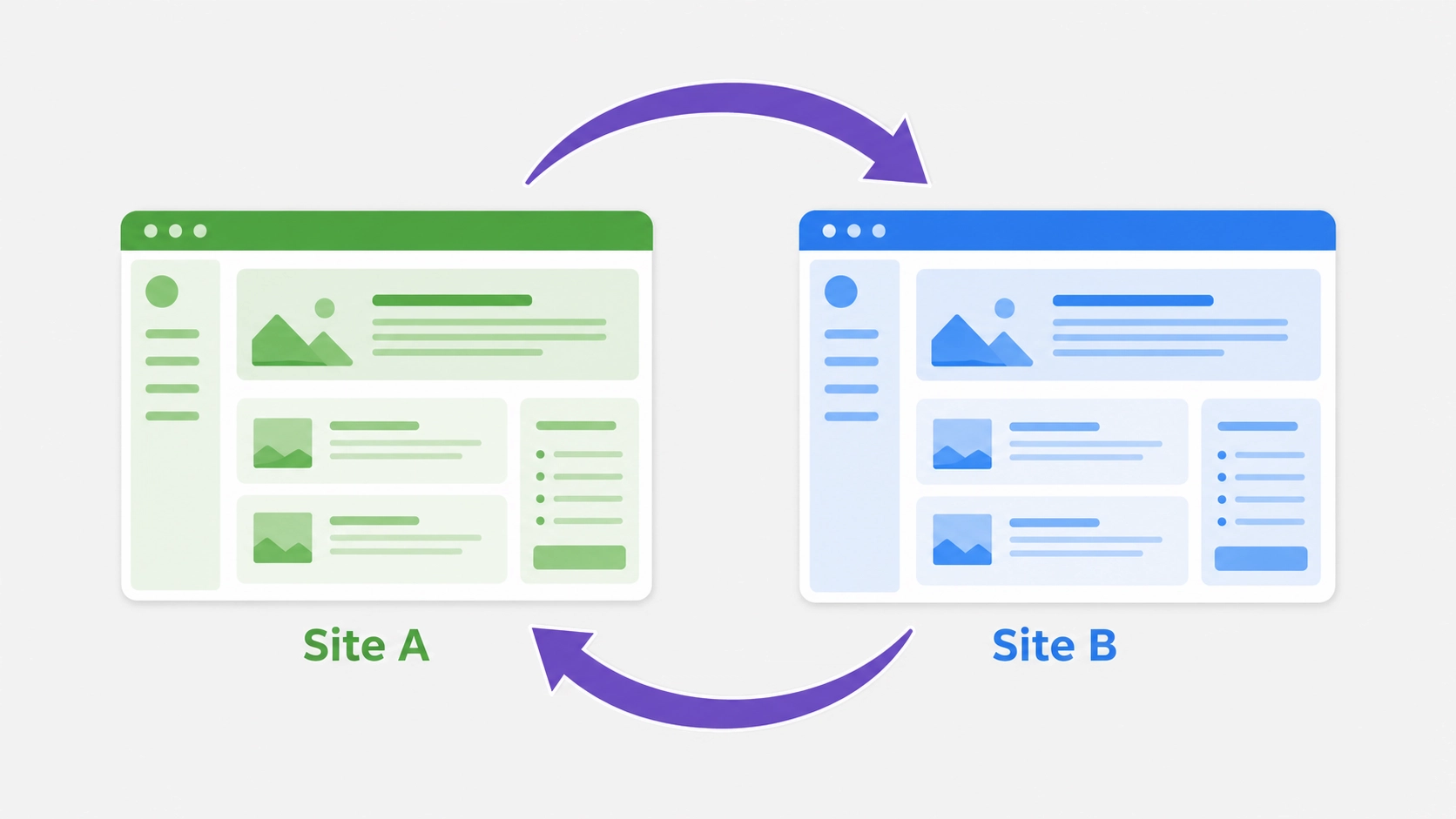
A reciprocal swap occurs when one site cites another in return for a citation. This can be direct. Site A references Site B, and Site B points back to Site A.
It can also be indirect. Site A points to Site B, Site B points to Site C, and Site C points back to Site A. This setup can carry more risk if the goal is to hide a planned swap.
The purpose is often to gain a perceived seo benefit from added references. Search engines use citations as signals. They also review context, quality, and intent. A reciprocal citation can be natural when it helps users find related information.
Are Website Citations Still Relevant
Website citations still matter because they help search engines find pages. They also help search systems understand how sources relate to each other. They can support authority when they come from trusted, useful, and related pages.
A stronger profile usually includes editorial mentions, branded references, and topic-relevant citations from credible sources, which are also core ideas in netlinking SEO. Quality matters more than volume. A few strong references can be more useful than many weak ones.
Reciprocal references are common across the web, but that does not always mean they are safe. The key difference is whether the citation helps users and fits the page context. A natural mention can support discovery and trust, while a repeated or forced pattern can create risk.

Is an SEO Link Exchange Safe?
An SEO link exchange can be safe when the connection is natural, relevant, and limited. It becomes risky when the main goal is to trade authority signals without helping users. The type of link, page context, and sitewide pattern all matter.
Safe vs Risky Reciprocal References
A safe reciprocal reference helps the reader understand a real relationship between two sources, similar to how contextual links in SEO should support the page topic and user intent. The sites are related. The pages have useful content. The anchor text also fits the sentence naturally.
A risky arrangement exists mainly to pass authority, control anchor text, or increase citation volume. It may not help the reader. It may also create a pattern that search engines can detect.
Safe signals include:
- Related topics
- Real business or editorial context
- Useful destination pages
- Natural anchor text
- Limited reciprocal patterns
Risky signals include:
- Unrelated websites
- Repeated exact-match anchors
- Thin guest posts
- Large swap networks
- Sitewide or repeated cross-referencing
Why Search Engines Dislike Manipulative Swaps
Search engines do not object to every reciprocal citation. They dislike patterns that try to manipulate authority signals. These patterns can make rankings less useful for searchers.
The main issue is intent. If the reference helps users, it has a clearer purpose. If the main goal is to manipulate rankings, the practice may resemble a link scheme.

Excessive Reciprocal Linking
Excessive link exchanges happen when a site repeats the same pattern across many pages or partners. This can create a clear footprint. A few relevant references may be normal.
Risk grows when swaps repeat with weak context. The risk also increases when the same domains recur. This can make the arrangement look planned instead of useful.
Reciprocal Citation Platforms
Some websites and platforms connect site owners who want reciprocal placements. These services may offer lists, groups, or marketplaces. Users can then trade citations with other site owners.
The main concern is that these systems often value volume over relevance. They can create repeated patterns across many domains. Search systems may notice shared users, repeated anchors, or similar placement behavior.
When to Avoid a Reciprocal Placement
Avoid this arrangement when the other website has no clear connection to your topic. A weak match can make the reference look forced. The citation should make sense to the reader first.
A swap is also risky when the page exists mainly to host outbound references. You should avoid it when the other site demands exact-match anchor text. You should also avoid it if the site is part of a large backlink exchange network or uses cross-linking across many unrelated pages.
Safe Reciprocal Reference Examples
Safe examples usually come from real relationships and useful content. The reference should help the reader understand why both websites are connected. Each mention should make sense on its own, even without search ranking value.
- Example 1: A web design agency cites its hosting provider in a guide about website speed. The hosting provider lists the agency on a partner page because the agency builds client sites on that platform. This works when both pages explain the relationship and help users choose a service.
- Example 2: A conference page lists a software company as an event sponsor. The software company publishes a recap of the event and references the conference page. This works because both mentions identify real participation.
- Example 3: A marketing blog cites a free analytics checklist from another website. That website later references the marketing blog in a resource section about reporting tools. This works when both resources are useful, and the anchor text sounds natural.
How to Review a Reciprocal Placement
A review should start with one question. Would the reference still make sense without ranking goals? If the answer is yes, the placement may have a stronger editorial reason. If the answer is no, the swap may need to be changed or avoided.
Use this test: would you keep the citation if Google ignored it completely? For larger sites, a structured enterprise link-building framework can also help teams review placements with more control. Review site relevance, page quality, anchor text, and citation patterns. A simple spreadsheet can help track source URLs, target URLs, anchors, and relationship context.
A useful audit should compare outgoing citations with incoming references. Look for repeated domain pairs, repeated anchors, and pages that exist only to host outbound references. These patterns matter more than one isolated reciprocal mention.
Practical Review Example
A marketing agency may cite an analytics platform from a reporting guide. The analytics platform may reference the agency on a partner page or in a case study. This looks safer when both pages are useful, and the relationship is clear.
The same setup becomes risky when both sites repeat exact-match anchors across unrelated posts. It also becomes weaker when the pages are thin. In that case, the sites should adjust the placement, change the anchor, or remove the swap.
Better Alternatives to Reciprocal Swaps
Many sites can build authority without relying on swaps. Better options include digital PR, guest contributions, and citation-worthy assets. Examples include studies, calculators, checklists, templates, and detailed guides.
These methods support link building by earning references through useful content. They do not depend on a trade. This can reduce pattern-based risk and create more natural mentions over time.
SEO Link Exchange Best Practices
A careful approach starts with relevance, editorial value, and limited use. Each reference should connect to the topic on the page. It should also help users understand the destination.
Use these best practices:
- Keep each reference relevant to the page topic.
- Make sure the placement helps users understand the destination.
- Use reciprocal mentions sparingly.
- Vary anchor text so the pattern looks natural.
- Avoid repeated patterns across unrelated pages.
- Keep a record of each placement for future audits.
Quick Answers About Reciprocal Backlinks