
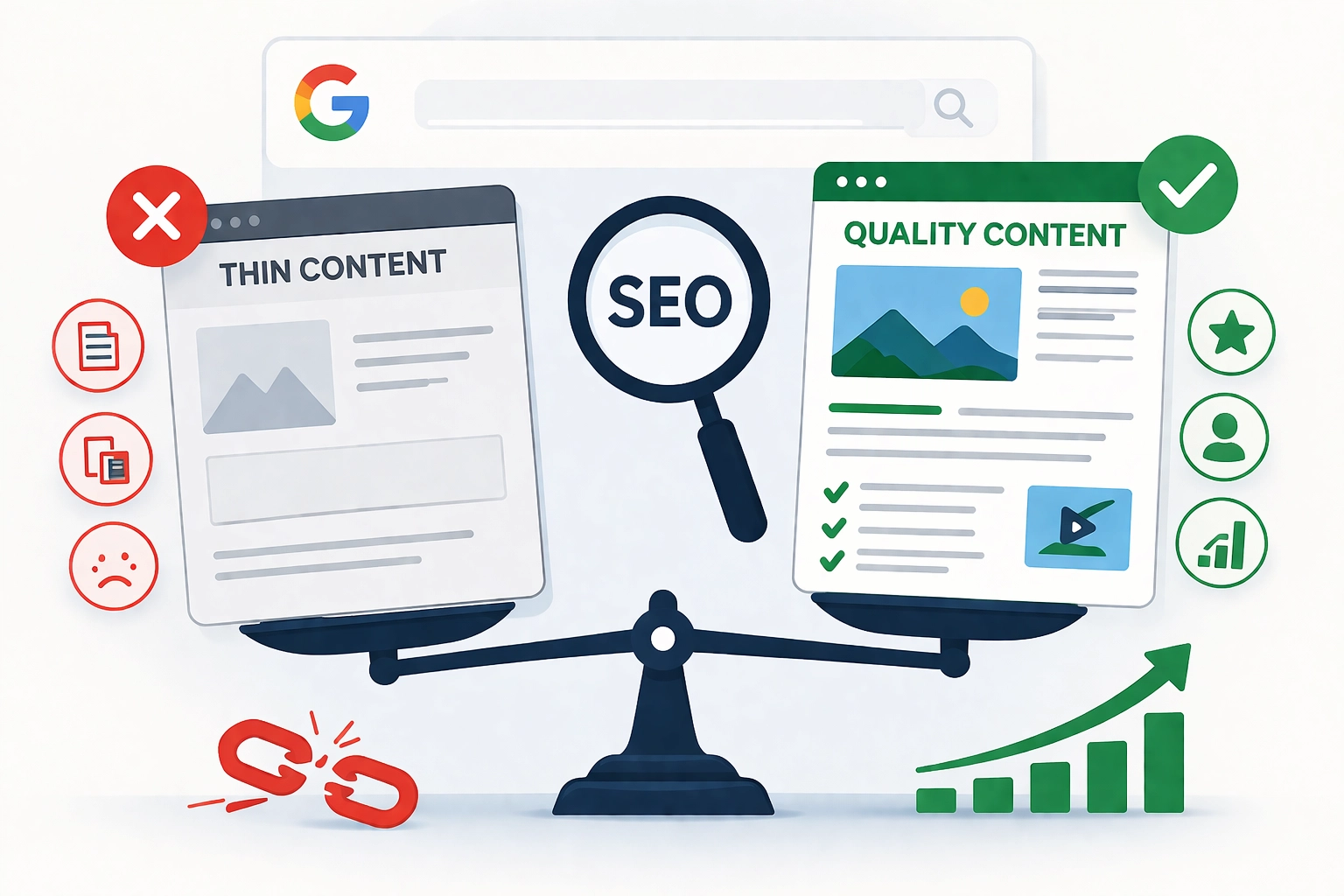
Fixing Thin Content in SEO requires a clear and simple process. It includes content audits, keyword research, and technical fixes such as canonical tags and noindex directives. Each page should give clear, useful, and original information that matches search intent. At SSinvent, teams led by Rodrigo César and Christopher Cáceres use these methods to review and improve the material across large sites.
Key Takeaways
- Thin Content in SEO refers to pages that lack real value, such as low-information, duplicate, or auto-generated content, which can hurt rankings or indexing.
- Search engines review content using signals such as relevance and originality and, in some cases, may apply a manual action.
- Common types include duplicate pages, low-value affiliate pages, scraped content, and empty category pages that do not match user intent.
- Fixing low-value pages means auditing pages, improving useful ones, merging duplicates, and using noindex when needed.
- Strong results depend on high-quality material, a clear structure, and regular updates that align with search intent.
What Is Thin Content in SEO
Thin content refers to pages that do not give enough value, depth, or clear information. These pages often have low word count, little detail, or repeated text across URLs. Low-value pages can appear in blogs, product pages, or category pages with no useful description.
Thin-content issues often arise from creating many pages without adding value. For example, creating many original pages with minor changes can reduce site quality. This can confuse search engines and make ranking harder. As a result, these pages may not perform well.
Thin vs Duplicate Content
Duplicate content means the same or very similar text appears on more than one page. Thin content means the page does not give enough value, even if it is unique. Both can create duplicate content issues and confuse search engines.
Scraped content often creates both problems because it copies text without adding value. Improper use of canonical tags can also prevent similar pages from being grouped. Knowing the difference helps decide whether to improve or merge content.
Why Is Thin Content Bad for SEO
How Google Evaluates Thin Content
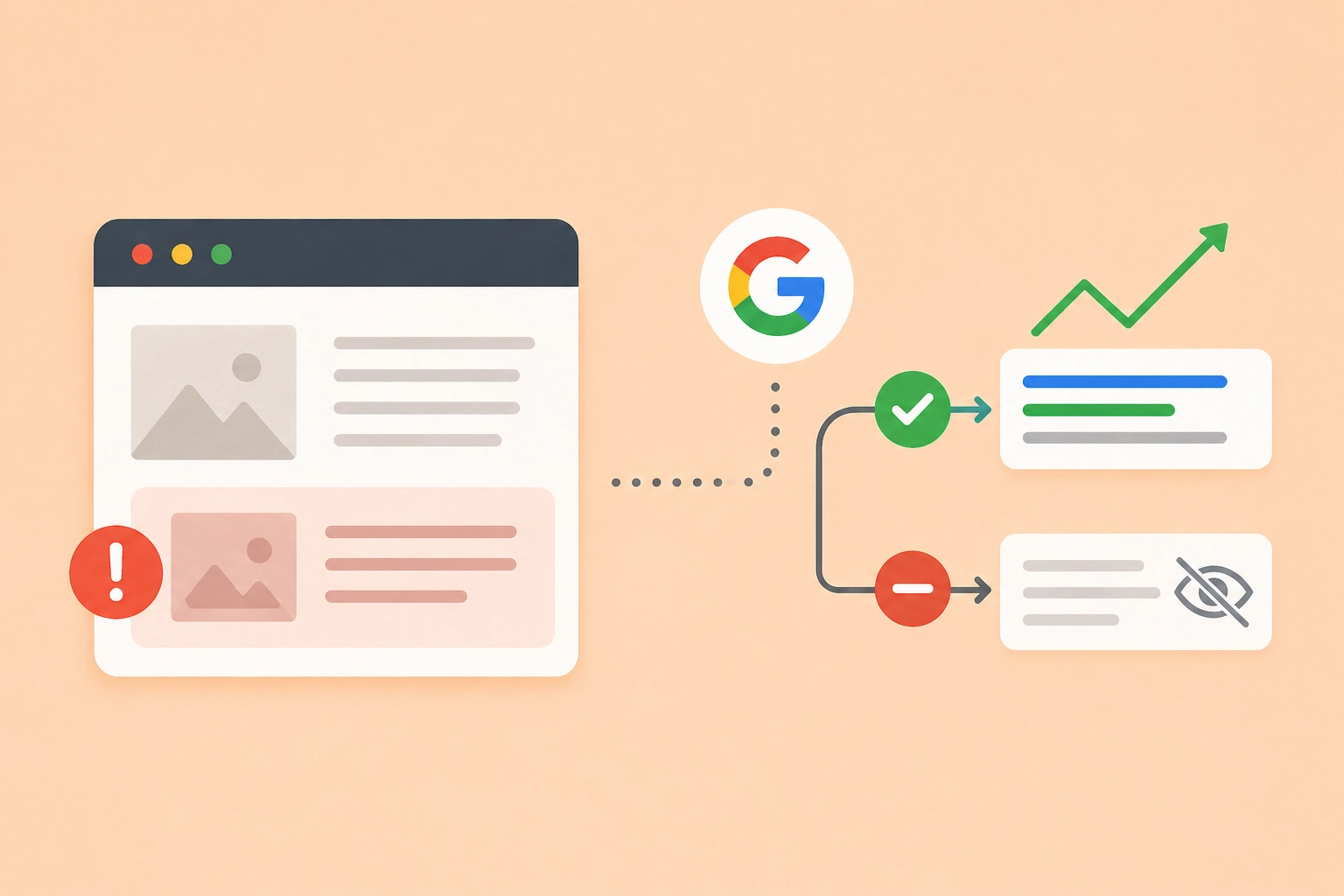
Search engines evaluate pages using signals such as relevance, originality, and user actions. Low-value pages often lack these signals, so they may not be indexed or ranked. In some cases, many thin content issues can lead to a manual action.
Search engines may ignore weak pages or lower their value in results. This affects how pages are crawled and ranked over time. Fixing these issues helps improve site performance.
Ranking Impact
Low-value pages can lower rankings because they do not meet quality standards. Pages with little detail are often less useful than other results. This makes it harder for them to rank.
Sites with many thin, low-value pages may see wider drops in rankings. Tools like Google Search Console can help find these problems. Fixing them early supports better results.
Types of Thin Content
Duplicate and Near-Duplicate Pages
Duplicate material issues occur when similar pages exist across multiple URLs. This includes product versions or repeated topics. These pages do not add new value.
Near-duplicate pages can weaken relevance signals. Search engines may not know which page to rank. Merging pages helps improve clarity.
Low-Value Affiliate Pages
Some affiliate pages link only to products and lack useful details. These pages lack reviews, comparisons, or insights. This makes them low-value.
Quality affiliate pages add useful explanations and real details. This helps users make better choices. It also improves page quality.
Auto-Generated Content
Auto-generated material is created with templates or tools without real input. These pages often repeat text or miss key details. They rarely help users.
Scraped content is also low quality because it copies text without adding value. This increases duplication and weakens the pages.
How to Identify and Detect Thin Content
Content Audit Basics
A content audit is a structured review of all pages on a website to evaluate their quality, purpose, and performance. It involves collecting data such as traffic, rankings, engagement, and word count to identify low-quality pages. This process helps identify pages that do not meet user intent or fail to provide useful information.
Keyword research supports the audit by showing what users are searching for and how each page aligns with that demand, and by using structured approaches, such as SEO formulas, to guide content decisions.
Each page should focus on one clear topic and serve a specific purpose. This reduces overlap, avoids duplicate pages issues, and improves overall site structure.
Thin Content Checker Tools
Tools help find low-value pages by showing low traffic, low engagement, or duplicate content issues. Google Search Console can show indexing and performance data. This helps spot weak pages.
Other tools can find missing data or repeated text. Using more than one tool gives a better view. This supports better decisions.
How to Fix Low-Quality Material in SEO
Improve or Expand Content
Fixing low-value pages means adding clear and useful details. This can include examples, steps, or better explanations. The goal is to create quality material that matches search intent.
For example, adding details to category pages helps users understand options. This improves both user experience and search results.
Merge or Remove Pages
Merging pages helps fix duplicate material issues and combine value. Removing weak pages improves overall site quality. This makes it easier for search engines to understand the site.
Pages without a clear purpose should not stay. Removing them helps improve structure and indexing.
Use Noindex When Needed
Some pages do not need to appear in search results, like filter pages. Using noindex keeps them out of search results. This avoids duplication.
Noindex helps focus on important pages. It improves site structure and clarity.
Thin Content SEO Template
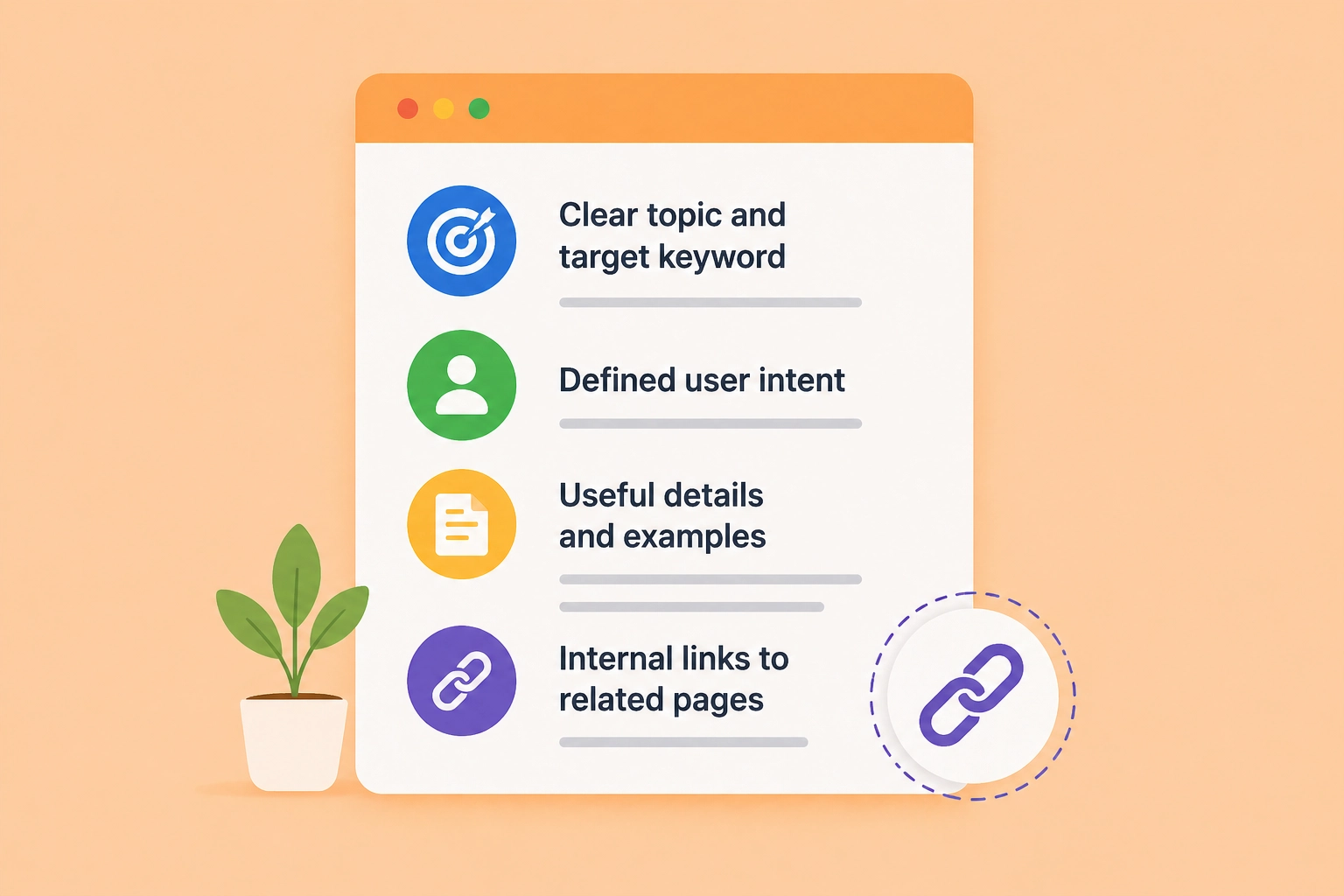
A simple template helps prevent low-value pages:
- Clear topic and target keyword
- Defined user intent
- Useful details and examples
- Internal links to related pages, supported by contextual links in SEO, help search engines understand page relationships
This helps keep the text clear and consistent.
SEO Content Best Practices
SEO Guidelines for Content Writers
Writers should focus on clear, useful, and relevant material. Each page should have a purpose and give real value. Avoid writing solely to target keywords, as practices like SEO keyword stuffing can reduce material quality and lead to low-quality issues.
Clear writing helps both users and search engines. It reduces thin material issues.
Focus on Search Intent
Search intent shows what users want from a query. Text must match that need. If it does not, users may leave quickly.
Keyword research helps find intent and guide the material. This improves results.
Add Depth and Value
Depth means covering a topic well. Value means giving clear and useful information. Together, they create quality pages.
Pages with strong detail perform better. They reduce issues with low-value pages.
Update Content Regularly
Content should be updated to stay useful and correct. Old pages can become thin over time. Regular updates keep the pages strong.
Updating it helps maintain quality. It also supports better search performance.
Low-quality pages can affect how your site is understood and ranked over time. A clear review of your pages helps you find gaps and improve overall quality. Small changes in structure, material, and intent can make a big difference.
If you need a deeper evaluation, consider consulting with a team that can review your material and provide a clear plan. This helps ensure your pages meet search standards and user needs.