
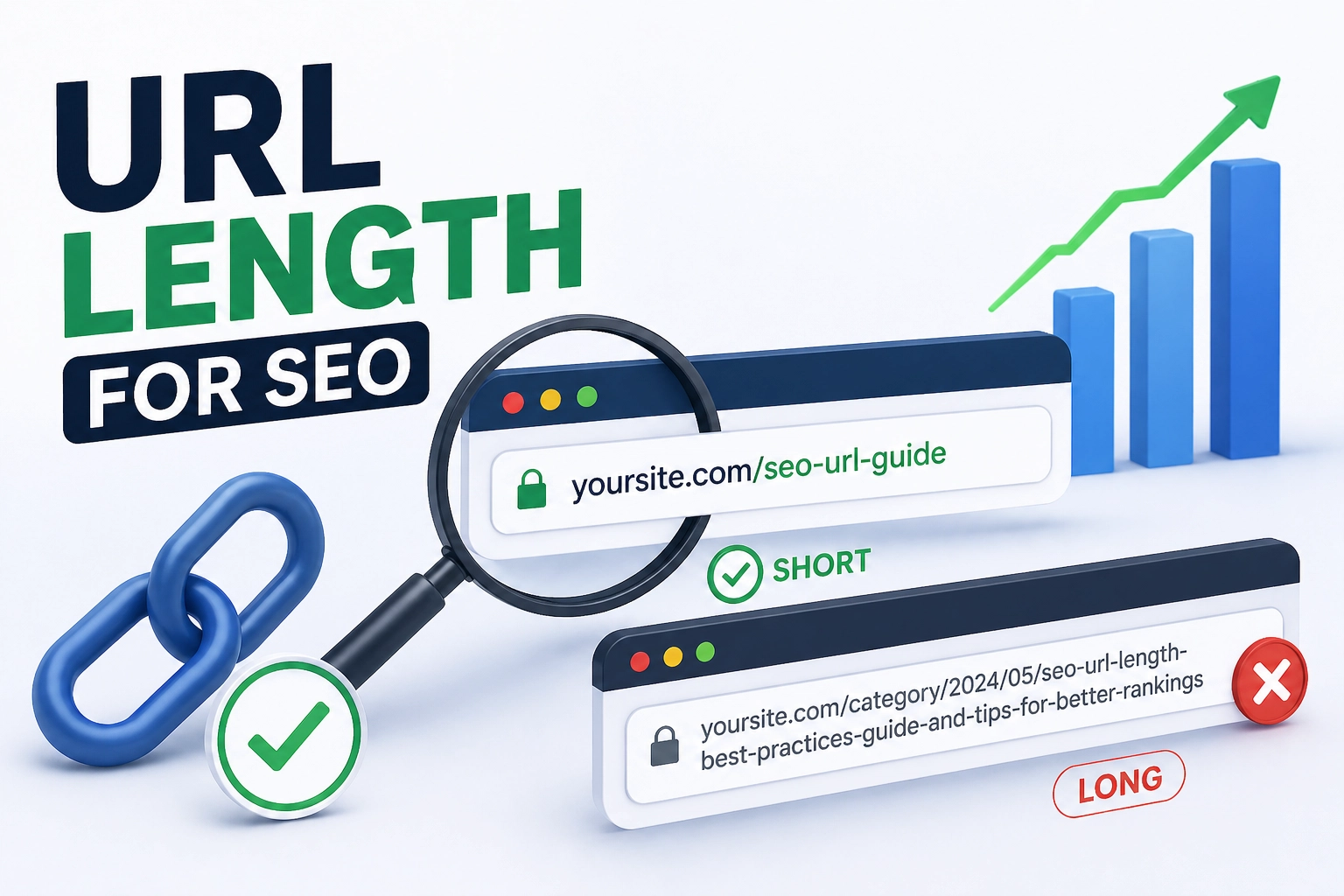
While browsers can handle URLs up to about 2,048 characters, concise, descriptive structures improve crawl efficiency and help search engines better understand page content. Using lowercase words, hyphens in keywords, and avoiding unnecessary parameters helps create a clean, search engine-friendly format.
At SSinvent, this topic is analyzed from a technical perspective to clarify how URL structure impacts performance beyond rankings. The following sections explain how URL length, structure, and best practices work together in search engine optimization.
Key Takeaways
- URL length for SEO does not directly impact search rankings, but it influences usability, clarity, and user interaction with search results.
- Shorter URLs are easier to read and share, which can improve click-through rates and help users understand page content before clicking.
- Search engines understand both long and short URLs, but clear structure and logical hierarchy support better crawling and indexing.
- The ideal approach is to create concise, descriptive URLs using keyword-rich terms while avoiding unnecessary parameters and clutter.
- Technical issues with URL length usually arise from complex parameters or duplication, not from exceeding a specific character limit.
Does URL Length Affect SEO Rankings?
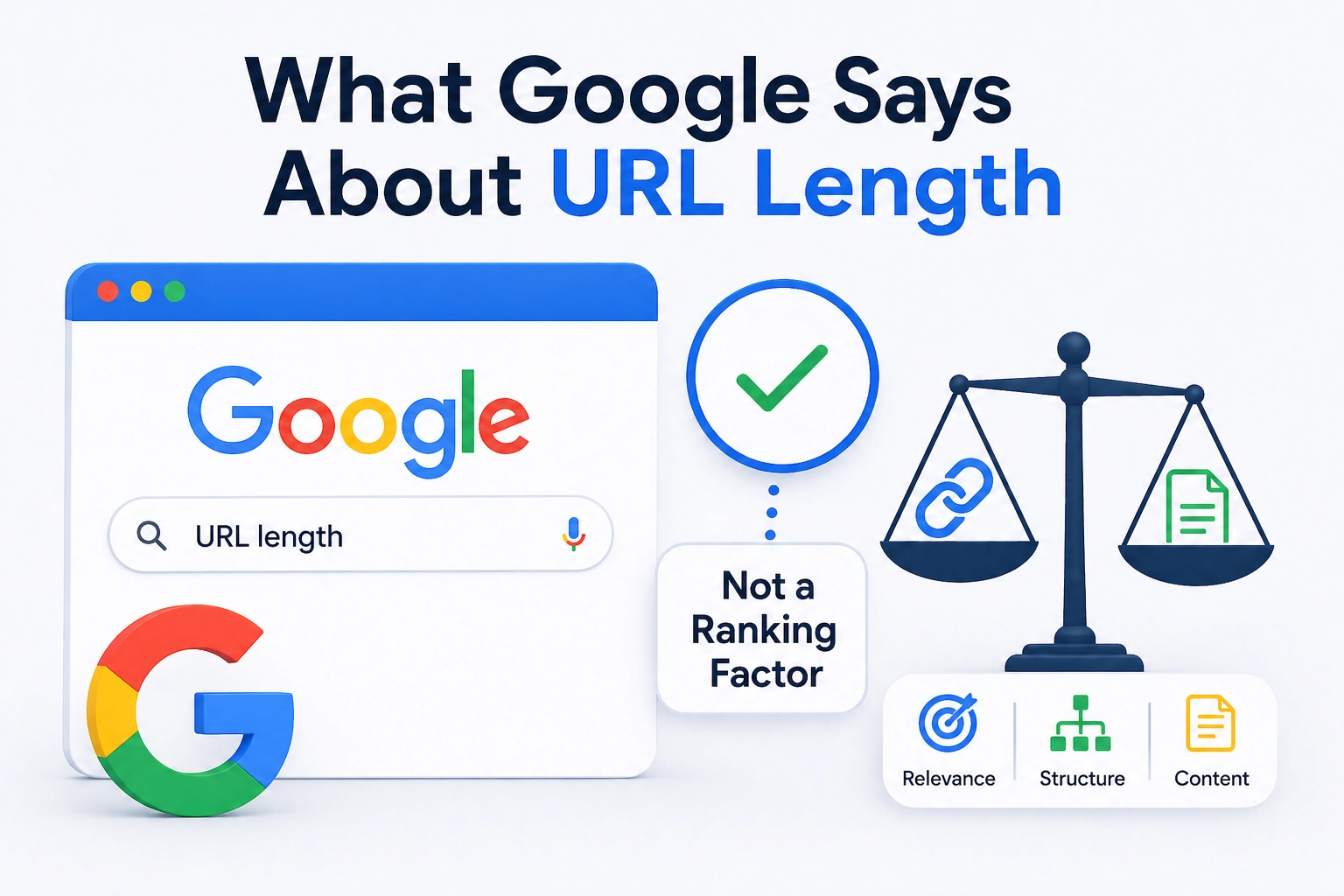
URL length alone is not a ranking factor in search engine optimization. According to John Mueller, a public spokesperson for Google Search, confirms that the length of a URL does not directly influence search rankings. Search engines evaluate relevance and page content rather than technical length.
However, shorter URLs can improve usability. Users can scan them quickly in search results, which may improve click-through rates. This shows that URL length affects behavior, not rankings.
Search engines understand URLs as part of the page structure. A clear and logical format helps with crawling and indexing. This supports both users and search engine systems.
Clarifying Rankings vs Usability Signals
URL length does not directly influence rankings, because search engines evaluate relevance, page content, and intent rather than the size of a URL. For example, a long URL like /blog/seo/url-length-best-practices-guide can rank above a shorter one if the content better matches the query. This shows that search rankings depend on content quality and alignment with user intent, not URL length.
However, shorter URLs often perform better in terms of usability. A URL like /url-length is easier to read, fits fully in search results, and is simpler to share. This can improve click-through rates because users can quickly understand what the page is about. The impact comes from user behavior, not from a direct ranking signal.
What Google Says About URL Length
Google has clarified that URL length is not a ranking factor. Search engines understand URLs of varying lengths and prioritize relevance, structure, and page content instead. This means there is no strict limit for ranking purposes.
Interpreting Google’s Position in Practice
Search engines understand URLs based on structure, hierarchy, and keywords. A clear URL helps define page content and supports indexing. This improves how search engines understand relationships between pages.
In practice, shorter URLs improve clarity. They help users and search engine systems process information faster. This reinforces that structure matters more than length.
Rodrigo César and Christopher Cáceres have both emphasized that clarity and organization are more important than strict limits. Their approach focuses on how search engines interpret signals rather than arbitrary metrics.
Why SEO Tools Flag URL Length
SEO tools often flag long URLs because they focus on usability. They recommend shorter URLs to improve readability and consistency. This can create confusion because these warnings are not based on ranking factors.
Tools identify patterns like clutter, repeated words, or parameters. These issues can reduce clarity for users and make it harder for search engines to understand them. This is why tools highlight them.
When to Trust SEO Tools and When to Ignore Them
SEO tools should be used as guidance, not strict rules. Some warnings are useful, while others are not critical.
- Trust warnings when URLs are complex or unclear
- Ignore warnings when URLs are long but still readable
- Focus on clarity instead of reducing length alone
Ideal and Maximum URL Length for SEO
Ideal URL Length for SEO
There is no strict limit required by search engines, but a practical range for SEO-friendly URLs is usually under 60 to 75 characters. Keeping URLs within this range helps ensure they display fully in search results and remain easy to read. Shorter, descriptive URLs also lead to higher click-through rates and make it easier for users to understand the page content.
Maximum URL Length for SEO
URL length limits are defined by browsers and servers, not search engines. Most systems support URLs up to about 2,000 characters, but very long URLs may not display in full or can cause handling issues. Keeping URLs shorter helps maintain clarity and avoids technical problems.
SEO-Friendly URL Structure and Length
An SEO-friendly URL should be clear, logical, and descriptive. It helps users understand the page content and helps search engines understand how pages are connected.
Key elements include:
- Clear words that describe the topic, avoiding confusion with SEO abbreviations
- Logical structure
- Minimal unnecessary characters
Maintaining an appropriate SEO-friendly URL length ensures the URL remains readable and effective.
URL Length Best Practices
Keep URLs Short and Clear
The goal is to create URLs that are easy to read and understand. Short URLs improve usability and make content easier to access.
Use Keywords Naturally
Using keyword-rich terms helps search engines understand the topic. Avoid overloading URLs with keywords, as this reduces clarity.
Avoid Parameters and Clutter
Complex parameters can make URLs harder to read and manage. Simplifying structure improves consistency and usability.
Enhancing user experience should guide decisions. Clear URLs help users navigate and trust content.
Impact on User Experience
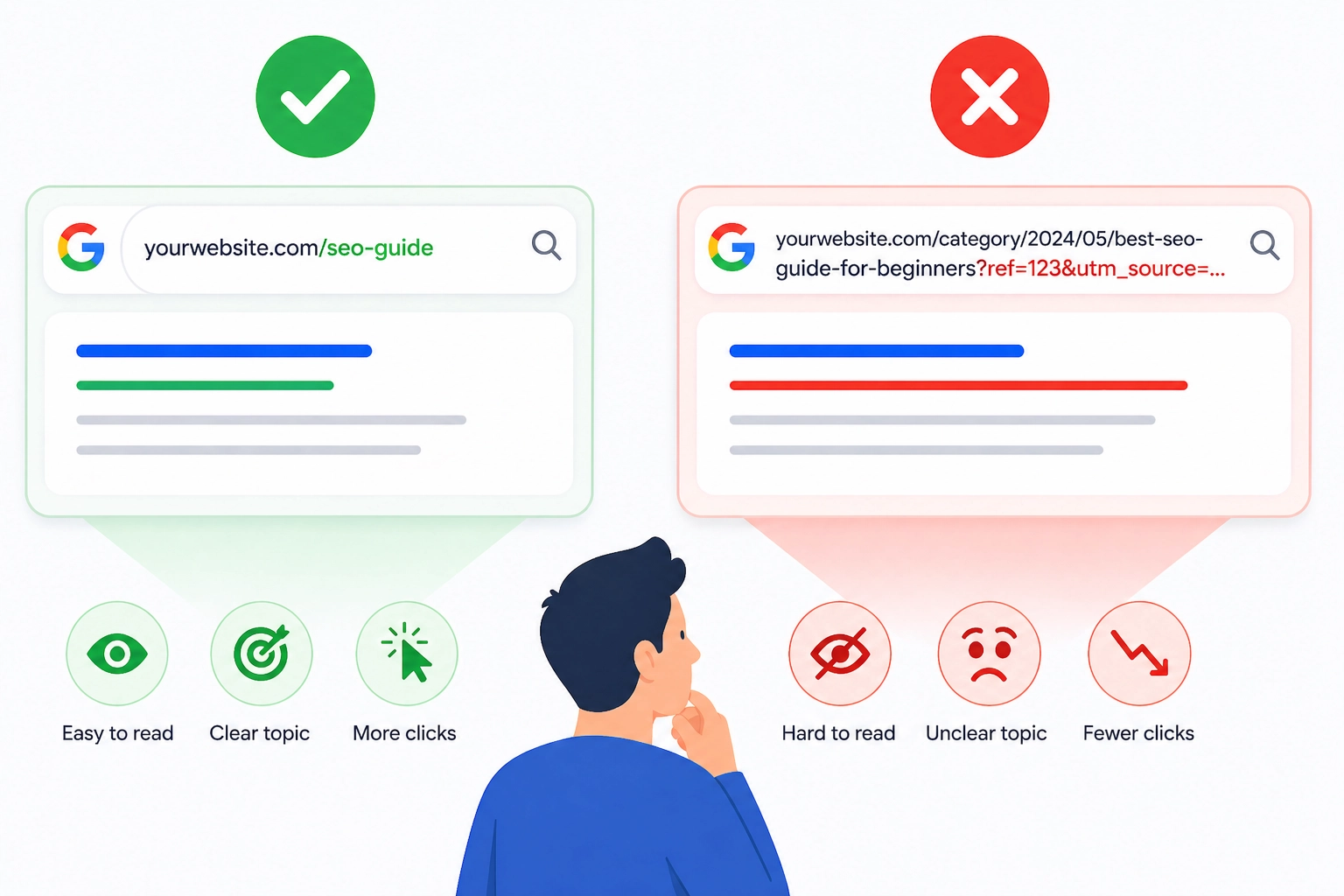
URL length affects how quickly users can read and trust a result. Short URLs are easier to scan, fit fully within search results, and clearly show the page’s topic. This helps users decide faster and can improve click-through rates.
Long or complex URLs with extra words or parameters can look unclear and harder to trust. They may also be cut off in search results, which can hide important context. Keeping URLs concise and descriptive supports better navigation and a smoother user experience.
How URL Length Affects Click Through Rates
Short URLs can improve click-through rates because they are easier to read. Users can quickly understand the page content before clicking.
Impact on Crawling and Indexing
Long and complex URLs can create unnecessary work for search engine crawlers, especially when they include many parameters or variations of the same page. This can lead to duplicate URLs that point to similar page content, making it harder to decide which version to index, especially when using setups like domain forwarding.
As a result, crawl resources may be used inefficiently.
Simple and consistent URLs help search engines understand site structure and relationships between pages. This makes indexing more accurate and reduces the risk of duplicate content issues.
Common URL Mistakes to Avoid
These mistakes often reduce clarity and make it harder for users and search engine systems to process content.
- Overly Long URLs: Long URLs often include unnecessary words or repeated terms. This reduces clarity and usability.
- Keyword Stuffing in URLs: Adding too many keywords makes URLs difficult to read. A balanced approach keeps them clear and search engine-friendly.
- Dynamic URL Issues: Dynamic URLs with many parameters can create confusion. Simplifying them improves readability and structure.
If you want a clear review of your URL structure and how it supports your SEO strategy, you can schedule a session with the team. This allows you to identify practical improvements and ensure your site is easy for both users and search engines to understand.