
Many businesses want to reach people searching for nearby services. Hyperlocal SEO services focus on this goal by using location signals and hyperlocal keywords to match search queries with a specific area.
The method includes optimizing your website, creating landing pages for service areas, and managing signals such as local citations and customer reviews. Search engines use these signals to show relevant local search results on mobile. Research teams at SSinvent study how location-based search terms influence online visibility.
Key Takeaways
- Hyperlocal SEO services focus on connecting businesses with nearby users by using location signals, hyperlocal keywords, and content that targets a specific area or neighborhood.
- Search engines evaluate factors such as search terms, local citations, customer reviews, and business listings to determine which companies appear in local search results and the Map Pack.
- Creating landing pages for service areas and using localized keywords helps search engines understand where a business operates and which search queries it should match.
- Hyperlocal strategies also rely on consistent location data, community references, and signals from platforms like social media to strengthen a business’s online presence in a specific location.
- Tracking local rankings, traffic patterns, and conversion rate metrics helps businesses evaluate how their hyperlocal optimization efforts influence visibility and user engagement.
What Are Hyperlocal SEO Services
Hyperlocal SEO services help businesses appear in local search results within a small geographic zone. This area may be a neighborhood, district, or nearby block. The strategy targets users searching within a specific area rather than an entire city.
The process uses location signals, search terms, and structured website data. It often includes localized content, landing pages, and local citations. These signals help search engines confirm that a business operates in a certain place.
What Is Hyperlocal SEO and How It Works
Hyperlocal SEO helps search engines connect results with a user’s location. When people type search queries that include a specific location, the system returns nearby businesses. It compares the search terms with business listings and website content.
Search engines check several signals during this process. These include addresses, service areas, and references to the local community. Customer reviews and directory listings also confirm the connection between a business and a place.
How Hyperlocal SEO Targets Neighborhood Searches
Neighborhood searches often contain a localized keyword. A user might search for a service by district or street name. These search queries indicate that the user wants results near that location.
Businesses respond by creating content tied to those areas. They build landing pages that describe services in a specific location. This structure helps search engines match the content with location-based searches.
Why Hyperlocal SEO Matters for Businesses
Local visibility is important because mobile search continues to grow. Many people search while traveling or walking through a city. They want quick answers for services near their current location.
Hyperlocal optimization helps businesses appear in local search results. When a company clearly shows its service areas and location signals, search engines can connect it with nearby users.
Does Local SEO Still Work Today
Local SEO still affects how search engines organize search queries. When people include a location in their search terms, the system prioritizes nearby results. Businesses with clear location data are easier to match with those searches.
Smartphones also increase the importance of location signals. Many users perform mobile searches when they need a service quickly.
Local Search Intent and Customer Behavior
Local search intent describes what users expect when they search for nearby services. Many people include place names or landmarks in their search queries. This shows they want results in a specific area.
Businesses can study these patterns to identify useful search terms. A localized keyword linked to a neighborhood often signals strong intent.
Benefits of Neighborhood-Level Visibility
Neighborhood visibility helps users find services faster. When a result indicates a clear location, users quickly decide whether the service meets their needs.
Clear location signals can also increase the likelihood of conversion. People searching within a short distance often need a service soon.
Hyperlocal Keyword Strategy
Keyword planning is central to hyperlocal SEO. Businesses look for search terms that combine services with a specific location. These phrases create hyperlocal keywords that match real search queries.
Search engines analyze these keywords to understand the context of a page. When the correct keywords appear naturally, the system can match the page with users searching nearby.
What Are Hyperlocal Keywords
Hyper-local keywords combine a service with a very small location. This location might be a street, district, or landmark. The phrase helps search engines connect the page with nearby users.
These keywords are more precise than general local terms. A city-level term is broader, while hyperlocal keywords target a specific area.
How to Research Neighborhood Keywords
Research often begins by observing how people describe a location. Neighborhood names and landmarks frequently appear in search queries. Keyword tools can reveal common phrases.
Businesses can also study mobile search behavior. Many users search while moving through a city, which reveals common search terms.
Using Hyper-Local Keywords in Content
After identifying keywords, businesses place them in useful sections of a page. Landing pages often include the localized keyword in headings and descriptions.
Keywords should appear naturally within the content. Search engines prioritize meaning and context over repetition.
How Hyperlocal SEO Services Work
Hyperlocal SEO services combine several actions to build location signals. Each step helps search engines understand where a business operates.
The process often includes optimizing your website, managing business listings, and creating location-specific content, which are core practices of a local SEO agency. These elements support a strong online presence.
Neighborhood Landing Page Strategy
Landing pages describe services available in a specific area. Each page usually focuses on a particular neighborhood or district.
The page may reference nearby streets, landmarks, or local events. These details help search engines connect the page with the location.
Google Business Profile Optimization
A Google Business profile provides clear data about a company. It includes the address, contact details, and services.
Customer reviews add more context to the listing. Reviews often mention the specific location where the service occurred.
Local Link Building and Citations
Local citations are mentions of a business on other websites. They appear in directories or community platforms and usually include contact details.
Consistent listings across directories help search engines confirm location accuracy.
Google Map Pack and Local Visibility
The Map Pack is a group of results displayed on search pages as a map. It usually appears when someone searches for a nearby service.
Search engines compare the user’s location with nearby businesses. The system then displays the most relevant options.
How Businesses Appear in Map Pack
To appear in the Map Pack, a business must match both the search query and the location. The search engine checks the service and the distance from the user.
Accurate business listings and citations support this process.
Local SEO Ranking Factors
Several factors influence local rankings. Relevance measures how well the service matches the search terms.
The distance between the user and the business also matters. Prominence includes signals such as customer reviews and online mentions.
Hyper-Local Marketing Strategy
Hyper-local marketing combines several channels that support local visibility. Content, social media activity, and location signals all contribute to a strong online presence.
Researchers such as Rodrigo César and Christopher Cáceres study how these signals interact in search systems.
Combining Content, Maps, and Reviews
Local content helps show that a business understands its community, and it reflects how content marketing helps SEO by strengthening local relevance and visibility. Articles about local events or neighborhoods provide useful context.
Customer reviews and map listings reinforce location signals. Reviews often mention the specific area where the service occurred.
Hyperlocal SEO Within a Broader SEO Strategy
Hyperlocal SEO is part of a broader SEO strategy that often includes technical improvements, keyword research, and 10 proven strategies to boost organic SEO traffic. Businesses often combine different methods to reach different types of search queries.
Professionals such as Rodrigo César and Christopher Cáceres study how these approaches interact within search systems.

What Are the 4 Types of SEO
Search optimization usually includes four main categories:
- On-page SEO – improving website content and structure
- Off-page SEO – building authority through links and citations
- Technical SEO – improving site performance and indexing
- Local SEO – targeting geographic search queries
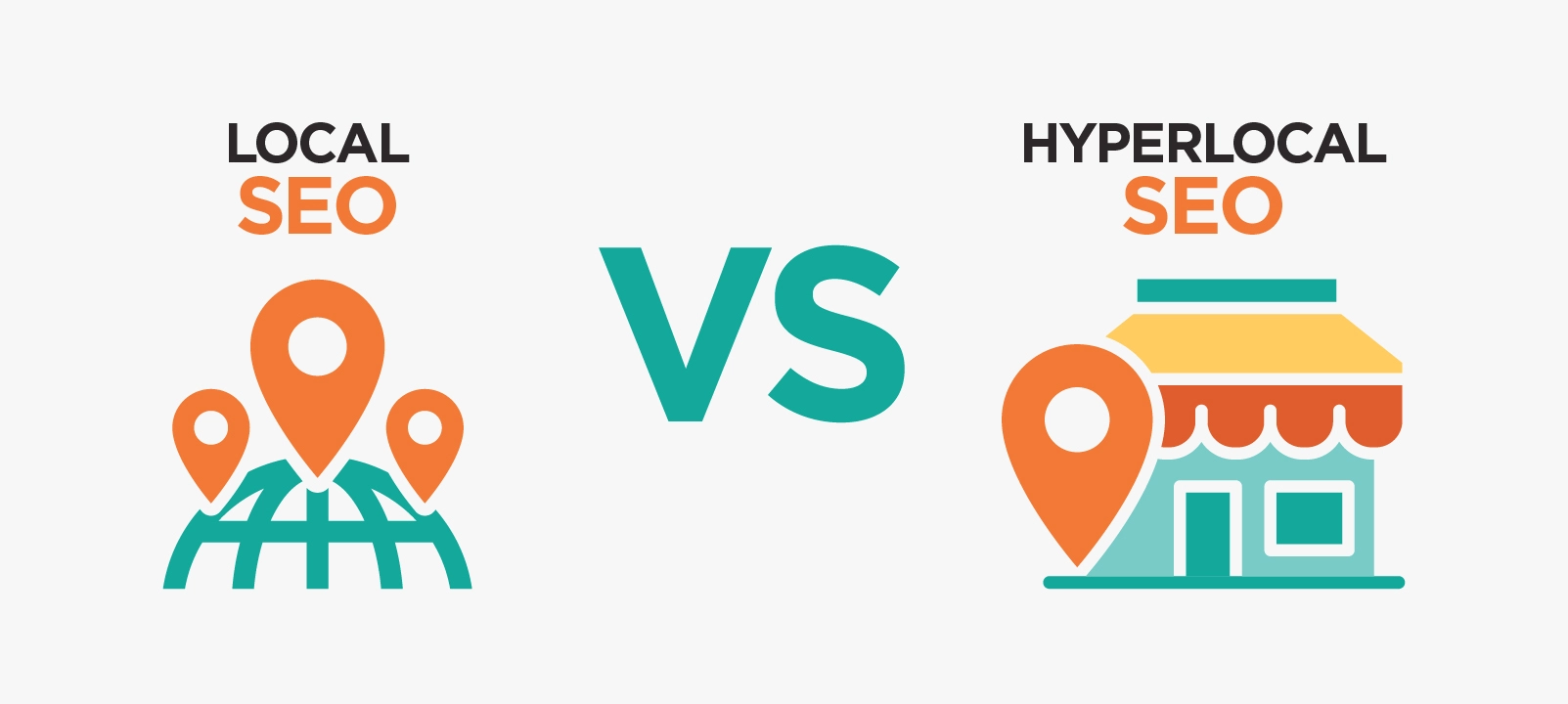
Hyperlocal SEO falls under the local category but focuses on a smaller geographic area.
Understanding the 80/20 Rule for SEO
The 80/20 rule suggests that a small group of actions can produce most results. In SEO, this may mean focusing on the most relevant search terms.
For hyperlocal strategies, businesses often prioritize a few service areas first.
Common Hyperlocal SEO Mistakes
Some websites create many location pages with similar content. This can confuse search engines about which page should rank.
Each page should focus on a different location and contain unique information.
Keyword Cannibalization Across Locations
Keyword cannibalization occurs when multiple pages target the same search terms.
To prevent this, each page should focus on a specific keyword tied to a distinct location.
Thin Content on Location Pages
Thin content appears when pages contain little useful information.
High-quality pages describe services in detail and reference nearby places or community activity.
Measuring Hyperlocal SEO Results
Tracking results helps businesses understand how users interact with location content. Analytics tools reveal traffic patterns and engagement.
Businesses can use this data to adjust their strategy.
Tracking Local Rankings and Map Pack
Ranking tools track how often a page appears in local search results for a specific keyword.
Monitoring Map Pack visibility also shows how strong location signals are.
Measuring Calls, Traffic, and Conversions
Analytics tools show how users reach a website through mobile search or map listings.
Conversion rate metrics, such as calls or form submissions, indicate whether visitors find the information useful.