
CTR SEO refers to how often users click a page after they see it in search results. CTR stands for click-through rate and represents the percentage of clicks relative to impressions on search engine results pages.
This metric matters because it shows how well a page aligns with search intent and captures attention. A strong SEO CTR can increase organic traffic and improve overall visibility. SSinvent, based in Austin, analyzes CTR SEO as part of its technical SEO research, advanced SEO services, and content performance studies.
CTR SEO does not focus only on attracting clicks. It also helps evaluate whether page titles, descriptions, and structured data reflect real user needs. When used correctly, CTR becomes a diagnostic metric that supports data-driven optimization.
Key Takeaways
- CTR (click-through rate) in SEO measures the percentage of clicks a page receives relative to its impressions on search engine results pages, and it helps evaluate how well a listing matches search intent.
- A good SEO CTR depends on ranking position, industry, and SERP features, so performance should be compared against similar pages and queries rather than a fixed benchmark.
- CTR is not confirmed as a direct ranking factor, but higher CTRs can signal strong relevance and should be analyzed alongside engagement and content quality.
- Title tags, meta descriptions, search-intent alignment, and visibility in featured snippets or other SERP features directly influence organic click-through rate.
- Google Search Console provides essential data to track Keyword CTR, impressions, and trends, enabling structured optimization based on real performance metrics.
What Is CTR in SEO?
CTR in SEO measures how many people click a page after they see it in organic search results. To calculate it, divide clicks by impressions and multiply by 100. This is the CTR formula. For example, if a page gets 50 clicks from 1,000 impressions, the SEO Click Through Rate is 5 percent.
Impressions represent how often a page appears for specific search queries. Clicks represent actual visits. The ratio between them shows how effective the listing is at attracting users.
CTR works the same way for organic search results and paid ads, but the context is different. In organic search, the title and meta description influence clicks. In paid ads, the ad copy drives clicks. The math is the same, but user behavior may change.
Here is a simple CTR example in SEO: A page ranks in position three for a keyword with 10,000 search volumes per month. If it earns 800 clicks, the organic click-through rate is 8 percent. This number shows how well the page attracts users for that specific Keyword CTR.
This example also shows why ranking position matters. Pages that rank higher usually receive more visibility and, therefore, more clicks. However, strong titles and alignment of intent can still improve performance even without ranking changes.
What Is a Good CTR for SEO?
A good CTR depends on ranking position and topic. Pages in the first position often earn the highest average CTR. Lower positions usually get fewer clicks. This means a 2 percent CTR may be strong in position eight but weak in position one.
Studies of search engine results pages show that the top three organic search results account for most clicks. This pattern explains why the average CTR drops sharply after the first page positions.
Many users ask if 2 percent, 4 percent, or 5 percent is good. A 2 percent CTR is typical for competitive search queries with many SERP features. A 4 percent CTR may show solid performance. A CTR of 5 percent or higher often indicates a strong match with search intent.
Industry also affects expectations, especially for businesses that need SEO to compete in high-volume markets. Branded search queries often lead to high click-through rates. Informational queries with a featured snippet may reduce clicks for other listings. To judge performance, compare your organic click-through rate with pages in similar positions and similar industries.
It is also useful to compare CTR trends over time. If a page shows higher CTRs month over month without ranking changes, the snippet update may be working.
Average CTR by Ranking Position
CTR changes significantly based on position on search engine results pages. Pages in position one typically receive the highest organic click-through rate. Positions two and three receive fewer clicks, and the rate declines sharply after that.
While exact numbers vary by industry, a simplified pattern often looks like this:
- Position 1 – Often 20 percent or higher
- Position 2 – Around 10 to 15 percent
- Position 3 – Around 7 to 10 percent
- Positions 4 to 10 – Often below 5 percent
These values are general estimates. SERP features, search intent, and competition affect real results. Comparing your average CTR against position-based expectations provides a clearer context than using a single fixed benchmark.
Does CTR Affect SEO Rankings?
Many people ask if CTR is a ranking factor. Google has not confirmed CTR as a direct ranking factor. However, user behavior can show how useful a page is. If a result achieves higher CTRs than others in the same position, it may indicate greater relevance.
It is important to separate cause and effect. A page may have a higher click-through rate because it already ranks high. That does not mean increasing CTR alone will raise rankings. Instead, CTR is driven by content quality and search intent.
User signals also matter. If users click and stay on the page, this may show satisfaction. If users click and quickly return to search engine results pages, this may show a problem. For this reason, CTR SEO should be reviewed with engagement data.
CTR data should support analysis, not replace it. A complete evaluation includes ranking stability, content depth, and alignment with search queries.

What Influences and Improves CTR SEO?
Several factors affect SEO CTR. Title tags and meta descriptions are the first elements users see. Clear, direct titles that include key keywords can increase clicks. A meta description that explains the page’s value can improve click-through rates.
Small adjustments can produce measurable changes. For example:
- Adding numbers or clear benefits in a title
- Clarifying the topic in fewer words
- Matching the exact search intent
Search intent is also key to improving your CTR. If users want a definition, the snippet should clearly show that the page explains the topic. If users want a comparison, the snippet should mention that. When the snippet matches users’ needs, they are more likely to click.
SERP features also influence organic click-through rate. A featured snippet, image pack, or video result can reduce clicks for other listings. At the same time, earning a featured snippet can increase organic traffic. Rodrigo César and Christopher Cáceres, industry professionals in technical SEO, often highlight the need to study SERP features before adjusting titles or content.
Using CTR data in strategy is important. If a page ranks high but shows low Keyword CTR, the title may need improvement. Updating the snippet to reflect a clear value can help increase CTR. This process supports steady improvement based on data, not guesses.
Improving your CTR should always support clarity. Overpromising in titles may increase clicks temporarily, but it can reduce trust and engagement.
Common CTR Optimization Mistakes
Improving your CTR requires accuracy and restraint. Some common mistakes reduce trust and long-term performance.
One mistake is writing exaggerated titles that promise more than the page delivers. This can create a temporary high CTR but increase bounce rates. Another mistake is ignoring search intent and focusing only on keyword inclusion.
A third mistake is changing titles too frequently without tracking results. CTR improvements require controlled testing and stable measurement. Structured optimization prevents misleading conclusions.
How to Measure and Track SEO CTR
Google Search Console is the main tool for tracking CTR SEO. It shows clicks, impressions, average CTR, and average position. It also lets users filter by device, page, and date. This helps identify trends in organic traffic.
You can review performance at three levels:
- Page level
- Query level
- Device level
This breakdown helps identify which search queries drive higher click-through rates and which need optimization.
To calculate CTR manually, divide clicks by impressions and multiply by 100. However, Google Search Console already reports the SEO Click Through Rate for each page and query. This makes it easy to compare Keyword CTR across different search queries.
Search volumes also matter. A page may have a high CTR but low traffic if search volume is low. A page with a moderate CTR on a large query may still drive strong organic traffic. Tracking both metrics helps provide a full picture.
Monitoring CTR changes after title or content updates allows controlled testing. Stable improvement over time is more reliable than short spikes.
A Simple CTR Testing Framework
CTR improvements should follow a controlled process. First, identify pages with strong rankings but lower than expected Keyword CTR. These pages offer the clearest opportunity for improvement.
Second, revise only one element at a time, such as the title or meta description. Third, monitor changes in Google Search Console over a defined period. Stable higher CTRs over several weeks indicate meaningful improvement.
Testing challenges assumptions and supports structured, adaptive SEO solutions based on measurable data. It ensures that changes reflect real performance shifts rather than short-term fluctuations.
SEO CTR vs Conversion Rate
SEO CTR measures clicks from search results. Conversion rates measure actions taken on the website, such as purchases or form submissions. A page can have a high CTR but low conversion rates if the content does not match expectations.
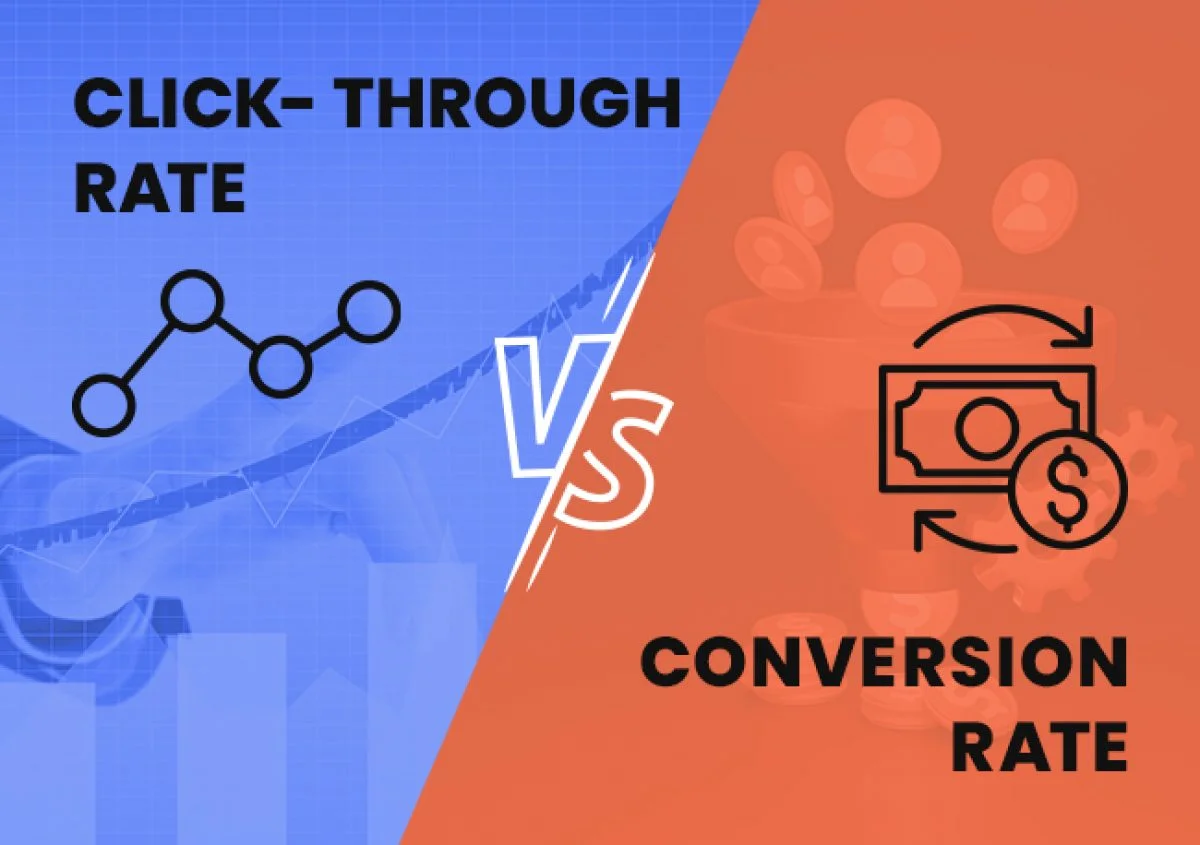
CTR reflects attraction. Conversion reflects satisfaction and decision. Both metrics are important, but serve different roles in evaluation.
Traffic quality is more important than click volume. A higher click-through rate from unclear titles may drive visits but not results. A slightly lower CTR that matches search intent may produce better outcomes.
When high CTR misleads
High click-through rates are not always positive. If users click but leave quickly, the page may not answer their question. This behavior shows a gap between the snippet and the content.
A high CTR without engagement can signal weak content or poor alignment with search intent. Rodrigo César and Christopher Cáceres note that stable performance requires clear titles and accurate information. CTR SEO works best when it reflects real value.
Evaluating CTR alone can lead to wrong conclusions. A full review should include ranking position, SERP features, search volumes, organic click-through rate trends, and engagement signals. When used correctly, CTR SEO becomes a clear and useful metric for informed decisions.
CTR in SEO helps measure how well pages attract clicks in organic search results. By understanding the CTR formula, benchmarking average CTR, assessing ranking impact, and tracking data in Google Search Console, professionals can make structured improvements.
The goal is not just a high CTR, but one that aligns with search intent and drives qualified organic traffic. When analyzed carefully, CTR SEO provides insight into visibility, relevance, and user behavior across search engine results pages.
FAQs About CTR SEO
What is CTR in SEO?
CTR in SEO measures the percentage of users who click a page after seeing it in organic search results. It is calculated by dividing clicks by impressions and multiplying by 100.
What is a good average CTR?
A good average ctr depends on ranking position and industry. Higher positions generally earn higher click-through rates.
Does a higher CTR improve rankings?
CTR is not confirmed as a direct ranking factor. However, strong engagement signals may support overall performance.