


Content pruning in SEO is the process of reviewing and improving existing content to raise overall quality and clarity. It means reviewing pages, fixing weak sections, merging similar topics, and removing low-quality content when needed.
The goal is to improve user experience, reduce waste, and align with EEAT SEO guidelines. SSinvent, based in Austin and led by industry professionals Rodrigo César and Christopher Cáceres, treats this process as a technical, structured method. This guide explains what Content Pruning SEO is, why it matters, and how to measure results.
Content pruning is not a one-time cleanup task. It is an ongoing maintenance process that supports long-term SEO performance. As websites grow, they accumulate outdated content, overlapping blog posts, and low-value pages. Without review, these pages can weaken overall quality and reduce clarity for search engines and users.
A disciplined approach helps protect the crawl budget and maintain a clear structure. Search engines allocate limited crawl resources to each site. If many low-value URLs exist, important quality pages may receive less attention. Content Pruning SEO reduces this inefficiency and strengthens site focus.
Key Takeaways
- Content Pruning SEO is a structured process that reviews existing content to update, merge, or remove low-quality pages in order to improve overall quality and clarity.
- A proper content audit uses data from Google Analytics and Google Search Console to identify content decay, thin content, duplicate content, and keyword cannibalization.
- Managing 301 redirects and internal links is essential when deleting content to protect crawl budget, preserve link equity, and maintain site stability.
- Strong content quality aligned with EEAT SEO guidelines improves user experience, supports clearer matching of search intent, and strengthens long-term SEO performance.
What Is Content Pruning in SEO?
Content pruning in SEO means reviewing pages to improve their value and relevance. It is not just deleting content. It is about improving overall quality across the site. A proper content audit checks traffic, clicks, and index data before any action.
Definition and Core Purpose
The core purpose of Content Pruning SEO is to strengthen the site as a whole. Instead of adding more blog posts, the focus shifts to improving existing content. This improves clarity, reduces noise, and strengthens important pages. The process supports better alignment between content and search intent.
How Content Decay Affects Rankings
Many sites face content decay over time. Content decay occurs when blog posts lose organic traffic due to outdated information or shifts in search intent. Updating outdated content can restore value and improve SEO performance. Clear updates also improve user experience.
For example, a guide written three years ago may contain outdated content, such as outdated statistics or broken references. Refreshing that page with current data can help regain visibility. Search engines prefer accurate and up-to-date information.
Why Remove Low-Quality Content SEO
Thin content and duplicate content often reduce site strength. Thin content gives little detail or answers. Duplicate content can cause keyword cannibalization, where pages compete for the same search term. Pruning reduces confusion and improves clarity.
In practice, this process improves page quality by removing distractions. When weak pages are removed or merged, search engines can better understand the site structure. This improves crawl efficiency and reduces wasted crawl budget.
Content Pruning SEO also supports better navigation. When users find fewer but stronger pages, they move through the site more easily. Clear structure supports trust and improves overall quality signals.
Content Pruning SEO Framework
A strong framework keeps the process organized. Start by building a full list of URLs using Google Search Console and Google Analytics. Include traffic data, impressions, and page status. This step shows how search engines view your existing content.
Audit and URL Inventory
Next, perform a structured content audit. Review organic traffic trends and identify outdated content. Check for pages that no longer match search intent. Data should guide every decision.
During this review, pay attention to signals such as low engagement, low impressions, and declining clicks. Also, check for broken internal links or pages that are rarely crawled. These details provide context for deeper evaluation.
It is useful to group pages into clear categories during the audit:
- High-performing quality pages
- Pages with declining organic traffic
- Thin content or duplicate content
- Pages with no impressions or minimal engagement
This structure enables clear, consistent decisions.
Update, Merge, or Remove Pages
A simple content-pruning SEO template includes three main actions:
- Update pages with steady demand but weak structure
- Merge similar pages to fix keyword cannibalization
- Remove low-quality content SEO when it adds no value
Each action should be clear and documented.
Before deleting content, check whether it still supports internal links or conversion paths. Some pages may not attract high traffic but still serve a strategic role. Pruning decisions should consider context, not just metrics.
Redirects and Risk Management
When deleting content, manage 301 redirects carefully to avoid SEO penalties. If a page has links or past traffic, redirect it to a relevant page. This keeps link equity and protects crawl budget. Removing pages without redirects can harm SEO performance.
After changes, recheck internal links. Ensure that navigation, blog posts, and contextual references do not point to deleted content. Clean link paths help maintain structure and support user experience.
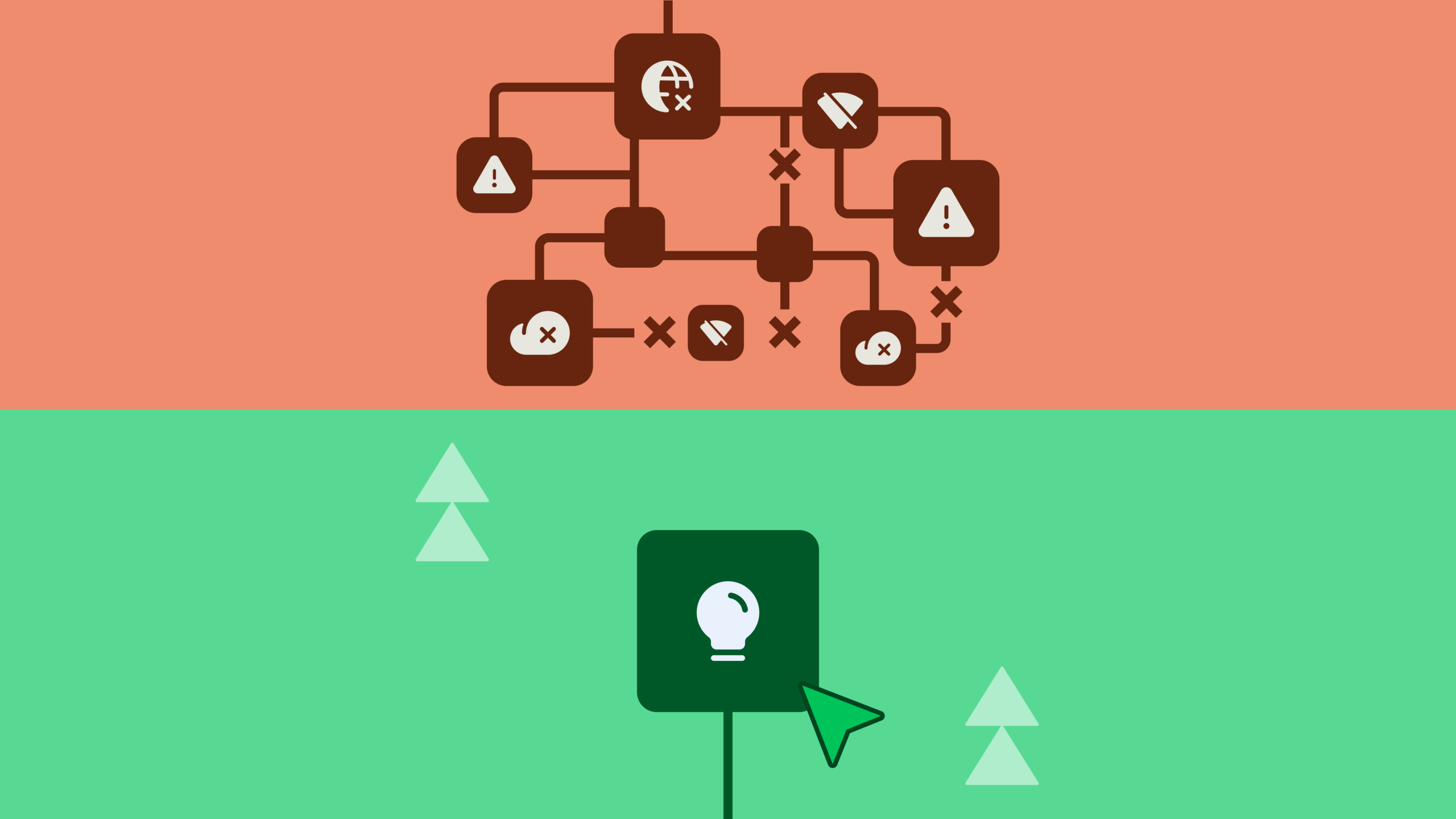
A structured review cycle, such as quarterly or semiannual audits, helps keep the process controlled. Regular reviews prevent large accumulations of outdated content and support steady improvement.
Advanced Content Audit Workflow
A high-level content audit is not enough. Tactical pruning requires measurable thresholds and structured segmentation.
Start by exporting all URLs from:
- Google Search Console
- Google Analytics
- A site crawler
Combine this data into a single spreadsheet.
Track these metrics for each URL:
- Organic sessions (last 12 months)
- Impressions
- Average position
- Click-through rate
- Conversions
- Backlinks
- Word count
- Last updated date
This gives a measurable baseline.
How to Identify Pruning Candidates
Use objective criteria instead of assumptions.
1. Zero-Value Pages
Pages with:
- 0 impressions
- 0 clicks
- No backlinks
- No conversions
These are strong candidates for removing low-quality content SEO.
2. Content Decay Signals
Pages that show:
- 40% or greater traffic decline year over year
- Falling average ranking position
- Decreasing impressions
These pages often require updating outdated content.
3. Keyword Cannibalization Detection
Use Google Search Console queries to find:
- Multiple URLs ranking for the same keyword
- Fluctuating rankings between similar pages
This signals duplicate content or overlapping intent.
Merge into a single authoritative page.
Tactical Decision Matrix
Instead of guessing, apply this matrix:
ScenarioActionHigh impressions + low CTRImprove title and metaDeclining traffic + strong backlinksUpdate and expandSimilar intent pagesMergeNo impressions + no valueDelete with 301 redirect
This framework removes emotional decision-making.
How to Update Pages Properly
Updating content means more than changing dates.
You should:
- Replace outdated statistics
- Add new subtopics
- Improve internal links
- Improve semantic depth
- Clarify structure
- Optimize headings
Focus on improving intent satisfaction, not word count.
Merge Process Step-by-Step
When merging duplicate content:
- Choose the strongest URL
- Consolidate valuable sections from weaker pages
- Rewrite for clarity
- Apply 301 redirects
- Update internal links
- Resubmit sitemap
This protects crawl budget and preserves authority.
Safe Content Deletion Checklist
Before deleting content, confirm:
- No backlinks of value
- No conversions assisted
- No important internal links
- No ranking queries
If all checks pass, deletion is safe.
If not, redirect.
Post-Pruning Monitoring Framework
After changes:
Week 1–2
- Monitor crawl errors
- Monitor index coverage
Week 3–6
- Review impressions
- Check ranking stability
Month 2+
- Evaluate organic traffic trends
- Evaluate seo performance improvement
Do not evaluate results in under 14 days.
Crawl Budget Optimization Layer
Crawl budget waste often comes from:
- Tag archives
- Filter URLs
- Old blog posts
- Pagination duplicates
Pruning improves crawl focus and indexing efficiency.
You can validate this by:
- Comparing crawl stats before and after
- Monitoring average pages crawled per day
Structured Internal Linking Optimization
After pruning:
- Strengthen links toward quality pages
- Remove orphan pages
- Ensure anchor text reflects intent
Strong internal links reinforce topical clusters.
Content Quality and SEO Performance
Content quality directly shapes SEO performance and is central to on-page SEO services. Search engines look for clear answers, strong structure, and updated facts. High-quality pages match search intent and stay focused on a single main topic. Good internal links support topic depth.
Experience, Expertise, Authority, Trust
EEAT SEO guidelines help define quality. Experience shows practical knowledge. Expertise shows accurate and clear writing. Authority builds through strong coverage. Trust grows from correct facts and a clean structure.
To align with EEAT, pages should present accurate data and clear explanations. Avoid vague claims or unsupported statements. Structured headings and logical sections help both users and algorithms interpret the page.
The 80/20 Rule in SEO
Strong content marketing strategies support these principles. Instead of producing large volumes of blog posts, focus on depth and relevance. Quality matters more than quantity. Content Pruning SEO supports this by removing distractions and strengthening focus.
The 80/20 rule in SEO explains traffic patterns. Often, a small group of pages drives most organic traffic. Focus on improving these quality pages first. Then review weaker pages with a critical view.
The 3 Cs of SEO
The 3 Cs of SEO are content, code, and credibility. Content must answer the user clearly. Code must support speed and structure. Credibility depends on trust and accuracy. Content Pruning SEO improves all three areas when done carefully.
For example, merging duplicate content can strengthen a single authoritative page rather than splitting signals across multiple weak pages. This reduces keyword cannibalization and clarifies topical authority. It also improves overall quality across the site.
Rodrigo César and Christopher Cáceres often emphasize that quality is measurable. Metrics such as engagement, bounce rate, and search visibility help confirm improvements. Their structured approach emphasizes data review over assumptions.

Modern SEO Strategy and Search Evolution
Search engines now use AI to interpret content. This shift has led to ideas such as GEO, generative engine optimization. GEO expands SEO into AI-driven results. Still, strong structure and clear content remain core needs.
The 4 Stages of SEO
Modern SEO often follows four stages. First is the technical setup. Second is content development. Third is authority building. Fourth is ongoing improvement. Content Pruning SEO plays a role in the last stage by refining existing content.
Will SEO Be Replaced by AI?
Some ask if AI will replace SEO, while others question whether SEO services are worth it. At present, AI supports search but does not replace core SEO rules. Structured pages, clear headings, and quality information still matter. Content marketing must serve both users and algorithms.
Content Strategy Beyond SEO Demand Generation
Content strategy beyond SEO demand generation looks at the full user path. Informational blog posts attract readers early. Detailed pages help users compare options later. Balanced content improves user experience and builds trust.
As AI systems summarize and interpret content, clarity becomes even more important. Short sentences and structured sections improve machine comprehension. This aligns with NLP-focused writing standards.
Rodrigo César and Christopher Cáceres support structured planning in evolving SEO systems. Their focus remains on data, documentation, and technical clarity. This approach aligns with responsible pruning methods and supports consistent overall quality.
How to Measure Content Pruning Success
Measurement ensures careful control. Track organic traffic using Google Analytics and Google Search Console. Compare impressions and clicks before and after updates. Short-term shifts may occur, so review long-term trends.
Traffic and Index Monitoring
Check index coverage reports for changes. Reducing crawl budget waste often improves efficiency. Fewer weak pages allow search engines to focus on quality pages. This supports stable rankings.
Monitor SEO performance across key queries. Look for improved ranking stability and stronger click-through rates. Changes may not be immediate, so review patterns over time.
Conversion and Engagement Impact
Review conversion paths after deleting content. Make sure key steps remain available. Removing important pages can hurt user experience. Pruning must protect clarity and access.
You can also monitor engagement metrics such as time on page and bounce rate. Improved structure often leads to better navigation and stronger interaction. These indicators help confirm that changes support overall quality.
Internal Links and Documentation
Finally, inspect internal links. Remove broken links that point to deleted pages. Clean link paths improve navigation and structure. A clear system supports overall quality and long-term SEO performance.
A documented review process improves accountability. Record each change, including updates, merges, and deleting content decisions. This history supports future audits and ensures transparency.
Conclusion
Content Pruning in SEO is a structured method for improving clarity, quality, and relevance. It relies on a content audit, data review, and careful decisions about updating or deleting content. Proper use of 301 redirects and index monitoring protects site stability. The goal is stronger overall quality and better alignment with EEAT SEO guidelines.
When done with care, pruning reduces outdated content, removes thin content, and supports a clear site structure. It improves user experience while strengthening organic traffic patterns. In modern search systems shaped by AI and data, disciplined pruning remains an essential SEO practice.