

Content hubs for search engine optimization (SEO) organize related pages around specific topics, helping users and search engines better understand a site. Instead of publishing isolated pages, a content hub connects multiple pieces of content through internal links and shared intent.
This approach helps structure information, guide user experiences, and clarify topical relevance in SEO. The concept is widely used by digital marketers to manage existing content and plan new pages more effectively. At SSinvent, this topic is examined from a technical and structural perspective to support accurate analysis and education.
Key Takeaways
- Content hubs for SEO organize related pages around specific topics, helping users navigate information more easily while providing search engines with clearer signals of topical relevance.
- A strong content hub strategy relies on internal linking, keyword mapping, and a clear hub-and-spoke structure to connect existing content and new pages without overlap.
- Creating a content hub involves prioritizing high-impact topics, structuring pages by user intent, and maintaining consistent internal linking across the content.
- Content hub examples show that reusable templates and well-defined structures support scalability, clarity, and long-term management of relevant content.
- An SEO plan for community content requires moderation and structure to ensure that user-generated material adds value, remains accurate, and supports search visibility.
What Is a Content Hub?
A content hub is a collection of related pages centered on a central theme or topic. It usually includes a main hub page that introduces the topic and several supporting pages that cover specific topics in more detail. These pages link to one another in a clear, consistent way, helping users navigate related information. Search engines also use this structure to understand how different pages are connected.
Well-known examples of this structure include Think with Google, which organizes research and marketing insights into topic clusters, and American Express Business Trends & Insights, which groups business strategy content under a centralized resource hub.
Content hubs differ from a single blog post by focusing on coverage rather than one-off answers. Each page within the hub serves a distinct purpose while contributing to the overall topic. For example, a hub about technical SEO may include landing pages, guides, and reference articles. Together, these pieces of content form a unified structure instead of scattered pages.
How Content Hubs Improve SEO Performance
Content hubs improve SEO performance by organizing relevant content to align with how people search. When users perform Google searches, they often explore multiple related questions rather than a single query. A content hub supports this behavior by offering clear paths between related pages. This structure encourages deeper engagement and helps users find answers without leaving the site.
From a search engine perspective, content hubs provide context, which aligns with technical approaches used in advanced SEO services. Internal links between related pages signal that the site covers a topic in depth. This does not guarantee rankings, but it supports clearer indexing and interpretation. Over time, well-structured hubs can support organic traffic growth by more closely matching user intent.
Topical authority and internal linking
Topical authority refers to how clearly a site demonstrates coverage of specific topics. Content hubs support this by grouping pages that address related questions and use similar language. Internal linking plays a central role by connecting pages in a logical hierarchy. Links from the hub page to supporting pages and vice versa help search engines infer relationships.
Internal links also guide users. When a page encourages users to explore related information, it improves navigation and usability. This is especially useful for complex topics that require multiple explanations. Clear linking supports both user understanding and technical clarity.
Content Hub Strategy and the 80/20 Rule
A content hub strategy defines which topics to cover and how to prioritize them. Not every idea deserves the same level of detail. The 80/20 rule in SEO suggests that a small set of high-impact topics often accounts for most results. Applying this rule helps focus resources on areas with meaningful search volume and relevance.
In practice, this means identifying core topics that matter most to the target audience. Supporting pages then address narrower questions related to those core topics. This approach reduces unnecessary content creation and helps maintain focus. A clear strategy also facilitates the evaluation of existing content and the decision about what to update or remove.
Focusing on high-impact topics
High-impact topics are those that align with user needs and search behavior. These topics frequently appear in Google searches and directly relate to user problems or decisions. Keyword research and analysis of search volume help identify these areas. The goal is not to chase every keyword, but to cover the most meaningful ones.
Once high-impact topics are identified, they serve as the foundation for the content hub. Supporting pages expand on related questions and use cases. This creates depth without spreading effort too thin. The result is a more focused and manageable content structure.
How to Create a Content Hub
Creating a content hub starts with planning and organization. The process begins by defining a main topic and outlining related subtopics. Each subtopic becomes a separate page with a clear purpose. These pages should link back to the main hub page and to one another when appropriate.
Content creation should build on existing content when possible. Auditing current pages helps identify gaps and overlaps. Some pages may already fit into a hub with minor updates. Others may need consolidation or rewriting to align with the new structure.
Keyword mapping and hub structure
Keyword mapping assigns specific keywords to specific pages within the hub. This step reduces overlap and clarifies intent. Each page targets a distinct query or set of related queries. This helps avoid confusion for both users and search engines.
The hub structure should reflect this mapping. The main page targets a broader topic, while supporting pages address narrower terms. Clear headings and internal links reinforce these roles. This structure supports relevance and readability.
Hub-and-Spoke linking model
The hub-and-spoke model is a common approach for organizing content hubs. The hub page sits at the center and links to spoke pages. Each spoke page focuses on a specific aspect of the main topic. Links from spokes back to the hub maintain cohesion.
This model works well for both users and search engines. Users can begin with a general overview and then proceed to detailed explanations. Search engines can see clear relationships between pages. The model also scales well with new content.
Content Hub SEO: Ideas and Examples
Content hub examples help clarify how different structures work in practice. There are several types of content hubs, depending on goals and audience needs. Some hubs focus on educational content, whereas others provide explanations of products or services. The key is consistency in structure and intent.
One common approach is to combine guides, blog posts, and reference pages into a single hub. Another approach uses landing pages supported by detailed articles. Both methods rely on internal links and clear navigation. Reviewing content hub examples helps teams choose a structure that fits their needs.
Reusable hub templates and structures
Reusable templates simplify content creation and maintenance, especially when supported by structured processes such as white-label SEO copywriting services. A template defines page layout, headings, and link placement. This consistency helps users recognize patterns and reduces design effort. Templates also support NLP optimization by maintaining predictable language and structure.
Templates can be adapted for different topics while maintaining the same framework. This is useful for sites that manage many hubs across multiple subjects. Consistent structure supports both clarity and scalability.
ON24 Content Hub and Engagement Hub
The ON24 Content Hub and ON24 Engagement Hub are often cited as structured examples in B2B environments. These hubs organize webinars, resources, and related materials around themes. Each page serves a clear role within the broader structure.
From an analytical view, these hubs show how different formats can coexist. Video, written content, and landing pages can all be integrated into a single hub. The key factor is consistent organization, not format.

SEO Plans for Community Content
An SEO plan for community content addresses user-generated material such as forums, comments, or shared resources. Community content can add depth and relevance, but it requires careful management. Not all user contributions align with quality standards.
A structured approach facilitates the integration of community content into a content hub. Clear guidelines define which contributions become permanent pages. Moderation ensures accuracy and relevance. When managed well, community content can support long-term coverage of specific topics.
Community-focused hubs should emphasize clarity and structure. Pages need clear headings and internal links. This helps both users and search engines interpret the content correctly. Social media can also play a role by directing users to these hubs.
Is SEO still relevant?
This question often reflects uncertainty regarding changes in search behavior, including whether SEO services are still worth it as search engines evolve. Search engines continue to rely on structured information and relevance. Content hubs align with these fundamentals by improving organization and clarity.
SEO is not a single tactic, but a set of practices. Content hubs represent a structural approach rather than a short-term tactic. They support long-term maintenance of relevant content. This makes them useful even as algorithms evolve.
Content Hubs vs Topic Clusters
Content hubs and topic clusters are closely related concepts. Both focus on organizing content around themes. The main difference lies in emphasis. Content hubs often highlight user navigation and resource grouping, while topic clusters focus more on keyword relationships.
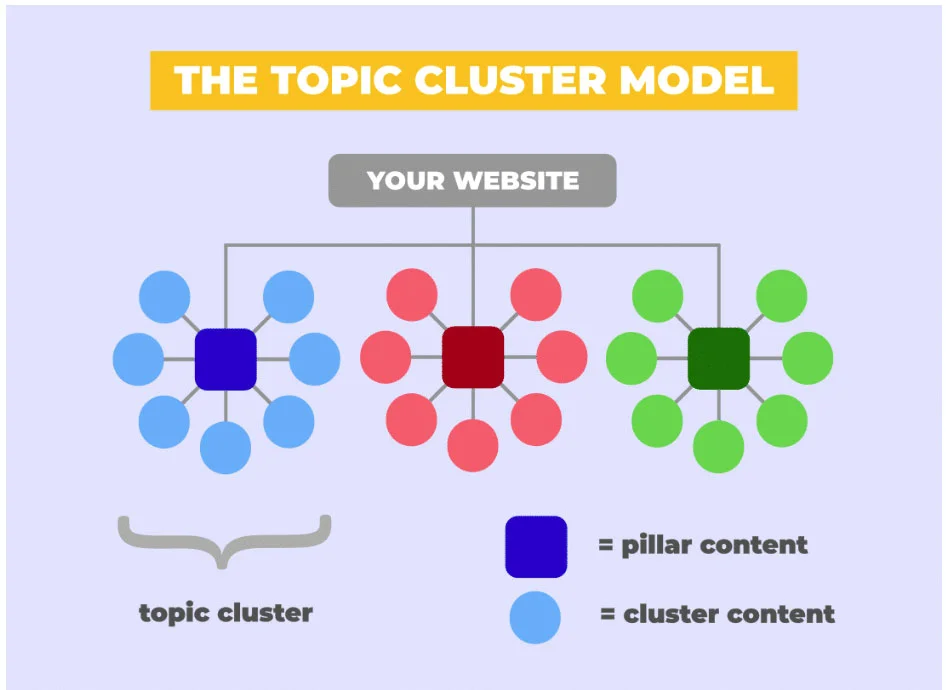
In practice, the two approaches overlap. A content hub may include clustered pages, and a cluster may function as a hub. The key factor is the clarity of the structure. Both models aim to improve relevance and understanding.
Common Content Hub Mistakes
Common mistakes include:
- Creating too many pages without a clear purpose, which leads to overlap and confusion.
- Weak internal linking that breaks the hub structure, as pages must connect logically to support navigation.
- Ignoring existing content, because building a hub without reviewing existing pages can lead to duplication.
Regular audits help avoid these problems. Clear planning reduces the need for later corrections.
When Content Hubs Make Sense
Content hubs make sense when a site covers multiple related topics. They are especially useful for educational content, guides, and reference materials. Sites with growing content libraries often benefit from this structure. It helps manage scale and complexity.
They may not be necessary for very small sites with a limited number of pages. In those cases, simpler structures may work better. Evaluating goals and resources helps determine whether a content hub strategy is appropriate.
Content hubs for SEO provide a structured framework for organizing relevant content around specific topics. They support clearer navigation, improved internal linking, and better alignment with user intent. By focusing on strategy, structure, and execution, content hubs help manage complexity without relying on promises or guarantees.
Industry professionals such as Rodrigo César and Christopher Cáceres have examined these structures analytically, emphasizing clarity and organization. When planned carefully, content hubs serve as a practical framework for managing content and improving search visibility.
Ready to see what SEO can do for your site?
If you want to understand where your site stands and what is holding back growth, schedule a call or request a free site audit. We will review your current visibility, technical setup, and content gaps, then outline clear next steps based on real data.