

Many companies rely on online search to reach people looking for answers, services, or products. Businesses that need Search Engine Optimization (SEO) are often those in competitive markets or those that depend on online visibility.
SEO helps these companies appear in search results and in comparison searches. This applies to local businesses, online stores, and service providers. SSinvent operates in this space as a technical and semantic SEO team as well as a web development firm based in Austin, providing context on how these practices work in real-world settings.
In practice, SEO helps businesses match how people search with how information is presented online. When pages reflect real questions and clear answers, search engines can interpret them more accurately. This process supports visibility without relying on short-term tactics. It also helps users find information faster and with less confusion.
Key Takeaways
- Businesses that need SEO are those that rely on search visibility, operate in competitive markets, or depend on organic traffic to reach potential customers.
- SEO across industries varies based on search intent, competition level, and sales cycles, making a one-size-fits-all approach ineffective.
- Local businesses and multi-location companies benefit from SEO that connects services with geographic search behavior and accurate business information.
- Technical SEO, content creation, and link building work together to improve search engine understanding, user experience, and long-term visibility.
- Evaluating how customers search and compare options helps determine whether your company needs SEO, and guides informed decisions about investing in SEO.
What Businesses Need SEO Most
High-competition businesses
Businesses in crowded markets face strong competition in search results. Many companies offer similar products or services, which makes visibility harder. Keyword research helps identify how people search and what terms they use. Optimizing SEO focuses on matching content with those real searches.
Competition in search results often reflects demand rather than market size. Industries with high search volume attract more content and optimization efforts. Examples of these industries include:
- Healthcare and medical services
- Professional and B2B services
- E-commerce and online retail
- Home and local services
SSinvent currently works with Electricians, Psychoanalysts, multiple Hair Transplant Doctors, Occuplastic Surgeons, Elite College Tutors, Physical Therapists, Medical Grade Supplements stores, and others.
SEO helps businesses compete by improving clarity, structure, and relevance. This enables search engines to more easily distinguish similar offerings.
High competition also means rankings can often change. Search engines reward pages that are clear and useful. This requires regular content creation and technical SEO upkeep. Without this work, even known brands can lose visibility.
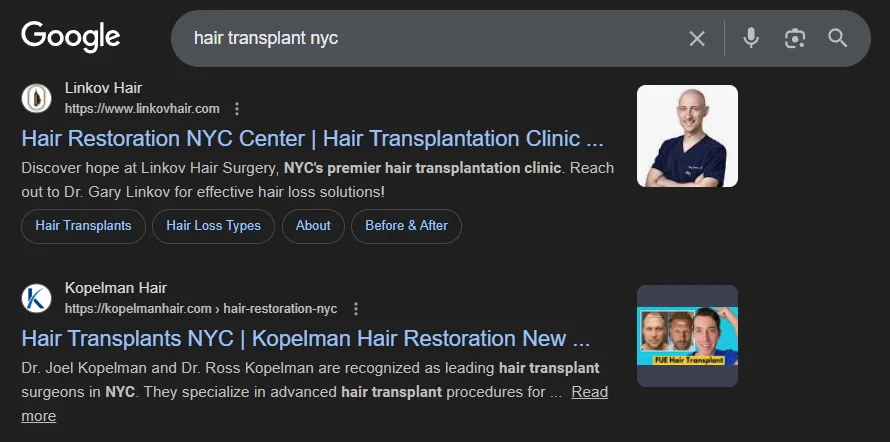
Kopelman Hair ranks in second place for the highly competitive keyword “hair transplant NYC” at the time of writing, widely considered one of the most difficult terms to rank for in this market.
Search-dependent businesses
Some companies rely on search engines to bring in potential customers. These businesses may not have strong offline referrals or physical locations. Organic traffic becomes a key source of leads. SEO helps these companies appear in search results when people search for solutions.
Search-dependent businesses often treat SEO as part of larger marketing strategies. SEO supports steady visibility over time. Clear site structure and relevant keywords help search engines understand the site. This improves the chance that pages rank higher.
These businesses often track how organic traffic changes over time. Even small ranking shifts can affect lead volume. SEO helps stabilize visibility by focusing on intent rather than trends. This reduces reliance on a single channel.
Businesses ready for SEO services
Not all companies are ready to invest in SEO. Businesses that benefit most already have clear products or services. They also understand their targeted audience and goals. SEO by industry may differ, but readiness is a common factor.
Readiness also includes having accurate site data and basic technical health. Pages should load correctly and display well on mobile devices. Without this foundation, optimizing SEO becomes less effective. Preparation improves outcomes and efficiency.
These companies prioritize clarity over quick results. They work to improve user experience and content quality. This supports long-term organic traffic growth. It also reduces wasted effort.
What Industries Need SEO the Most
Healthcare and medical services
Healthcare users often search for symptoms, treatments, or providers. SEO helps medical services appear for these searches. Accuracy and clear language matter because topics affect real decisions. Search intent often includes learning and finding care.
Medical websites benefit from strong structure and simple navigation. Technical SEO improves site speed and access. Content marketing focuses on clearly explaining services. This builds trust and meets search guidelines.
Healthcare SEO must follow strict accuracy standards. Content should reflect verified information and avoid unclear claims. Search engines prioritize trust and clarity in this space. This makes structure and wording especially important.
Professional and B2B services
Professional services rely on trust and clear expertise. SEO for industries such as legal and consulting focuses on common questions. People search for help with specific problems. Content creation helps explain services in plain terms.
In many B2B cases, users compare multiple providers before contacting one. SEO supports this research phase by organizing information clearly. Pages that explain processes and terms often perform better. This helps users make informed choices.
B2B SEO often supports long decision cycles. Users research before contacting a provider. SEO aligns content with each research stage. This improves clarity and relevance.
E-commerce and online retail
Online retail depends heavily on search visibility. SEO helps users find products and compare options. Keyword research shows how shoppers describe products. This guides how pages are written.
Technical SEO also plays a big role for online stores. Search engines prefer fast pages with clear product details. Link building supports authority in crowded markets. These steps help stores rank higher.
Product pages also benefit from clear descriptions and consistent terms. When content matches how people search, relevance improves. This supports both rankings and user experience. It also reduces confusion during comparison.
Home and local services
Home services depend on location and timing. Local businesses need to appear in search results for nearby users. SEO connects services with local search intent. These searches often happen when users need help fast.
Local SEO focuses on clear business details and services. User experience matters because decisions are quick. Content creation highlights practical information. This supports trust and visibility.
Local intent often signals immediate need. Users may compare only a few results before deciding. SEO helps ensure accurate service details appear quickly. This supports faster decisions and clearer expectations.
Which Businesses Need Local SEO
Location-based services
Businesses serving a specific area depend on local search. These include clinics, repair services, and shops. Local SEO helps match these businesses with nearby searches. Clear location data is essential.
Search engines use local signals to confirm accuracy. This improves visibility and trust. It also improves the user experience. Location-based services often treat SEO as a core need.
Local SEO also depends on consistency across platforms. Business details should match across all online channels. This helps search engines confirm accuracy. It also improves trust for users.
Multi-location businesses
Companies with many locations face added challenges. Each location may serve a different audience. SEO by industry becomes more complex in these cases. Content must balance brand consistency and local detail.
Separate location pages often help. Keyword research shows regional search differences. This improves organic traffic quality. It also avoids confusion for users.
Managing many locations requires a clear internal structure. Each page should accurately represent one location. This avoids overlap and confusion, and search engines prefer this clarity.
SEO Differences by Industry
Search intent
Search intent changes by industry. Some users want quick answers. Others want deep research. SEO for industries must reflect these needs.
Content should match what users expect. Search engines reward pages that answer questions clearly. This improves rankings and engagement. It also lowers confusion.
Intent can change over time. New search terms may appear as markets shift. Regular review helps keep content aligned. This supports continued relevance.
Competition and sales cycles
Some industries have long sales cycles. Others involve fast decisions. Advanced SEO strategies adapt to these differences. Educational content supports longer research phases.
Short sales cycles require clear, direct content. SEO focuses on relevance and speed. Understanding these patterns helps plan better strategies. It also sets realistic expectations.
SEO planning works best when it reflects real decision timelines. Not all searches lead to quick action. Content should match each stage. This improves usefulness.

SEO Services List by Business Need
Technical SEO and site health
Technical SEO helps search engines crawl and index a website. This includes speed, mobile use, and structure. A strong technical base supports all SEO work. Without it, results suffer.
Site health also affects user experience. Slow pages reduce trust. Technical SEO fixes these issues. This supports long-term stability.
Technical SEO also helps prevent indexing issues. Search engines must access content easily. Clear structure supports this. It reduces errors and delays.
Content and On-Page SEO
On-page SEO aligns content with relevant keywords. SEO copywriting and content creation clearly explain products or services. Short sentences and clear headings help readers as well as search engines.
Content marketing within SEO focuses on value. It avoids heavy promotion. On-page work also includes titles and internal links. These guide users and search engines.
On-page SEO also supports accessibility. Clear headings help readers scan content. This benefits all users. It also improves algorithmic understanding.
Link Building and Authority
Link building helps show credibility. Search engines use links as trust signals. Good links come from relevant sources. Quality matters more than quantity.
Authority grows over time. It reflects content quality and relevance. Businesses treat link building as part of broader marketing strategies. This supports steady growth.
Links often reflect how content connects across the web. Relevant references signal topic alignment. Search engines use this context. It supports credibility.
Does My Company Need SEO
How customers find your business
Make sure to start with discovery. If people use search engines to find your services, SEO matters. This includes learning and comparison stages. SEO supports each step.
Keyword research shows what people search. It highlights gaps in visibility. This data supports informed decisions. It also shows where SEO fits.
Understanding discovery paths helps set priorities. Some users arrive through search, others through referrals or social media. SEO focuses on search behavior. This complements other channels.
Organic traffic vs paid channels
Organic traffic builds over time. Paid ads work only while funding continues. SEO supports long-term visibility. Paid channels offer faster exposure.
Many businesses use both. Investing in SEO supports stability. It also works alongside social media. Understanding both helps plan better.
Organic traffic often grows slowly but lasts longer. Paid traffic stops when spending ends. Many businesses balance both as SEO supports stability.
What Is the 80/20 Rule in SEO
High-Impact Keywords and Pages
The 80/20 rule in SEO means a few pages drive most results. Identifying these pages helps focus effort. Relevant keywords often bring most organic traffic. This improves efficiency.
Reviewing performance helps refine focus. SEO by industry affects which pages matter. Regular checks support ongoing improvement. This keeps work targeted and clear.
Focusing on high-impact areas helps manage resources more effectively. Not every page needs the same effort. Prioritization improves efficiency. This supports long-term planning.
Ready to see what SEO can do for your site?
If you want to understand where your site stands and what is holding back growth, schedule a call or request a free site audit. We will review your current visibility, technical setup, and content gaps, then outline clear next steps based on real data.