

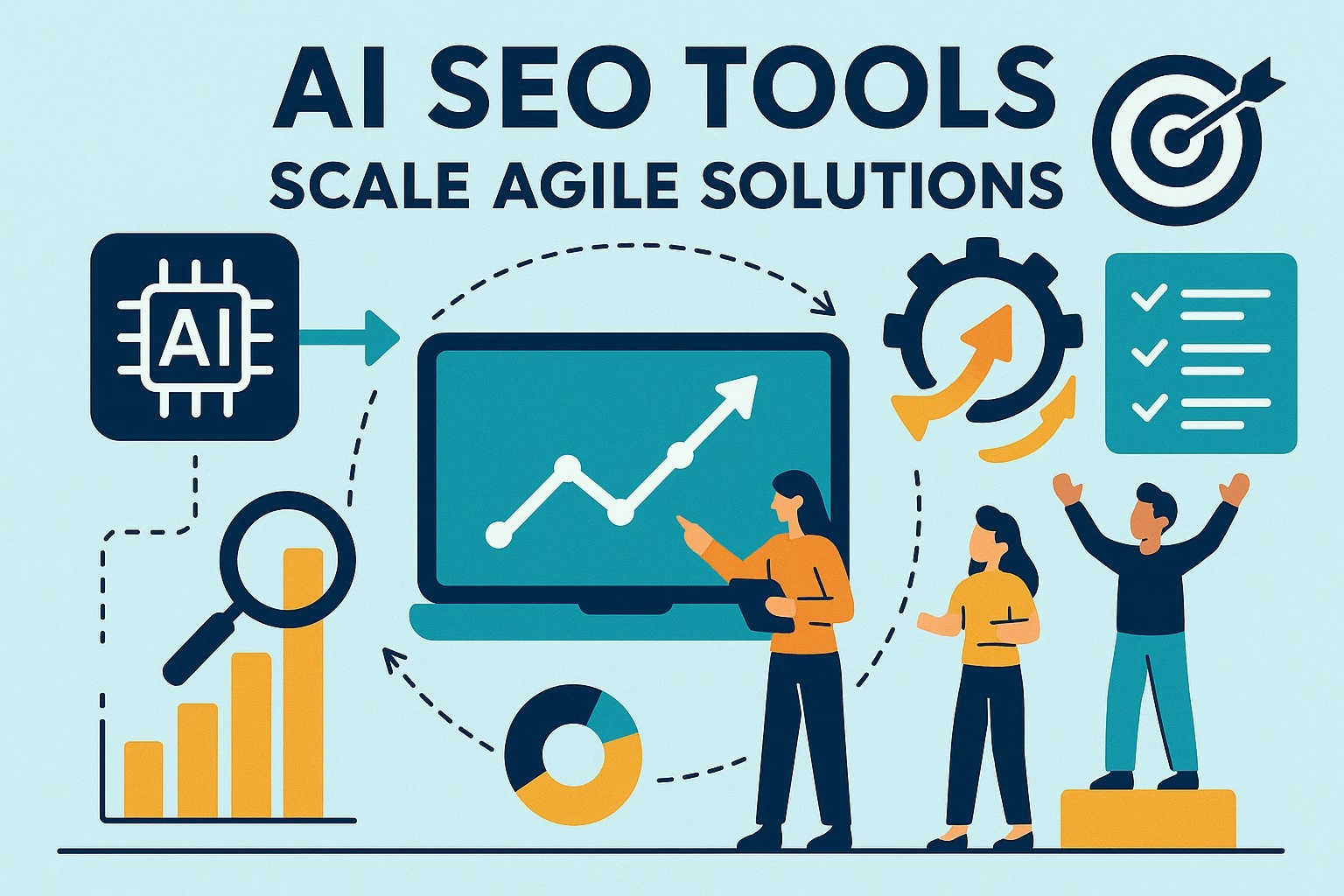
Organizations use artificial intelligence in search engine optimization to support faster planning, testing, and iteration within agile environments. The idea behind using AI SEO Tools for scaled agile solutions is not automation for its own sake, but structured support for agile workflow, data interpretation, and continuous improvement.
These tools help marketing teams and SEO teams manage complexity as sites, markets, and content grow. This article explains the concept, frameworks, and practical limits of AI-driven SEO in agile settings.
Key Takeaways
- AI SEO tools support agile workflows by automating data collection and analysis, allowing teams to make timely, data-driven decisions without slowing sprint cycles.
- Scaling agile SEO is challenging due to manual processes and search volatility, but structured frameworks and AI-supported monitoring help maintain consistency and quality.
- Scaled Agile Frameworks provide clear coordination across team, program, and portfolio levels, helping SEO efforts align with broader digital marketing goals.
- AI SEO tools strengthen Agile SEO strategies by enhancing keyword research, content optimization, and technical SEO visibility across large, complex sites.
- Effective use of AI in SEO depends on combining automation with human judgment, ensuring continuous improvement while preserving clarity, relevance, and control.
How AI SEO Tools Scale Agile Solutions
Automation and faster decisions
AI SEO tools help agile teams process large datasets that would otherwise slow down planning cycles. Tasks such as keyword research, crawl analysis, and performance monitoring can run continuously in the background, supported by advanced SEO services designed for scalable analysis.
This allows teams to base data-driven decisions on updated information rather than periodic reports. Faster access to structured data supports shorter feedback loops in agile workflows.
Automation does not replace human judgment in SEO strategies. Instead, it reduces time spent on manual collection and sorting. Marketing teams can review prioritized insights and decide which actions align with current sprint goals. This approach aligns with embracing agility rather than rigid planning.
Scaling agile SEO without quality loss
Scaling agile SEO requires both consistency and speed. AI tools help maintain standards by applying the same technical SEO checks and content optimization rules across large sites. This reduces variance when multiple agile teams work on the same platform. Quality control becomes part of the system rather than a final review step.
When SEO teams grow or distribute work across regions, including collaboration with an offshore SEO company, automation supports shared processes. Cross-functional teams can rely on the same data definitions and metrics. This helps teams work together without constant realignment meetings. The result is scale without abandoning structured review.
Why Agile SEO Is Hard to Scale
Manual processes slow growth
Agile methods rely on frequent testing and adjustment, but SEO often involves slow, manual steps. Reviewing logs, analyzing rankings, and auditing pages can take weeks when done manually. As sites expand, these delays increase. Manual processes break the rhythm that agile teams depend on.
SEO strategies that rely on spreadsheets and static reports struggle to keep pace. By the time insights reach decision-makers, conditions may have changed. AI tools address this gap by enabling near-real-time analysis. This allows agile teams to act while insights are still relevant.
Search volatility and dependencies
Search environments change often due to algorithm updates, user behavior, and competitive activity. Agile SEO must respond without disrupting other digital marketing work. Dependencies between content, technical changes, and branding strategy add complexity. One update can affect many teams at once.
AI tools help map these dependencies by showing patterns across data sets. They highlight correlations between changes and outcomes without assigning intent. This supports informed planning rather than reactive fixes. Teams can adapt while maintaining stability.
What Is the Scaled Agile Framework
Purpose of scaling agile teams
The Scaled Agile Framework exists to coordinate many agile teams working toward shared objectives. It provides structure without enforcing strict sequences. In SEO contexts, this means aligning technical SEO, content, and analytics efforts across departments. The framework supports coordination rather than control.
Scaled Agile approaches recognize that teams work at different speeds. They focus on visibility and alignment rather than uniform execution. For SEO, this allows local experimentation within a shared structure. AI tools support this by standardizing data inputs.
The three levels of Scaled Agile
Scaled Agile commonly operates across three levels: team, program, and portfolio. At the team level, individuals handle tasks such as content optimization or technical fixes. The program level coordinates related initiatives across agile teams. The portfolio level aligns SEO goals with broader digital marketing objectives.
Understanding these levels helps marketing teams clearly assign responsibilities. AI tools can support each level by tailoring reports and alerts. This reduces confusion and duplication of effort. Clear structure supports sustainable growth.
Which Framework Is Used to Scale Agile
SAFe and enterprise SEO
The Scaled Agile Framework, often called SAFe, is widely used in large organizations. It provides defined roles and planning cycles that fit enterprise needs. In SEO, SAFe can help coordinate SEO teams, development groups, and branding stakeholders. AI tools integrate by feeding data into planning sessions.
SAFe emphasizes alignment and visibility. This suits organizations managing many domains or markets. AI-generated insights support these goals by offering consistent measurement. This allows enterprise teams to compare progress without manual reconciliation.
Other agile scale methodologies
Not all organizations use SAFe. Some adopt lighter agile framework models that focus on coordination rather than formal structure. These methods still require shared data and clear communication. AI tools remain useful regardless of the chosen framework.
The key factor is fit. Agile scaling methodology should align with organizational size and culture. AI tools adapt to different structures by providing configurable views. This flexibility supports varied operating models.
Agile SEO Framework and Strategy
Agile SEO framework structure
An agile SEO framework defines how tasks move from idea to execution and review. It connects keyword research, content planning, and technical validation. AI tools help by organizing inputs and tracking outcomes. This supports continuous improvement rather than one-time optimization.
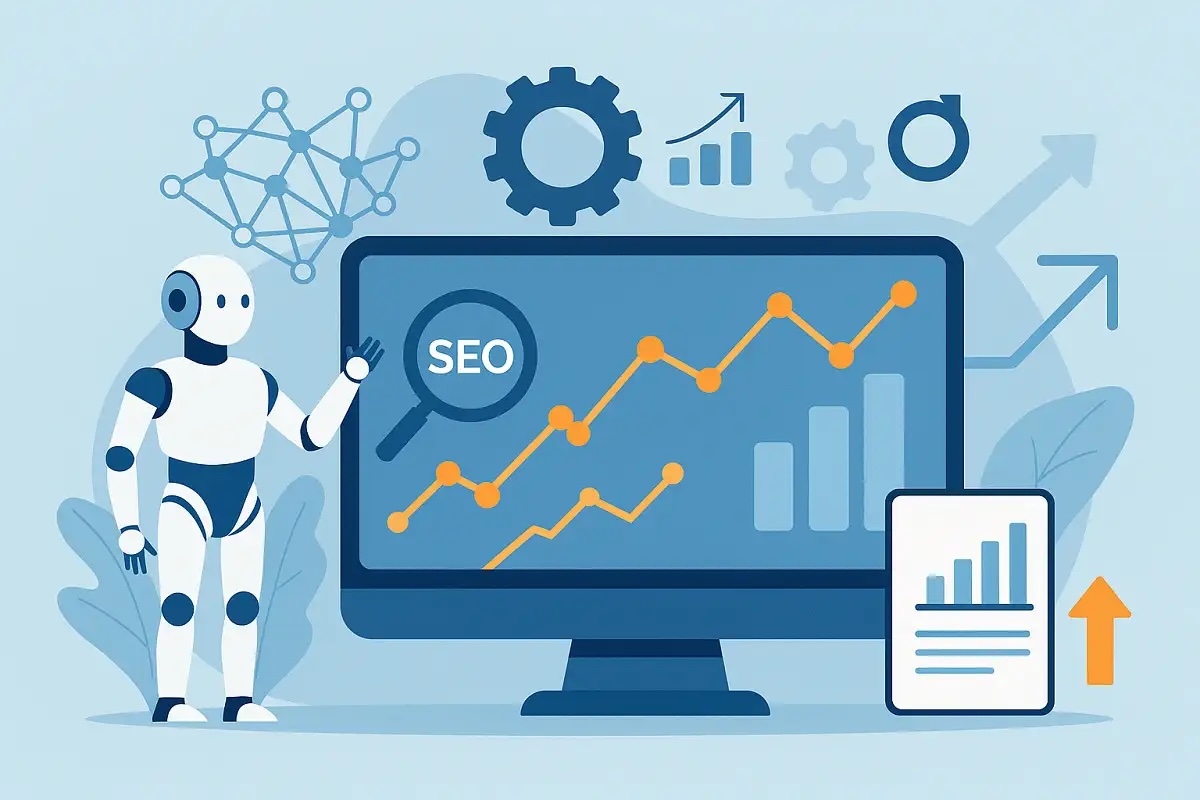
Clear structure reduces friction between teams. Marketing teams know when to contribute, and SEO teams know when to review. Shared dashboards help cross-functional teams stay aligned. Structure supports agility rather than limiting it.
Agile SEO strategy with AI
An agile SEO strategy uses short cycles to test and refine ideas. AI tools help identify patterns across content and performance data. These insights guide prioritization without dictating actions. Human judgment remains central.
Customer feedback also plays a role. AI tools can surface trends from user behavior and search queries. Teams can incorporate this into planning without delaying releases. Strategy evolves through informed iteration.
Core Capabilities of AI SEO Tools
Keyword and intent analysis
Modern AI tools analyze search intent beyond simple keyword matching. They group terms based on behavior and context. This improves keyword research by aligning content with user needs. SEO strategies become more precise.
Intent analysis also supports content optimization through structured on-page SEO services aligned with user search behavior. Teams can adjust structure and language based on observed patterns. This reduces reliance on assumptions. Data supports clarity and relevance.
Technical SEO and performance data
Technical SEO requires ongoing monitoring of site health. AI tools track issues such as crawl errors and page performance. Alerts help teams respond quickly. This supports agile workflow by reducing surprises.
Performance data feeds into planning and review. Teams can see how changes affect outcomes without long delays. This strengthens the feedback loop. Continuous visibility supports stable iteration.
Enterprise and Leadership Perspective
What scaled agile CEOs expect
Leaders adopting scaled agile expect transparency and coordination. They need confidence that teams work toward shared goals. In SEO, this means clear metrics and predictable processes. AI tools support reporting without manual aggregation.
Executives focus on systems rather than individual tactics. They value repeatable processes that scale. AI-supported SEO aligns with this expectation by embedding analysis into workflows. This reduces reliance on ad hoc reviews.
Does Google use scaled agile?
Google does not publish detailed internal frameworks, but public information suggests agile principles guide its work. Teams emphasize experimentation, feedback, and iteration. These principles align with scaled agile concepts. SEO teams can learn from this approach.
The lesson is not to copy structures but to adopt practices. AI tools support experimentation by lowering analysis costs. This encourages learning without disruption. Structure supports exploration.
Brand Elevation Through Scaled Agile SEO
Consistent visibility at scale
Brand elevation scale agile solutions focus on consistency across touchpoints. SEO contributes by aligning content and technical standards. AI tools help enforce these standards across large sites. This supports brand coherence.
Consistency does not mean uniform content. Agile teams can adapt messaging while following shared rules. AI systems monitor adherence without limiting creativity. This balance supports sustainable visibility.

SEO aligned with growth goals
SEO works best when aligned with broader branding strategy and digital marketing plans. Scaled agile methods help integrate SEO with social media and content initiatives. AI tools provide shared data across channels. This supports coordinated planning.
Growth goals evolve over time. Agile methods support adjustment without disruption. AI tools help teams track progress and adapt. Alignment remains intact through change.
AI SEO tools support agile methods by reducing friction in analysis, coordination, and review. They enable teams to scale without abandoning structure or clarity. When applied within an agile framework, these tools support informed iteration rather than automation alone.
By understanding frameworks, capabilities, and limitations, teams can use AI to support sustainable, data-driven, continuous-learning agile SEO practices.