


SEO growth relies on clear steps that show how visibility, relevance, and performance work together. This article goes over the 10 most cutting-edge organic SEO strategies to boost traffic by focusing on how search engines read content and how users interact with web pages.
It presents practical actions linked to measurement, review, and adjustment, not promises or outcomes. The approach reflects how teams at SSinvent study search performance in technical and content-based environments. The sections below explain what to track, how to read data, and why validation matters for long-term SEO improvement.
Key Takeaways
- The 10 proven strategies to boost SEO organic traffic focus on keyword research, relevant content, technical SEO, internal links, backlinks, and measurement, which together explain how search engines and users assess web pages.
- Matching content with user intent and relevant search queries improves visibility on the results page and helps bring steady traffic to your website over the long term.
- Technical SEO and user experience, including performance on mobile devices, help ensure that relevant content can be found and used without issues.
- Blog posts and regular content updates expand keyword coverage and help content stay useful as search behavior changes.
- Ongoing measurement with tools like Google Search Console allows SEO strategies to be refined using data instead of assumptions.
The 10 Proven Strategies to Boost SEO Organic Traffic
The strategies below describe common practices used to improve visibility and relevance in search results. Each strategy focuses on a specific way search engines review web pages and how users respond to content. Together, they form a clear SEO strategy instead of separate tasks. The goal is to understand how each step supports steady organic growth.
1. Perform targeted keyword research
Keyword research helps identify relevant keywords and long tail keywords based on how users write search queries. The goal is to understand what people are actually searching for, not what sounds correct internally. Focusing on one targeted keyword per page reduces topic overlap and improves clarity for search engines. It also helps avoid competing with your own pages in search results.
Effective keyword research also considers search intent and competition. Some keywords signal research behavior, while others signal readiness to act. Matching keyword choice to content type improves relevance and ranking stability. This process lowers the risk of publishing content that attracts impressions but no meaningful traffic.

2. Align content with user intent
Search engines evaluate whether content satisfies the intent behind a query. Pages that clearly match informational, navigational, or transactional intent tend to perform more consistently. When content misses intent, users leave quickly or search again. These signals reduce long-term visibility.
Aligning with intent means shaping the structure, depth, and language to align with user expectations. Informational queries need clear explanations. Transactional queries need clarity around next steps. When intent is met, engagement improves, and search engines gain confidence in ranking the page for similar queries.

3. Optimize on-page SEO elements
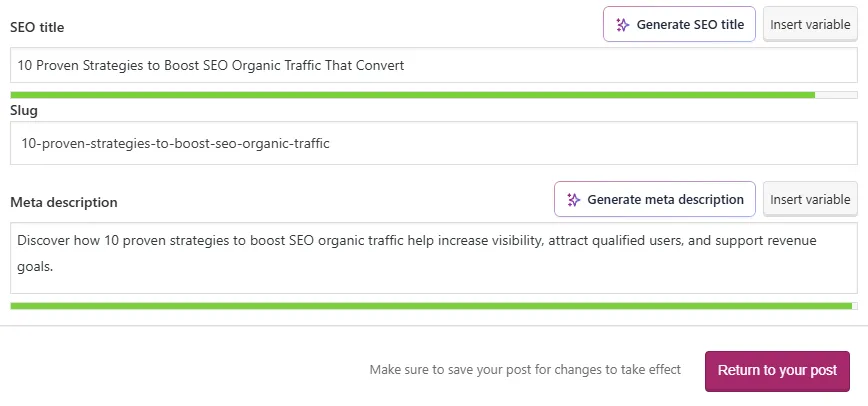
On-page optimization ensures titles, headings, and the meta description clearly describe what a page covers. These elements help search engines determine relevance and help users decide whether to click. Clear wording reduces ambiguity and improves how pages appear in search results.
Headings also guide content hierarchy and scanning behavior. Proper structure helps search systems understand a page’s topic priority and relationships. When on-page elements support the content instead of repeating keywords, pages remain stable through algorithm updates.
4. Create relevant and structured content
Creating content means organizing information so it is easy to read and scan, a core principle of effective SEO and content marketing.
Relevant content stays focused on a clearly defined topic and avoids covering multiple subjects on the same page. Each section should answer a specific question tied to user search behavior. This makes the content easier to understand and more likely to match real search queries.
Structured content relies on clear headings and a logical order. Headings help users skim and find answers quickly. They also help NLP-based search systems identify topic relationships and depth. Short paragraphs, consistent formatting, and clear section breaks improve comprehension and support long-term organic visibility rather than short-lived traffic spikes.
5. Strengthen internal linking
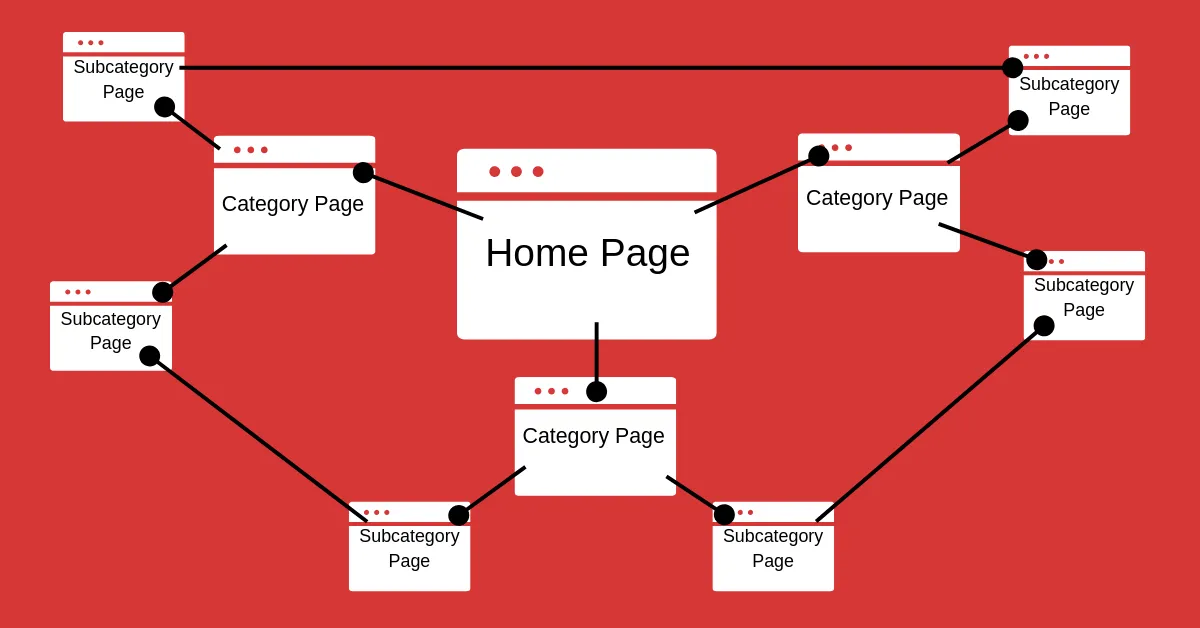
Internal linking connects related web pages and blog posts in a clear way. These links help search engines understand topic relationships and page importance. For users, internal links improve navigation and content discovery. Over time, this structure supports steady traffic to your website.
6. Earn relevant backlinks
Backlinks act as outside signals of relevance and authority. Leading organic SEO methods focus on link relevance, not link volume. Links from related sources support credibility for specific relevant keywords. This strategy helps build trust signals without promising ranking changes.
Quality backlinks often come from useful content, partnerships, citations, and editorial mentions. Placement also matters. Links within meaningful content sections provide stronger context than links placed in footers or directories. Over time, this approach supports trust and topic authority without relying on aggressive link tactics.
7. Improve technical SEO foundations
Technical SEO ensures pages load properly, display correctly, and remain accessible across devices, which is the focus of advanced SEO services. This includes crawlability, indexation control, site speed, mobile responsiveness, and proper use of structured code. When technical elements break, search engines may struggle to fully process or rank content.
Even strong content can underperform if technical issues exist. Problems such as duplicate URLs, slow load times, or blocked resources limit visibility. Fixing these foundational elements allows search engines to interpret pages correctly and helps content reach its full potential.
8. Optimize for mobile and user experience
User experience shapes how visitors interact with web pages once they arrive. Clear layouts, readable text, logical spacing, and stable navigation improve usability, especially on mobile devices. Since most searches now happen on mobile, pages must function smoothly on smaller screens.
Search engines observe engagement signals such as time on page, scrolling behavior, and interaction patterns. When users can quickly find answers and move through a site easily, these signals improve. Strong UX supports organic growth by aligning usability with search quality expectations.
9. Publish and maintain blog content
Blog posts help answer informational search queries and expand topic coverage across a site. Each post creates an opportunity to appear for additional relevant keywords and related questions. Consistent publishing builds topical depth rather than isolated pages.
Maintenance is just as important as publishing. Search intent shifts, facts change, and competitors update content. Reviewing and updating existing blog posts helps preserve rankings, improve accuracy, and keep content aligned with current search behavior.
10. Measure and refine using search data
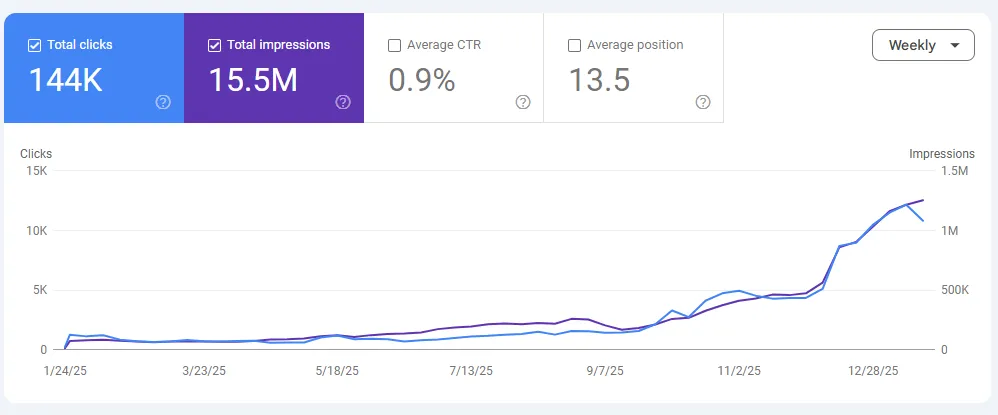
Measurement connects SEO strategy to real performance outcomes. Tools like Google Search Console provide insight into impressions, clicks, average position, indexing status, and query behavior. This data shows how content actually performs, not how it was intended to perform.
Reviewing search data helps identify gaps, declining pages, and new opportunities. Refinement may involve adjusting content depth, improving technical elements, or shifting keyword focus. Ongoing analysis supports steady progress through informed decisions rather than fixed assumptions.
Measure and Validate SEO Results
Measuring SEO performance helps determine whether proven strategies to boost organic traffic are working as planned. Search visibility depends on how web pages respond to search queries, user intent, and technical signals. Without clear measurement, SEO strategy decisions rely on guesswork instead of data. Validation helps confirm which changes affect traffic to your website.
The first step is defining what “results” mean in SEO. Common metrics include impressions, clicks, average position on the results page, and engagement tied to the target audience. These signals show how relevant keywords match search behavior. They also highlight gaps between targeted keyword goals and real performance.
Use Google Search Console for performance tracking
Google Search Console provides direct insight into how search engines index web pages and show them in search. Performance reports reveal which long tail keywords bring traffic to your site and which pages lack visibility. This data supports clear, fact-based decisions. It reduces reliance on assumptions.
Interpret results with professional context
SEO data should be reviewed together, not alone. Professionals such as Rodrigo César and Christopher Cáceres often stress that changes in impressions or clicks can signal shifts in relevance, not failure. Trends need context to be understood correctly. Interpretation depends on knowing how search engines and users react to updates.
Use validation to support long-term SEO
SEO measurement is meant to guide improvement, not prove success. Validation helps confirm what is working and where adjustments are needed across content creation, internal linking, and technical SEO. Over time, this process improves clarity, relevance, and performance based on real data, not assumptions. It supports steady growth as part of a broader digital marketing plan.
If you want clarity on what is holding your site back, schedule a consultation or request a free website audit. Reviewing real search data helps identify practical next steps and prevents wasted effort on changes that do not improve performance.