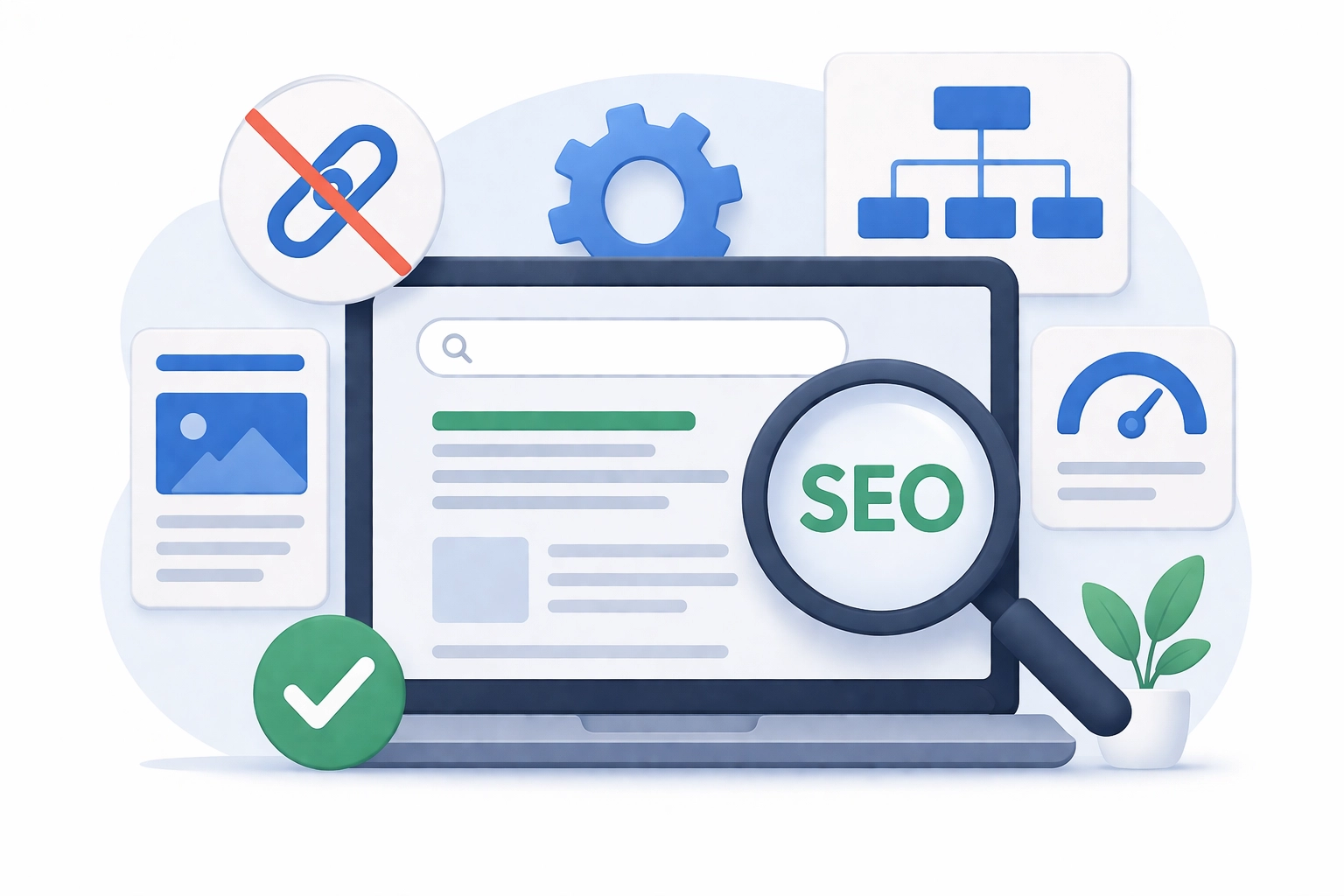
This approach works best for low- to medium-competition topics or when targeting long-tail keywords. It requires steady work on content quality, site structure, and performance, like page speed and indexing.
Instead of relying on outside links, authority comes from internal signals and complete content. At SSinvent, this method is studied from a technical and real-world view to see how it fits into broader digital marketing strategies.
Key Takeaways
- SEO without link building can work when content quality, internal linking, and technical SEO clearly align with search intent and provide complete, structured answers.
- Internal signals such as topical authority, anchor text, and site structure can serve as alternative ranking factors in low- to moderate-competition environments.
- A clear workflow that includes content creation, internal linking, and technical optimization is essential to maintain visibility without relying on external backlinks.
- This approach has limitations, as competitive keywords and broader authority often still require external backlinks for long-term scalability.
- Combining a strong user experience, consistent content updates, and a strategic structure helps improve search performance even without traditional link-building efforts.
Can You Do SEO Without Backlinks?
Search rankings depend on many ranking factors, not just links. A page can improve its place in search results by focusing on relevance, structure, and user experience. When content is clear and useful, it can rank in low-competition topics or long-tail searches. This shows that links are not the only way to rank.
SEO without link building focuses on internal signals and strong content. Instead of using external backlinks, authority comes from a clear structure and depth. These signals help a search engine better understand the page. This method works best when competition is low.
Limits of Link-Free SEO
SEO without link building has limits in competitive topics. High-volume keywords often need external backlinks to compete with strong sites. Without them, growth can slow down. This creates a limit on how far a page can rank.
Search engines also use backlinks to measure trust. Internal signals cannot fully replace that trust. Even with high-quality content, rankings may stop improving. In these cases, a full link-building strategy may be needed.
How SEO Without Backlinks Works
SEO without backlinks works by improving how a site is perceived in terms of relevance and structure. Search engines evaluate content, internal links, and technical SEO to rank pages. These act as signals when external backlinks are missing. When done well, they support rankings.
A clear structure helps both users and search engines. Pages should connect to related topics in a simple way. This improves navigation and user experience. It also helps search engines understand the site.
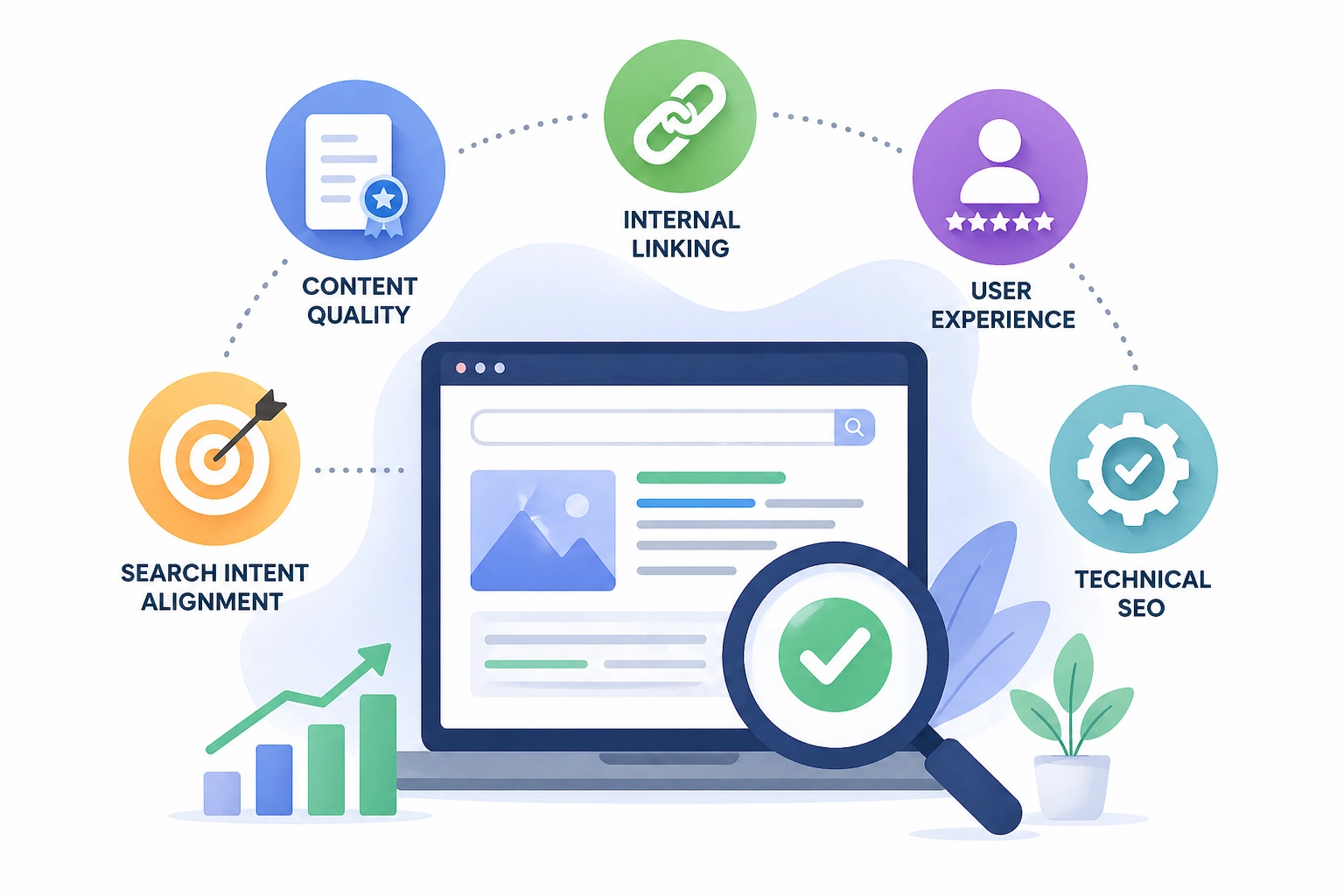
Key Ranking Signals Without Backlinks
When backlinks are not used, other signals become more important. These signals help decide how a page ranks. Knowing them helps improve results.
- Content quality – shows depth and accuracy
- Internal linking – spreads authority
- User experience – supports engagement
- Technical SEO – helps with indexing
- Search intent alignment – ensures relevance
Each signal helps the page perform better. When combined, they can support rankings without backlinks.
Internal linking serves as a ranking signal because it helps search engines understand a page’s importance and its relationships to other pages. When multiple pages link to one topic using consistent anchor text, it signals that the topic is important within the site.
This improves how the page is crawled, indexed, and ranked. Over time, this structure can increase visibility without relying on external backlinks.
Cause and Effect of Ranking Without Backlinks
Every SEO action has a result. Higher content quality improves relevance and aligns with user intent. Internal links improve crawlability and structure. These changes affect how a search engine ranks the page.
Technical updates, such as faster speeds, improve the user experience. This can increase engagement. Search engines see this as a positive sign. Over time, this supports better rankings.
How to Do SEO Without Link Building
Doing SEO without link building needs a clear process. The focus is on improving what is inside the site. This includes content, structure, and technical setup. Each part helps the site rank.
Rodrigo César and Christopher Cáceres study these systems by examining how the parts work together. Their approach focuses on consistency across pages. This helps improve overall performance.
Step-by-Step SEO Without Link Building Workflow
A simple workflow helps keep everything consistent. Each step builds on the next. This makes the process easier to follow.
- Choose a target query and do keyword research
- Create content that matches search intent
- Link pages using clear anchor text
- Improve technical SEO, like indexing and meta descriptions
Following these steps improves results. It also helps match ranking signals.
SEO Without Backlinks Checklist
A checklist helps keep things organized. It makes sure nothing is missed. This improves results over time.
- Match content with search intent
- Use clear headings and structure, including h3 tags
- Add internal links with strong anchor text
- Optimize meta descriptions
- Improve speed and mobile use
This process supports both usability and rankings.
Content Strategy for SEO Without Link Building
A strong content plan helps pages rank without external backlinks by focusing on relevance and completeness. Content should match user intent and fully answer the query. This improves how a search engine understands the topic and increases the chances of appearing in search results. A clear structure also supports better navigation and user experience.
Topic clusters group content around a single main theme and connect related pages. This creates a network that shows topical authority across the site. Internal links and descriptive anchor text, including contextual links, help search engines understand how pages relate to each other. This structure improves indexing and makes it easier for users to find related information.
Long-form content allows deeper coverage of a topic and supports more keyword variation. It helps incorporate related terms identified during keyword research, improving relevance across different queries. This also increases content quality by covering more angles of the topic. Well-structured sections, including clear headings and h3 tags, make the content easier to scan.
Updating content keeps it accurate and aligned with current search intent. Search engines favor pages that remain relevant over time. Adding new details, refining structure, and improving clarity can improve performance. Regular updates support long-term visibility without relying on a link-building strategy.
Alternatives to Link Building
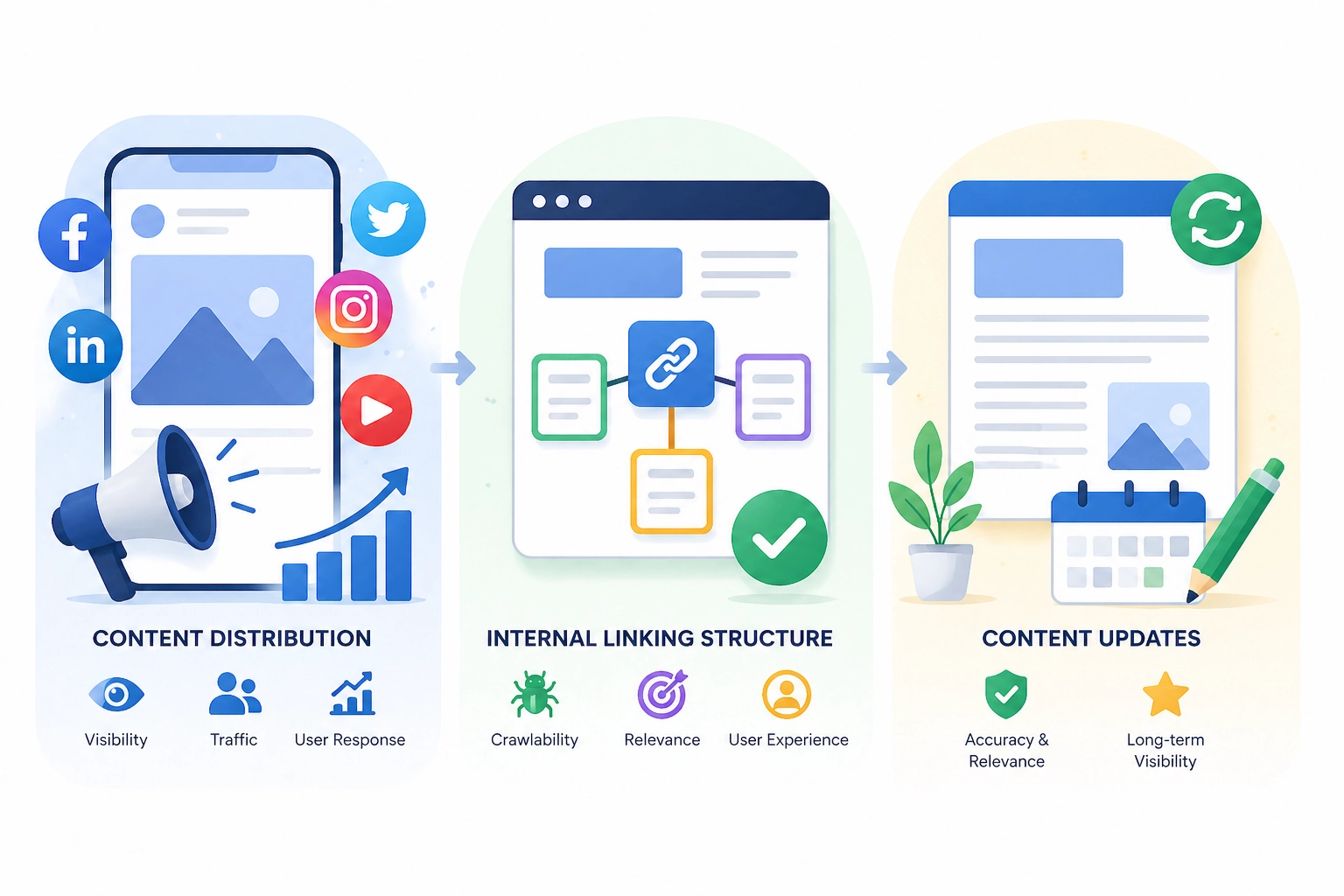
Other methods can support rankings without backlinks. These focus on internal signals and visibility. They help improve reach, engagement, and structure.
- Content distribution through social media: Sharing content on social media increases visibility and traffic. It also helps measure user response and guide improvements.
- Internal linking structure: Internal links connect pages and share authority. They improve crawlability, relevance, and user experience.
- Content updates: Keeping content accurate and aligned with search intent. This supports long-term visibility and content quality.
Real Examples of SEO Without Backlinks
A practical example involves a page targeting a long-tail keyword such as “how to fix a slow WordPress site without plugins.” The page ranks because it provides a clear, step-by-step answer, uses strong internal linking, and closely matches search intent.
It includes structured headings, clear H3 tags, and a fast loading speed, which improves user experience. Even without external backlinks, these combined signals help the page appear in search results.
Common Mistakes to Avoid
Mistakes can reduce results. Most problems come from weak content or poor structure. Fixing them helps improve rankings.
- Thin content: Content that lacks detail provides low value. This reduces relevance and limits ranking ability.
- Ignoring search intent: Content that does not match the query leads to poor results. This affects both rankings and user experience.
- Weak structure: Poor use of headings, h3 tags, and internal links makes the content harder to understand. This reduces clarity for both users and search engines.
When You Still Need Backlinks
Backlinks, often managed through strategies like netlinking, still matter in competitive topics. They provide outside trust and authority. Without them, growth is limited. This affects long-term results.
High-volume keywords need strong signals. External backlinks help pages stand out. They also improve visibility. This shows why they are still important.
If you want to review your current strategy or understand where SEO without link building fits your site, you can schedule a call. A structured review can help identify gaps in content quality, internal linking, and technical setup. This makes it easier to see what is limiting your website’s rank. You can then decide the next steps based on clear data and priorities.