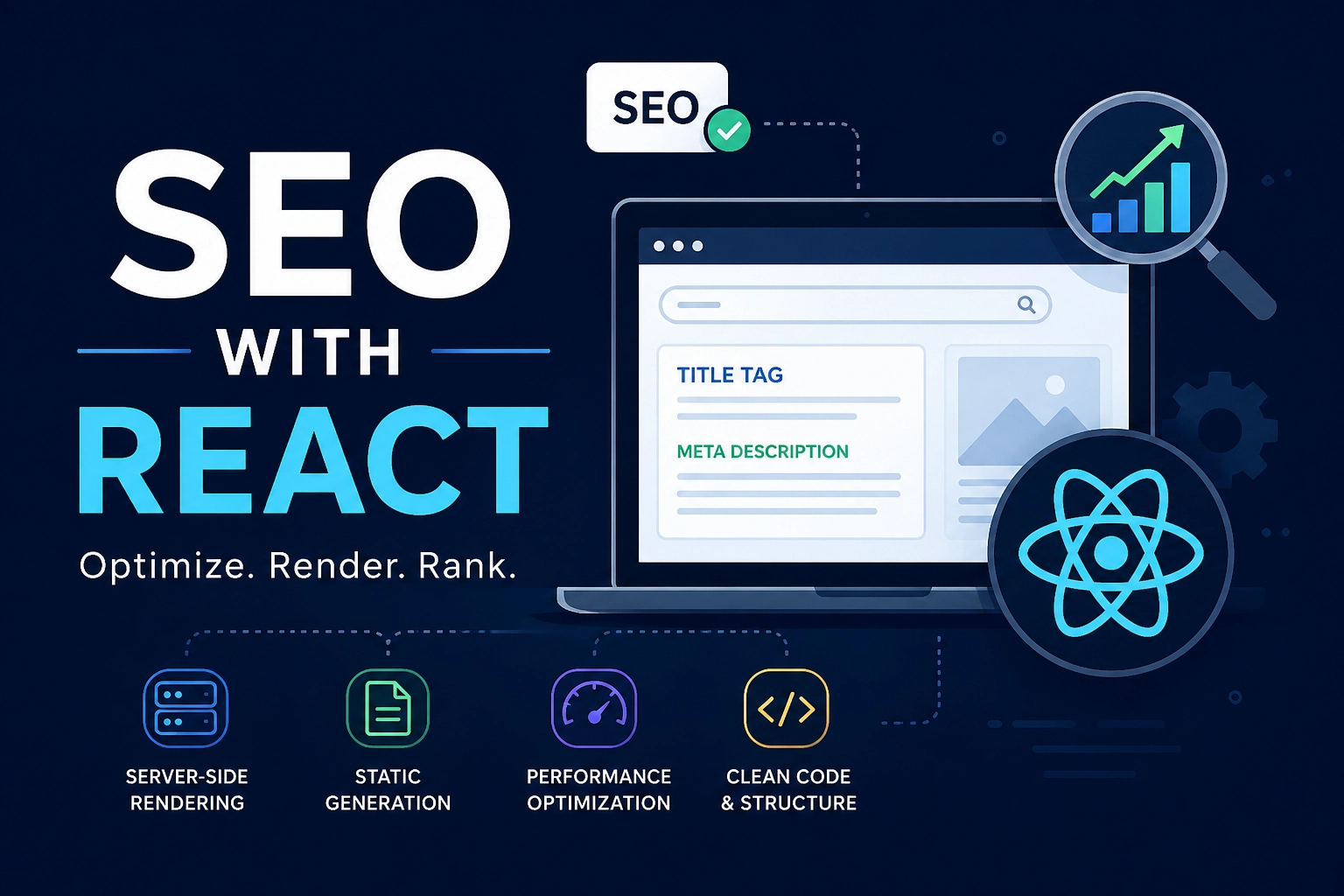
This helps search engines understand each page and show it properly. SSinvent examines SEO with React from a technical perspective, focusing on how rendering, crawlability, and speed interact. The goal is to make content easy to find and easy to read for both users and the search platform.
Key Takeaways
- React applications can support search engine optimization when content is accessible through methods like server-side rendering SSR, static HTML, or pre-rendering.
- Client-side rendering can delay indexing, so developers must ensure that search engine crawlers can access fully rendered content during the initial crawl.
- Proper implementation of metadata, such as title tags and meta name, description content, is essential for helping search engines understand each page.
- Performance improvements such as code splitting and image optimization enhance both user experience and crawl efficiency.
- A structured approach that includes rendering strategy, validation tools, and clear routing ensures consistent indexing and long-term visibility.
What Is SEO With React?
SEO with React means making React applications easy for search engine crawlers to read. Many web applications load content in the browser using client-side rendering. This can make it harder for the search platforms to see the full page.
To fix this, developers make key content available in static HTML or use server-side rendering SSR. This helps search engines understand the page during the first visit. React SEO optimization focuses on making content clear and easy to index.
SEO With a React App Explained
In a React app, each page is built from React components and often updated without full page reloads. This creates a dynamic experience for users, but it changes how content is delivered to search engine crawlers. Instead of receiving a complete page, crawlers may see content that depends on JavaScript execution.
For SEO, this means developers must control how each page exposes key information. Elements like title tags, meta name, and description content need to be updated correctly for every route. When each page has a clear structure and metadata, search platforms can understand and index React applications more reliably.

Is React SEO Friendly?
React can work well for SEO if set up correctly. The main issue is how content loads on the page. Client-side rendering can delay what search system crawlers see.
With the right setup, React can offer both speed and good indexing. This improves both user experience and search visibility.
When React Is Not SEO Friendly
React can create SEO issues when content depends on JavaScript to load. In these cases, search engine crawlers may not see the full page right away. As a result, some content may not get indexed.
Problems also appear when metadata is not handled correctly. Missing title tags or incorrect meta name and description content can confuse search platforms. Proper setup ensures that each page is clear and easy to understand.
Common React SEO Issues
React applications often have problems with indexing and crawlability. These issues come from how content loads and how JavaScript runs. Without fixes, search systems may not process pages correctly.
Crawlability and Indexing Issues
Crawlability refers to how easy it is for search engine crawlers to move through a site. In React apps, routing and dynamic content can block access. This makes it harder to find pages.
Indexing problems happen when the content is not ready during the crawl. Using static HTML helps fix this. It lets search platforms read the page right away.
JavaScript Rendering Problems
JavaScript rendering can slow down page processing. Search engines may render pages after the first crawl. This delays when content appears in results.
Large scripts also slow down the page. This affects both users and crawlers. Faster loading improves both access and ranking.
How to Do SEO With React
SEO with React needs a clear plan, supported by ongoing SEO experimentation to validate what works. You must combine rendering methods with technical fixes. The goal is to make content easy to read and index.
Rodrigo César and Christopher Cáceres stress the need to match development with SEO needs. This helps keep pages clear and consistent. It also improves how search engines read the site.
How to Implement SEO With React Step by Step
A simple process helps avoid errors. Each step improves how content is shown and indexed.
- Use server-side rendering SSR or static generation
- Set metadata with tools like React Helmet
- Make sure content appears in static HTML
- Test indexing with SEO tools
This process helps search engines understand your pages.
Best Rendering Methods for SEO
Rendering controls how content loads and how search system crawlers see your pages. The most common methods are server-side rendering SSR, static generation, and client-side rendering. Each method affects how fast content appears and how easy it is to index.
Server-side rendering SSR sends fully built pages to crawlers, which makes indexing more reliable. Static generation creates static HTML files that load fast and are easy to crawl. Client-side rendering can work, but it may delay content visibility, so it often needs support from other methods.
Technical SEO Fixes for React
Technical fixes help search platforms crawl and index your site. They improve structure, speed, and access. Without them, pages may not rank well.
Handling Meta Tags With React Helmet
Metadata is key for search systems optimization. React Helmet lets you set title tags, meta name, and meta description content for each page.
Common usage includes:
- Import Helmet from React
- Import Helmet from react-helmet
This keeps metadata clear across all pages.
Using a React SEO Checker
A React SEO checker helps find problems, while proper search engine submission ensures pages are discovered and indexed. It checks metadata, links, and speed. Regular checks keep your site working well.
Improving Crawlability and Indexing
A clear structure helps search engine crawlers navigate your site. Links should work without JavaScript. This makes pages easier to find.
Optimizing Page Speed
Fast pages improve user experience and search engine indexing, and often represent some of the easiest, quickest SEO wins in React projects. Search systems process faster sites more easily.
Key steps include:
- Optimize images
- Use code splitting
These steps make pages load faster.

React SEO Best Practices
Best practices help keep SEO strong over time. They reduce errors and improve structure. This makes your site easier to manage.
Christopher Cáceres and Rodrigo César highlight the need for clear structure and accurate setup. This helps both users and search platforms navigate the site.
Use this checklist to stay consistent:
- Check metadata
- Use structured data
- Review internal links
- Track performance
These steps support ongoing SEO.
Internal Linking and Routing
Internal linking connects pages and helps navigation. Routing must work without JavaScript. This helps search platforms’ crawlers read the site. Clear URLs improve both structure and user experience.
If you want help reviewing your setup or improving how your React site is indexed, you can schedule a call to go over your current implementation. We can look at your rendering approach, metadata, and structure to identify what needs adjustment. This gives you a clear next step based on your specific setup.