
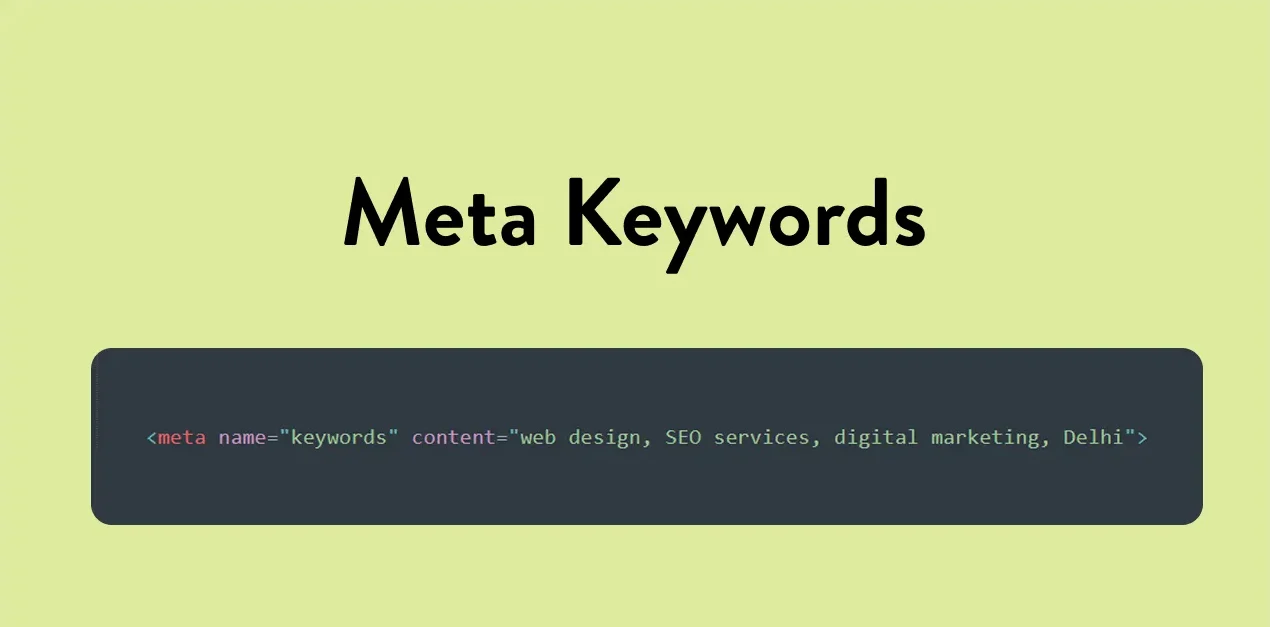
Meta keywords for SEO in 2026 do not help most websites rank because Google no longer uses that tag as a meaningful ranking factor. What still matters is visible page content, title tags, meta descriptions, page structure, and how well a page matches search intent.
At SSinvent, metadata is reviewed as part of a broader technical SEO strategy. This guide explains title tag best practices, the role of meta title description and keywords, and which HTML signals still help users and search engines understand web pages.
Key Takeaways
- In 2026, meta keywords for SEO do not meaningfully help rankings, so teams should focus on visible content, page structure, and search intent instead.
- Title tags and meta descriptions still matter because they shape how pages appear in search engine results and can influence click-through rates (CTR).
- Modern SEO relies more on clear headings, canonical and robot directives, structured data, and an SEO-friendly HTML structure than on outdated hidden keyword fields.
- Free tools and generators can help draft or review metadata, but they cannot replace human judgment about accuracy, clarity, and user intent.
- The strongest metadata strategy is to keep titles and descriptions unique, align them with the page’s real content, and review them regularly in Google Search Console.
Do Meta Keywords Still Matter in 2026?
Why Google Ignores Meta Keywords
Google no longer uses the meta keywords tag as a meaningful ranking factor. Its current guidance focuses on helpful content, clear purpose, and signals that help the engine understand a page accurately. That makes an outdated hidden tag far less important than the visible words on web pages, the title, the headings, and the way the content answers a real search query.
Why the Tag Became Outdated
The meta keywords tag lost value because it was easy to abuse. Many sites filled it with repeated terms that did not reflect the real topic of the page. Modern search engine optimization now depends more on semantic understanding, internal context, contextual links, and structured data than on a hidden keyword list.
Meta Title, Description, and Keywords Explained
What Each Tag Does
The phrase “meta title, description, and keywords” often groups together several elements, even though each one serves a different purpose.
In 2026, the keywords tag no longer helps most rankings, while the title tag and meta description still shape how a page is understood and presented. Meta descriptions can also influence click-through rates, which is why modern page optimization focuses more on visible relevance and accurate metadata than on hidden keyword fields.
Which Tags Still Help SEO
The tags that still matter are the ones that help search engines interpret, index, and display a page correctly. That includes title tags, meta descriptions, canonicals, robots directives, hreflang, and schema. Technical audits now focus on HTML meta tags that support understanding, not on outdated hidden keyword fields.
Old vs Current Metadata Priorities
What No Longer Helps
Older SEO checklists often treated the keywords tag as a core part of on-page work. In 2026, that view is outdated because modern SEO depends far more on visible relevance, page structure, and alignment with search intent. The title and description still affect how pages appear in search engine results, while the keywords field does not hold the same value.
What Still Supports SEO
Current metadata priorities are more practical and more visible. Strong titles, useful descriptions, clear heading structure, robot directives, canonical signals, and structured data all help users and search engines understand web pages.
A modern SEO strategy should treat metadata as one part of a larger page system rather than as an isolated shortcut.
Title Tag Best Practices for 2026
How to Write Strong Title Tags
A strong title tag should clearly describe the page, match search intent, and include the main topic in natural language. It should help users understand the page before they click, not just insert keywords.
The best approach is to lead with the main idea, keep the wording specific, and make sure the title reflects the actual page content. A useful title tells both readers and crawlers what they can expect without sounding forced. Accuracy matters more than trying to fit as many phrases as possible into one line.
SEO Tags Examples for Titles
A strong title for an informational page is “Do Meta Keywords Matter in SEO in 2026?” because it matches the question directly. A weak example is “Best Meta Keywords SEO 2026 Free Tool Guide Tips” because it reads like a pile of terms instead of a clear answer. Titles work best when the visible wording stays relevant to the search query and useful to real readers.
Title Length, Formatting, and Punctuation
A strong title tag should be easy to scan on both desktop and mobile. Rodrigo César recommends keeping titles concise, often around 50 to 60 characters, so the main wording stays visible in browser tabs and results pages. This is not a strict rule, but it helps reduce truncation and keeps the topic clear.
Formatting also matters because crowded titles are harder to read. At SSinvent, the recommendation is to use clear separators and avoid excessive symbols. In most cases, the best approach is to put the main idea first and keep punctuation simple.
HTML SEO Meta Tags That Matter
How to Write Better Meta Descriptions
A strong meta description explains the page in simple language and gives the user a clear reason to click. It should align with user intent and can include a direct call to action when that improves clarity. The description should summarize the real page’s content, not try to trick the reader with vague claims or unrelated keywords.
Build an SEO-Friendly HTML Structure
An SEO friendly HTML structure helps crawlers and readers follow the same logic from top to bottom. Headings, semantic tags, canonical signals, robots directives, and schema all give search engines more context about sections, duplicates, and special data.
Use Clear Heading Tags
Heading tags should describe the section that follows and should not repeat the same idea in slightly different words. A clear H1 sets the topic, H2 headings group the main ideas, and H3 headings break down supporting points without clutter. When headings reflect search intent and section purpose, they improve readability and topical relevance across web pages.
Canonical, Robots, and Schema in Context
What Canonical and Robot Directives Do
Canonical and robot directives support indexing and page control, even though they do not work like title tags or meta descriptions. A canonical tag, by definition, helps search engines understand which version of similar pages should be prioritized, while robot directives help control crawling and indexing behavior.
These tags do not replace strong content, but they do help search engines interpret page relationships more accurately.
How Schema Supports Search Understanding
Unlike meta keywords, schema markup gives structured information about a page, such as products, reviews, FAQs, or contact details. It can help search engines interpret page details more clearly and support enhanced results in some cases. This matters because structured data explains page content more precisely than a hidden keywords tag.
How Google Rewrites Search Snippets
Why Titles and Descriptions Change
Google does not always show the exact title tag or meta description that a page includes. It may rewrite a snippet when the original wording is too vague, too long, too repetitive, or less relevant to the user’s search query. That is why title tag best practices should focus on clarity and relevance first, not just on placing a focus keyword at the start.
A practical workflow is to compare the written metadata with what Google actually shows in search engine result pages. If the search engine rewrites the snippet often, that may signal that the original wording is not specific enough or not closely aligned with the page’s content. This helps teams improve metadata based on real search behavior.
SEO Tags Examples and Free Tools
SEO Meta Tags Generator Tools
An SEO meta tags generator can save time, but it should be treated as a drafting aid, not a final editor. A generator can produce a first pass for title and description fields, but good metadata still needs judgment about audience, purpose, and wording. Human review is still needed for precision, tone, and factual fit.
When Free Tools Can Help
Free tools help most when they support checking, not guessing. Google Search Console can show impressions, clicks, and average positions, which helps identify web pages where the title or description may need revision. Preview tools and validators can also help teams review snippets and spot duplicates or missing tags across many URLs.
What Generators Cannot Replace
No tool can fully replace editorial judgment about intent, context, and accuracy. A generator cannot decide whether a title overpromises, whether a description misstates the topic, or whether the page content truly satisfies the reason for the search.
This kind of review depends on technical SEO judgment, because tools cannot fully assess intent, accuracy, or whether the metadata truly matches the page.

How to Audit Metadata Performance
What to Check in Google Search Console
Metadata should be reviewed against performance data, not just style rules. Google Search Console helps identify web pages with high impressions but weak clicks, which can point to title or description problems on search engine result pages. When reviewing results, look for patterns instead of isolated numbers.
When to Rewrite Tags
A tag should be rewritten when it no longer reflects the page topic, when it targets the wrong search query, or when Google repeatedly shows a different version in the results page. Titles and descriptions may also need updates when search intent changes or when the page content has been revised.
The goal is not constant rewriting, but to keep metadata accurate and aligned with the page’s content over time.
How Metadata Supports Search Intent
Match the Snippet to the Query
Metadata works best when it reflects what the user is actually trying to accomplish. Search intent is the purpose behind a search, and Google’s guidance says ranking systems prioritize helpful, reliable information created to benefit people.
That means the title and description should not just contain keywords. They should match the likely reason behind the search query and set accurate expectations before the click.
Connect Metadata to the Page Content
A good snippet should describe what the page actually delivers. If the title promises one thing and the page’s content delivers something else, the result may attract the wrong click or fail to satisfy the user. This matters under Google’s quality framework because usefulness depends on how well the landing page fits the user’s purpose, and trust remains central to strong E-E-A-T.
Common Myths and Errors
Is There a Best Meta Keywords Tag in 2026?
A common myth is that there must be a “best” list of meta keywords that can improve rankings across many pages. In reality, search engines evaluate page quality, relevance, and user satisfaction in more complex ways than a hidden keyword field can express. The better question is not which keywords to hide, but how the visible page, metadata, and structure align with the user’s task.
Do Reddit Claims About Meta Keywords Hold Up?
Forum discussions can be useful for spotting confusion, but they should not override primary guidance or current technical documentation. This standard matters when reviewing claims from Reddit, social media, or casual blog posts about meta keywords SEO in 2026 in Reddit debates, because not all advice is current or reliable. Use forums to see what people ask, then verify the answer against trusted sources and live page behavior.
Keyword Stuffing and Weak Snippets
Keyword stuffing is still one of the clearest metadata mistakes because it reduces readability and can make the snippet look manipulative. Weak snippets also fail when they hide the topic, miss the search intent, or skip a useful call to action for the reader. Better snippets are specific, accurate, and tied closely to the visible content.
Final SEO Best Practices
Match Search Intent First
The first rule is to match search intent before refining any tag. Every title, description, heading, and section should support the reason the user searched in the first place. If the page answers the wrong question, even clean metadata will not make it the best result.
Keep Tags Clear and Unique
Each page should have a clear and unique title and description that reflect its specific topic. Unique tags help search engines distinguish similar pages, help users choose the right result, and reduce confusion across large sites with related URLs.
This is especially useful for pages that target close variations of a focus keyword within one broader search engine optimization program.
Review and Update Tags Regularly
Metadata should be reviewed as part of an ongoing maintenance process, not written once and forgotten. A sensible workflow is to check important pages, compare their snippets with current search engine results, and update titles or descriptions when the search query landscape changes. That cycle keeps metadata aligned with current search engine result pages, browser tabs, organic traffic patterns, and the way real users react to snippets.