

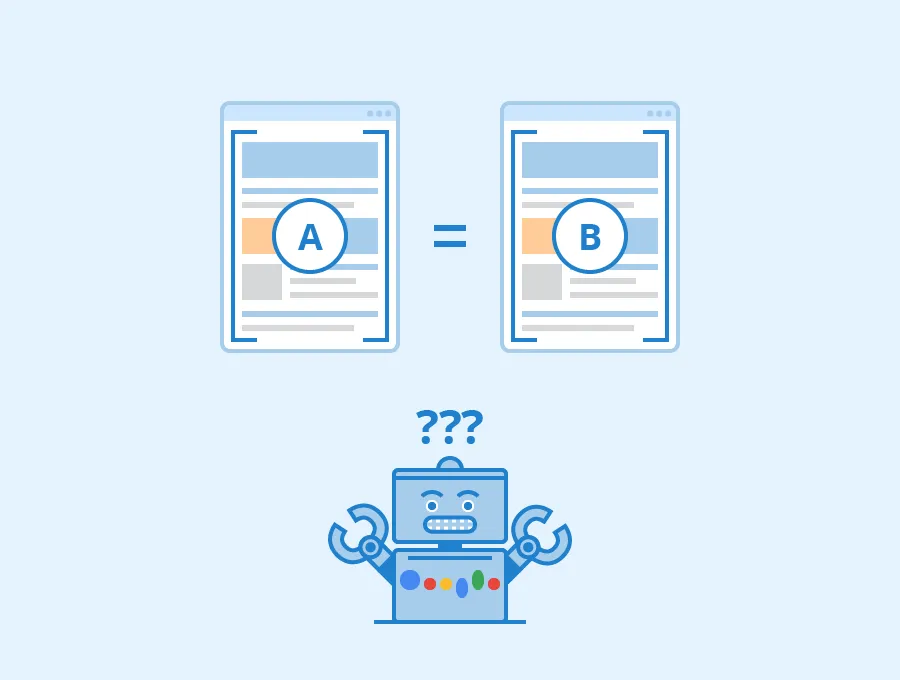
Duplicate product descriptions SEO explains how search engines handle product pages that use the same or very similar text. Google does not usually apply a duplicate content penalty in normal e-commerce cases. Instead, it may filter similar content in search results and choose one web page to show. This can affect visibility, link equity, and crawl budget.
At SSinvent, professionals such as Rodrigo César and Christopher Cáceres study these patterns to understand how duplicate content issues affect rankings. This guide explains what happens, why it happens, and how to fix it.
Duplicate content becomes a problem when search engines cannot tell which page is most important. Google looks at signals like canonical tags, internal links, and keyword focus. If those signals are unclear, rankings are often subject to change.
Key Takeaways
- Duplicate product descriptions SEO does not usually trigger a duplicate content penalty, but Google may filter similar content and show only one version in search results.
- Internal duplication, such as duplicate product detail pages caused by URL parameters or trailing slash variations, can split link equity and waste crawl budget.
- Using canonical tags, setting a clear canonical URL, and reviewing reports in Google Search Console help consolidate multiple versions of the same content.
- Writing a unique product description for each product page and targeting distinct keywords reduces cannibalization and improves search engine clarity.
- A structured SEO strategy that combines technical fixes and deeper content improves how product pages perform in search results over time.
What Is Duplicate Product Content?
Duplicate product content exists when multiple product pages use the same or very similar text. This often happens when stores copy manufacturer descriptions. It can also happen when one website creates multiple versions of the same content by mistake.
When search engines find similar content across multiple pages, they must choose one version to display in search results. Google groups these pages and selects a primary page. The other pages may stay indexed, but will not show often in search results.
Duplicate content usually appears in three common cases:
- Reused manufacturer descriptions across different websites
- URL parameters that create duplicate product detail pages
- Internal duplication from filters, sorting, or navigation
You must identify the source before fixing the issue.
Duplicate product detail pages explained
Duplicate product detail pages appear when one product has more than one URL. Filters, sorting options, or session IDs can create extra versions. A trailing slash can also create multiple versions of the same content.
For example, a product may load at /product and /product/. If both versions are indexable, Google may treat them as separate product pages. Without a correct canonical URL or a rel=canonical tag, Google must decide which page to rank.
Other common causes include:
- HTTP and HTTPS are both active
- www and non-www versions live
- The same product in different categories
Each version splits authority if not handled correctly.
Internal vs cross-domain duplication
Internal duplication happens inside one website. It often results from URL settings or technical errors. These duplicate content issues waste crawl budget because bots crawl multiple pages with similar content.
Cross-domain duplication happens when many websites use the same product description. This is common in e-commerce. Google usually picks one version to show in search results instead of applying a duplicate content penalty.
In cross-domain cases, stronger websites often win. Authority, backlinks, and clean structure influence which page appears.

Are Duplicate Product Descriptions Bad for SEO?
Duplicate product descriptions are not always harmful. Google has said it does not punish normal duplication. However, similar content can reduce visibility because Google filters extra versions.
The main issue is confusion, not punishment. When multiple pages target the same keyword with nearly identical text, Google groups them. Only one page may show in search results.
This can lead to:
- Fewer impressions
- Lower click rates
- Unstable rankings
Understanding this helps you build a better SEO strategy.
Do they cause Google penalties?
Most duplicate product descriptions do not cause a manual penalty. A duplicate content penalty usually applies only in cases of spam or manipulation. Normal e-commerce duplication does not fall into that category.
Still, duplication can weaken performance. If many product pages look the same, search engines cannot decide which landing page is most important. That reduces ranking strength.
A clear structure prevents this problem.
Why does Google filter similar pages?
Google filters similar content to improve user experience. Users want different and useful results. They do not want to see the same text many times.
When Google detects duplicate product descriptions SEO patterns, it groups those pages. It then shows one main result. The others remain accessible but appear less often.
You can use Google Search Console to check which pages Google selects as canonical. This helps you find duplicate content issues.
How SEO Duplicate Content on Product Pages Affects Rankings
SEO duplicate content on product pages can compete with each other. When many pages target the same keyword with similar content, they split the ranking signals. This weakens your SEO strategy.
Search engines review content, links, and structure. If multiple pages look equal, signals are spread across them. No single page becomes strong.
This often leads to:
- Split link equity
- Slower indexing
- Wasted crawl budget
Page competition and keyword cannibalization
Keyword cannibalization happens when multiple pages target the same search term. In duplicate product descriptions SEO cases, this happens when pages reuse identical text. The pages compete rather than supporting a single strong page.

For example, a store may create separate pages for color variations but use the same description for each. Without a unique product description for each version, rankings may rotate or drop.
A clear keyword plan prevents cannibalization.
Link equity and crawl efficiency
Link equity is the value passed through links. If backlinks point to different versions of the same product, value splits. This weakens each product page.
Crawl efficiency also matters. Search engines have a limited crawl budget. If bots crawl duplicate product detail pages, they may ignore more important updates.
To improve crawl efficiency:
- Consolidate duplicate URLs
- Use canonical tags correctly
- Remove unnecessary parameter pages
These steps improve clarity and indexing.
How to Fix Duplicate Product Descriptions SEO
Fixing duplicate product descriptions SEO requires content and technical changes. You must reduce similar content and send clear signals to search engines.
Effective fixes include rewriting text, setting canonical tags, adjusting keywords, and improving internal links. Rodrigo César and Christopher Cáceres often emphasize that clear signals help search engines understand a page’s purpose.
A simple workflow includes:
- Finding duplicate pages with SEO tools
- Checking Google Search Console reports
- Consolidating multiple versions of the same content
- Rewriting important product pages
How to write a product description
A unique product description focuses on real use and benefits. Do not copy manufacturer text. Explain how the product solves a problem.
Add details such as size, materials, and practical uses. Connect features to real outcomes. This reduces similar content and strengthens clarity.
Review each web page for repeated phrases. Rewrite sections with new angles or extra detail. Avoid copying text across multiple pages.
Use canonical tags vs noindex
Canonical SEO tells search engines which page is the main version. The rel=”canonical” tag points to the preferred canonical URL. This consolidates link equity across duplicate pages.
Noindex tells search engines not to index a page. Use it for filter pages or temporary URLs. Do not use it on important product pages.
Check canonical tags in Google Search Console. Make sure each canonical URL points to the correct page.
Target unique keywords per page
Each product page should focus on one main keyword. Do not repeat the same keyword on many pages. This avoids internal competition.
Different keywords clarify search intent. Over time, this improves how Google ranks pages. A clear SEO strategy and advanced SEO services help support this structure.
Improve internal linking and content depth
Internal links guide search engines to your main pages. If duplicate pages exist, link to the preferred version clearly. This strengthens authority.
Add more depth to important pages. Include FAQs, specs, and real-world examples. More depth makes pages less likely to look like similar content.
SEO Product Description Examples
Examples show how to reduce duplication and improve clarity. The goal is to move from generic text to useful detail.
Product description for clothing
A weak description might say, “100 percent cotton shirt with modern fit.” Many stores use this text. It creates duplicate content issues.
A stronger version describes fabric weight, stitching quality, and fit comparison. It explains comfort and use cases. This creates a unique product description.
Product description for food products
Many food retailers copy supplier descriptions. This creates duplicate product descriptions and SEO risks across multiple pages.
A better version includes serving ideas, storage advice, and meal pairings. It adds context and helps users. This reduces duplication.
Product description writing for students
Students often list features without context. Repeating bullet lists creates similar content.
A simple template includes:
- Problem the product solves
- Key feature
- Clear benefit
- Target user
This structure supports clarity and NLP interpretation.
Etsy description and brand examples
Etsy sellers often reuse description templates. An Etsy description example that repeats generic text creates duplicate content issues.
Brand description examples should explain process, mission, and values. Etsy shop announcement examples can highlight updates or shipping policies. These details reduce the number of versions of the same content.
FAQs About Product Descriptions in SEO
Does duplicate content always cause a penalty?
No. A duplicate content penalty usually applies only to spam. Normal e-commerce duplication leads to filtering, not punishment.
How can I find duplicate product pages?
Use SEO tools and review Google Search Console coverage reports. Look for duplicate URLs and canonical conflicts.
Should I use a canonical tag or a noindex tag?
Use a canonical tag when pages are similar, but one should rank. Use noindex when a page should not appear in search results.
Does duplicate content affect crawl budget?
Yes. Bots may waste crawl budget on duplicate pages rather than on important updates.
Can similar product descriptions rank separately?
Yes, if each page uses a unique product description and a distinct keyword focus. Clear differences improve ranking potential.
Duplicate product descriptions SEO requires a clear structure and smart decisions. Google does not punish duplication by default, but filtering reduces visibility. Strong canonical tags, focused keywords, and deeper content help product pages perform better in search results.