

Search content often needs structure to guide users from discovery to action. This is where AIDA (Attention, Interest, Desire, and Action) SEO becomes relevant. It applies the AIDA model to search-focused content, helping align keywords, intent, and format with how users process information.
The approach explains how content can capture attention, build interest, support evaluation, and enable action without forcing outcomes. This article outlines how AIDA SEO works, how it connects to search intent, and how teams like SSinvent analyze it as part of structured SEO research.
In search environments, users rarely arrive with a single, fixed goal. Queries often reflect uncertainty, comparison, or early exploration. AIDA SEO provides a way to organize content so it responds to these shifting needs. Rather than optimizing every page for the same outcome, it supports intent-based differentiation.
Key Takeaways
- AIDA SEO uses the AIDA model to match search content with user intent instead of pushing users to act too soon.
- Each stage of the AIDA framework links to a different type of search, which explains why learning pages, comparison content, and action pages serve different roles in the customer journey.
- Aligning keywords and content structure with the stages of AIDA helps reduce confusion and improves how users find and understand information.
- The AIDA model still works in digital marketing when used as a flexible guide, since users often move back and forth between stages.
- Effective AIDA SEO focuses on clear structure, simple explanations, and intent alignment rather than persuasion or guaranteed results.
What Is AIDA in SEO and Marketing?
AIDA in SEO and marketing refers to applying the classic AIDA marketing model to content created for search engines. The model describes how users move through attention, interest, desire, and action as they engage with information. In SEO, this translates into matching content types and keywords to different stages of the customer journey. The goal is clarity and relevance rather than persuasion.
This approach helps explain why not all pages should aim for immediate action. Some queries indicate early learning, while others suggest readiness to evaluate options. AIDA SEO provides a framework for organizing content based on these signals. It helps ensure that content meets users where they are, rather than where marketers want them to be.
In digital marketing, AIDA also provides a shared language across teams. SEO, content, and email marketing often target different points in the marketing funnel. Using a consistent framework reduces misalignment between marketing efforts.
The AIDA Model Explained
The AIDA model is a communication framework that outlines four stages of engagement. Each stage reflects a different mental state and information need. In content and SEO, these stages help explain why users search for different terms at different moments. Understanding this structure supports clearer content planning.
Originally developed for advertising analysis, the model has been adapted across multiple channels. In search contexts, the message is delivered through page structure, headings, and internal linking. The AIDA framework does not promise results, but it provides a structured framework for analyzing how information is presented.
In SEO, the value of the model lies in interpretation. It helps teams understand why a blog post, a landing page, and a product comparison serve different purposes even when they target the same topic.
The four principles of AIDA
- Attention: Content at this stage aims to capture attention by addressing broad questions or problems. Pages often focus on definitions, high-level explanations, or emerging trends. The goal is to grab attention without overwhelming the reader.
- Interest: At the interest stage, users seek deeper explanations. Content expands on concepts, explains processes, and answers follow-up questions. This stage often includes guides, long-form articles, or structured tutorials.
- Desire: Desire stages focus on evaluation. Users compare options, assess credibility, and look for supporting details, such as case studies or documented examples. Social proof may appear here as supporting context, not persuasion.
- Action: Content at this stage supports task completion. This may involve forms, tools, or clear calls to action. In AIDA SEO, clarity and usability matter more than promotional language.
AIDA Theory and Academic Foundations
AIDA theory originated in early advertising and communication studies. It was designed to describe how messages move from awareness to response. Over time, the model has been discussed in academic contexts as a descriptive rather than predictive framework.
In research literature, AIDA is often used to analyze communication effectiveness. Scholars examine how messages are structured rather than assuming guaranteed outcomes. This distinction aligns well with SEO, where user behavior cannot be controlled.
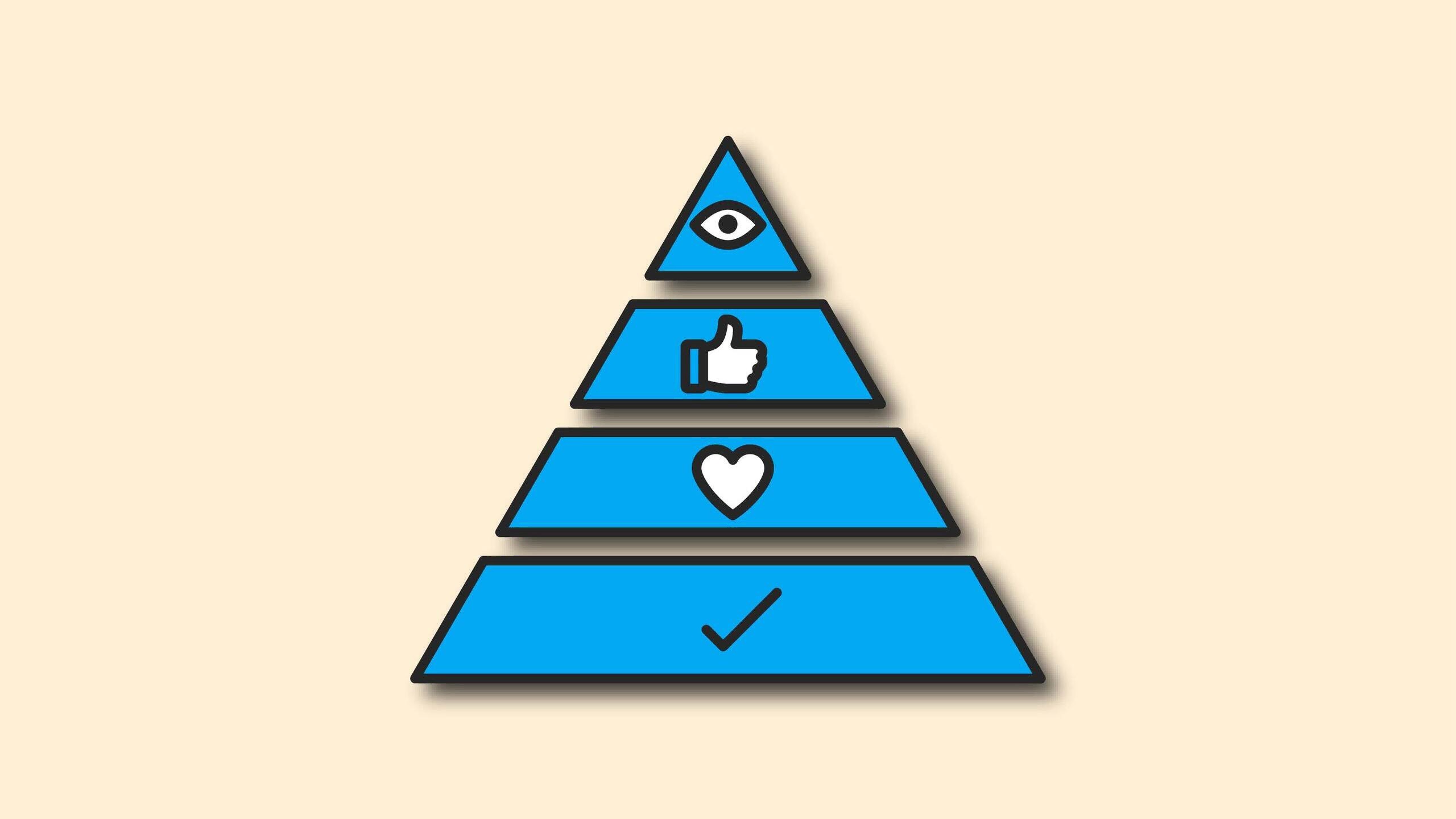
The AIDA marketing model also highlights limitations. Users may skip stages, revisit earlier content, or consume information out of order. Search behavior reflects this non-linear movement. Understanding these limits prevents overreliance on rigid funnel assumptions.
How the AIDA Framework Applies to SEO
The AIDA framework applies to SEO by connecting search intent with content structure. Each stage of AIDA aligns with a different type of query and informational need. This mapping supports more accurate content planning.
Rather than treating all traffic as equal, AIDA SEO encourages intent-based analysis. Pages are evaluated based on how well they serve their stage in the customer journey. This improves topical clarity and internal linking logic.
This approach is often used in digital marketing audits and aligns closely with structured analysis methods found in advanced SEO services. It helps identify gaps where content may be missing for a specific stage or duplicated across stages.
Search intent across AIDA stages
At the attention stage, users search broadly. Queries aim to capture attention and introduce a topic. These searches often lead to educational blog content or introductory pages.
During the interest stage, users refine their questions. They look for explanations, definitions, or process descriptions. Content supports learning and exploration without requiring commitment.
At the desire stages, users evaluate options. Queries may include comparisons, feature breakdowns, or supporting evidence. Pages here often include structured explanations and references.
At the action stage, users search with the intent to complete a task. Queries are direct and goal-oriented. Content should support usability and reduce friction.
Keyword Strategy by Funnel Stage
Keyword strategy changes across the marketing funnel. Awareness keywords are broad and informational. Interest keywords are more specific and process-focused.
Desire keywords often include qualifiers, comparisons, or evaluation terms. Action keywords tend to reference tools, access, or next steps. Mapping keywords to stages of the AIDA framework prevents mismatched content.
This approach also supports clearer performance analysis. Metrics can be evaluated based on intent rather than solely on volume.
AIDA Model Example for SEO Content
An AIDA model example in SEO shows how the theory translates into structure. Content formats differ based on the stage being addressed. This does not require separate campaigns; it requires intentional design.
For a single topic, multiple pages may exist. Each page serves a different intent within the marketing funnel. This reflects how customers move through information over time.
Blog content example
A blog post typically supports attention or interest stages. It introduces concepts, explains terminology, and provides background. The goal is to capture attention and establish understanding.
At this stage, strong calls to action are unnecessary. Instead, clarity and logical progression matter most. This supports readers who are still forming their understanding.
Landing page example
A landing page often supports desire or action stages. It summarizes information, clarifies options, and supports evaluation. Content may reference social proof as contextual support.
The landing page format is designed to reduce friction, a principle commonly applied in affordable web design services for small businesses. In AIDA SEO, this means structure and accessibility, not persuasion. Clear headings and concise explanations support decision-making.
AIDA SEO Example in Practice
Attention
Page type: Informational blog post
- Keyword: “what are SEO services”
- User intent: Learn basics
- Content:
- Define SEO in plain terms
- Explain what SEO does and does not do
- No pricing
- No sales pitch
- Define SEO in plain terms
Example page:
“What Are SEO Services and How Do They Work?”
This page exists only to answer the question.
Interest
Page type: Educational comparison
- Keyword: “SEO services for small businesses”
- User intent: See relevance
- Content:
- SEO vs ads
- What small businesses usually need
- Common mistakes
- Light internal links to deeper pages
- SEO vs ads
Example page:
“SEO Services for Small Businesses: What Actually Matters”
You are still teaching.
You are not selling yet.
Desire
Page type: Solution-focused service page
- Keyword: “small business SEO agency”
- User intent: Evaluate providers
- Content:
- Clear service breakdown
- Process overview
- Case examples
- Why your approach fits this problem
- Clear service breakdown
Example page:
“Small Business SEO Agency Built for Long-Term Growth”
This is where credibility matters.
Action
Page type: Conversion page
- Keyword: “hire SEO agency”
- User intent: Take next step
- Content:
- Clear offer
- What happens after the call
- Simple CTA
- Clear offer
Example page:
“Book a Free SEO Strategy Call”
No education here.
Just direction.
How this works as a system
- Each page answers one intent only
- Pages link forward, not sideways
- Users move naturally without pressure
This is the layered structure SSinvent uses when reviewing content systems.
Rodrigo César and Christopher Cáceres often point out that problems arise when teams mix stages on a single page.

Is the AIDA Model Still Relevant Today?
The AIDA model remains a relevant analytical tool. It helps explain how users interact with information across channels. In modern digital marketing, its value lies in organization rather than prediction.
Search behavior has evolved. Users switch between devices, revisit queries, and consume content across formats such as email marketing and social media posts. AIDA still provides a useful lens to understand this movement.
When applied flexibly, the model adapts to modern contexts. It supports structured thinking without assuming linear progression.
Common Mistakes When Using AIDA for SEO
A common mistake is treating AIDA as a strict sequence. Users often move back and forth between stages. Overly rigid structures can reduce relevance.
Another issue is forcing calls to action into early-stage content. This can disrupt learning and reduce trust. In the early stages, prioritize explanation and context.
A third mistake is ignoring performance measurement. While AIDA SEO focuses on structure, outcomes still require evaluation. Metrics should reflect intent alignment rather than raw traffic. AIDA is most useful when applied as a guide. Treating it as a checklist can limit its effectiveness.