


Costs often vary by industry, competition, location, and lead quality, with common ranges from about $10 to $300 per lead. The model pays off when the cost per qualified lead stays below the value that the business can earn from a new customer.
SSinvent evaluates this model through technical SEO, content strategy, conversion tracking, and web development so the lead source, page quality, and attribution process are clear.
Key Takeaways
- Pay-per-lead SEO charges for verified, qualified inquiries instead of general traffic, rankings, or impressions.
- This approach works best when qualification rules, tracking, attribution, and ownership terms are clearly defined before work begins.
- Costs commonly range from about $10 to $300 per inquiry, depending on the industry, competition, location, and quality standards.
- Unlike PPC, pay-for-performance SEO, or rank-and-rent, this structure focuses on qualified inquiries generated through organic search.
- Success depends on keeping the acquisition cost below the value of a new customer while maintaining accurate reporting.
What Is Pay-Per-Lead SEO
This model charges for qualified leads from organic search. It does not charge only for traffic, rankings, or content work.
The pay-per-lead model is common for local services, contractors, clinics, consultants, and B2B companies. A pay-per-lead service often builds landing pages, tracks form submissions and calls, and sets clear rules for what counts as a valid prospect.

How SEO Pay per Lead Works
The process starts with keyword research, site fixes, SEO and content marketing, and tracking setup. The goal is to attract potential customers who are searching for relevant products or services.
Search engine visibility brings users through service terms, local searches, cost searches, and comparison queries. Once users arrive, forms, calls, and booking requests become tracked actions.
Tracking checks each inquiry by service type, location, contact details, and intent. This helps show the real cost per lead and reduces disputes.
Comparing This Model With Other Channels
PPC buys fast ad visibility. Organic growth depends on useful pages, strong site health, links, and content relevance.
Pay-for-performance SEO may track rankings, traffic, or conversions. This model focuses more on verified customer inquiries that meet agreed rules.
Rank and rent means one party owns a ranked site and rents the inquiries to another business. Before choosing this setup, a business should check reporting, exclusivity, and asset ownership.
How Much Does SEO Pay
Revenue depends on the niche, close rate, competition, and customer value. A legal consult, roof repair quote, software demo, or medical visit can have very different value.
High-value services can often support higher acquisition costs. Agencies also need to review site work, content cost, tracking setup, and client retention.
Rodrigo César and Christopher Cáceres would review these points as part of a full search strategy that includes advanced SEO services and web development. Rankings and traffic alone do not show the full picture.
When This Model Pays Off
This structure works best when:
- The business knows the value of each qualified inquiry.
- There is enough search demand for the service.
- The website can convert visits into calls, form submissions, or bookings.
- The sales team follows up quickly.
Good fits include:
- Contractors
- Repair companies
- Consultants
- Clinics
- Legal professionals
- B2B companies
This approach may not work well when:
- Services are unclear.
- Tracking is weak.
- Follow-up is slow.
- Qualification rules are vague.
How to Build a PPL SEO Strategy
- Start with a profitable niche that has real demand.
- Choose keywords that show buying intent, not only research intent.
- Create landing pages that answer key questions fast.
- Explain the service, build trust, and guide users to a simple next step.
- Use clear service details, accurate content, author expertise, reviews, internal links, and relevant backlinks.
- Track customer engagement, inquiry quality, and conversion results to improve the campaign.
Risks and Trust Factors
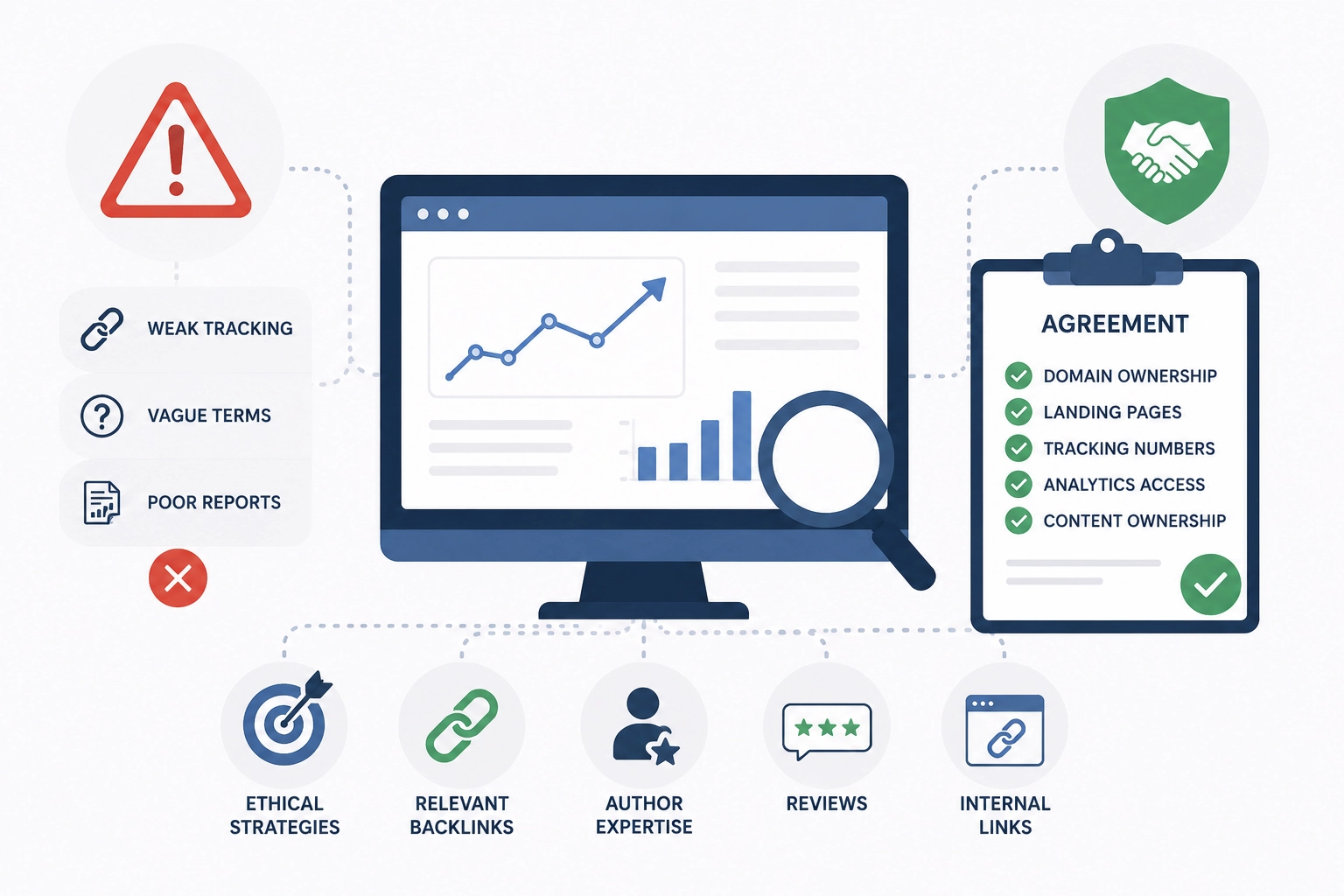
This type of agreement needs clear rules because billing depends on tracked actions. Weak tracking, vague terms, or poor reports can create conflict.
Organic growth also takes time. Search engines need to crawl, compare, and evaluate pages, while ongoing SEO testing helps refine what improves visibility before steady results appear.
Ethical marketing strategies avoid spam links, false claims, fake reviews, and hidden ownership terms. The agreement should state who owns the domain, landing pages, tracking numbers, analytics, and content.
When This Approach Is Worth Considering
This pricing structure can make sense for businesses with strong margins, clear sales steps, and accurate reporting. It can make budgeting easier because costs connect to verified inquiries.
It is not a shortcut or a guarantee. Long-term results depend on site quality, useful content, strong rules, and fast follow-up.