


This article explains how organic visibility grows through keyword research, local SEO, content creation, technical site health, and trust signals. A strong strategy connects each search term to the right page, such as a treatment page, a location page, a blog post, or an FAQ.
SSinvent approaches this topic through technical SEO, content marketing, strategic backlinks, and web development, with a focus on making aesthetic practice websites clear for both search engines and potential clients.
Key Takeaways
- Medical spa SEO helps med spas appear for high-intent local searches by improving their website, Google Business Profile, service pages, and local search signals.
- Strong treatment pages should answer clear patient questions about services, suitability, process, limitations, and consultation needs.
- Local SEO, reviews, citations, and location pages help users verify where the business operates and whether it matches their needs.
- Content marketing drives organic traffic by addressing common treatment questions through blog posts, FAQs, before-and-after guidance, and patient education.
- Tracking should focus on business-relevant actions, such as website traffic, keyword visibility, calls, forms, and booked consultations.
What Is SEO for Medical Spas?
This term refers to the process of organizing a website so search engines can understand its services, locations, and relevance. It includes content, technical structure, local listings, reviews, and links. The goal is to help people searching for aesthetic treatments find the right page quickly.
A keyword is a word or phrase that users type into Google. Examples include “Botox near me,” “laser hair removal in Austin,” and “CoolSculpting in [city].” These targeted keywords should connect to service pages, location pages, FAQs, or educational content.
Why Aesthetic Practices Need Search Visibility
Aesthetic practices need organic visibility because users often research treatments before they call or book. They compare services, reviews, credentials, pricing signals, and treatment details. In the medical spa industry, trust and clarity affect how users evaluate a provider.
Search visibility also supports a stronger online presence across organic search, maps, and local search. It does not replace paid ads or other digital marketing channels. It creates a stable foundation for qualified discovery over time.
Core Strategy for Med Spas
A complete search strategy connects keyword research, page-level improvements, technical health, local visibility, backlinks, and contextual links in SEO. Rodrigo César and Christopher Cáceres are industry professionals who apply these areas through a technical and content-focused lens. Each part should help users find accurate information and understand the next step.
Keyword research identifies service terms, local phrases, and patient questions. Page-level work improves titles, headings, internal links, image alt text, and the clarity of body content. Technical fixes improve crawlability, mobile usability, page speed, clean URLs, broken links, and structured data.
Schema markup can help search engines understand services, FAQs, business details, reviews, and locations. For aesthetic practices, structured data should match the visible page content. It should not mark up claims, services, or reviews that users cannot verify on the page.
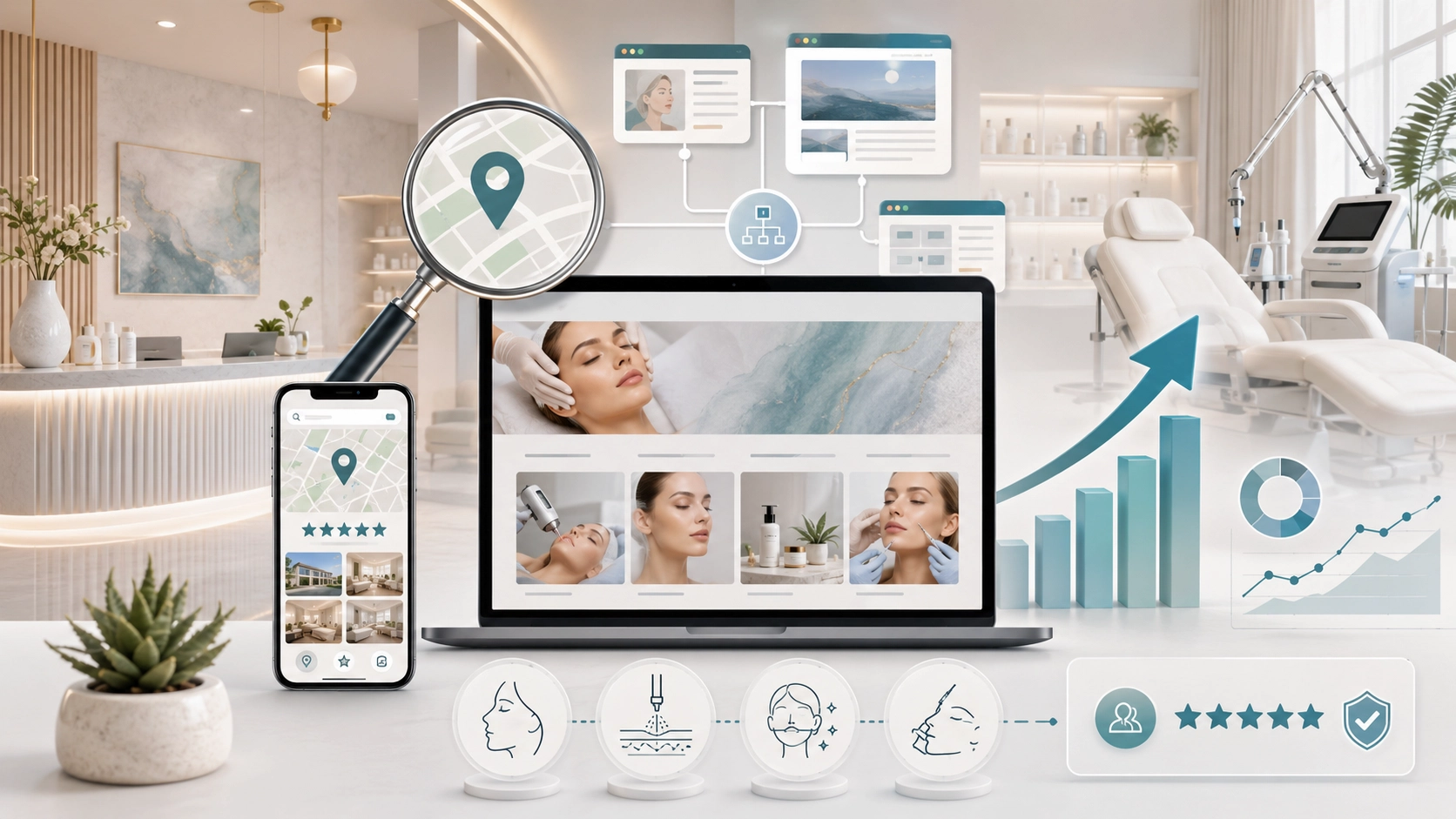
Local Search for Aesthetic Practices
Local med spa SEO helps the business appear when users search for nearby aesthetic treatments. A Google Business Profile should include accurate categories, services, photos, hours, appointment links, and contact details. The profile should match the website and other listings.
Reviews, citations, and directories also support local visibility. Reviews help users assess patient experience, while citations confirm the business name, address, and phone number. Location pages should include unique local details instead of repeating the same text for every city.
Treatment Page Optimization
Treatment pages matter because users often search for specific services. Each page should explain what the treatment is, who it may suit, what the process involves, and what limitations exist, following the same clarity principles used in SEO for landing pages. The page should inform users without making outcome guarantees.
A Botox page, for example, should explain common treatment areas, consultation needs, and related services such as dermal fillers or facial rejuvenation. Laser service pages should clarify goals like hair reduction, resurfacing, or pigmentation support. Body contouring and skin rejuvenation pages should set realistic expectations and explain when a professional evaluation is warranted.
Medspa SEO Content Marketing
This approach helps answer patient questions before users contact the business. Creating content around common concerns can support rankings and improve informed decision-making, especially when SEO and content marketing work together. A useful blog post may compare treatments, explain recovery, define terms, or answer safety-related questions.
Strong content topics come from search demand, service relevance, and user intent. FAQs can answer direct questions in a short format, and support featured snippet opportunities. Before-and-after content should include consent, context, and careful wording so users do not assume every result will be the same.
Website UX and Conversions
Search brings users to the site, but each page must be easy to navigate and clear enough to support action. Pages should load quickly, work well on mobile devices, and guide users toward calls, forms, or appointment bookings. Clear calls to action should appear where users naturally need them.
Tracking shows whether seo efforts are producing useful signals. Common metrics include website traffic, keyword visibility, calls, form submissions, and booked consultations. Rankings matter, but they should connect to business-relevant actions.

Medical Spa SEO Services
Medical spa SEO services can include audits, content planning, technical fixes, local optimization, backlink strategy, and reporting. A provider should explain the work, the scope, and the metrics used to measure progress. Clear scope matters because ranking higher depends on competition, site quality, market size, and the website’s starting condition.
An audit reviews content, structure, local setup, technical health, and user experience. Content support may include service pages, location pages, blogs, FAQs, and metadata. Reporting should explain what changed, what improved, and what still needs work.
Cost, Timeline, and Trust
Organic search work for an aesthetic practice usually depends on competition, location, website condition, content needs, backlinks, and project complexity. SSinvent strategies typically range from $1,500 to $3,500 per month, based on content volume and technical scope.
Some markets are easier to compete in than others, so the plan should align with local search demand and the site’s current quality.
A realistic timeline is usually 12 to 14 months. The first 1 to 3 months often focus on audits, technical fixes, keyword mapping, Google Business Profile updates, and priority page improvements. Months 4 to 14 usually focus on new service pages, local content, citations, backlinks, reporting, and conversion improvements.
No provider can guarantee rankings or results. SSinvent operates without forced minimum-term contracts and offers bimonthly payment options for businesses that prefer to start gradually. Trust also matters, so treatment pages should avoid unsupported claims and clearly show provider credentials, ethical review practices, and authorship.
Common Mistakes
Avoid these issues because they can reduce visibility, weaken trust, and make the website harder to use:
- Thin service pages that do not explain the treatment, process, suitability, limitations, or common patient questions can create thin content SEO issues.
- Duplicate location pages that repeat the same content with only the city or neighborhood changed.
- Weak internal linking that leaves service pages, blogs, FAQs, or location pages disconnected from related content.
- Poor review practices, such as ignoring feedback, using risky tactics, or failing to respect privacy and platform rules.