
Healthcare SEO for Doctors: Local SEO Content Strategies
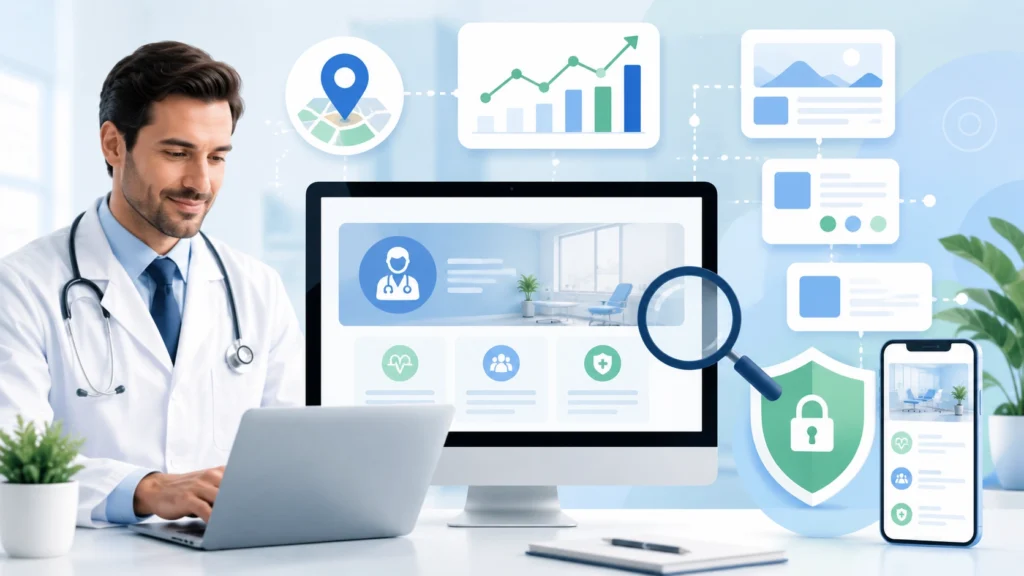
An effective healthcare SEO for doctors plan combines local search, accurate medical content, structured data, strong site performance, and simple booking paths. It can improve visibility in Google Search, Map results, and AI search tools. A complete Google Business Profile, correct provider listings, and pages that match patient needs support this work. Schema can help search tools understand a practice, but it does not guarantee rankings.
AI in Healthcare SEO: Build Trusted Search Visibility

Trusted search visibility starts with clear medical content and a sound website. AI in healthcare SEO, also called AI optimization or AIO, helps search tools understand, check, and cite health information. It goes beyond basic keyword use by focusing on patient intent, page meaning, and direct answers. It can also help content appear in Google AI Overviews, Perplexity, ChatGPT Search, and standard search results.
Healthcare Marketing SEO: Grow Traffic and Patient Leads
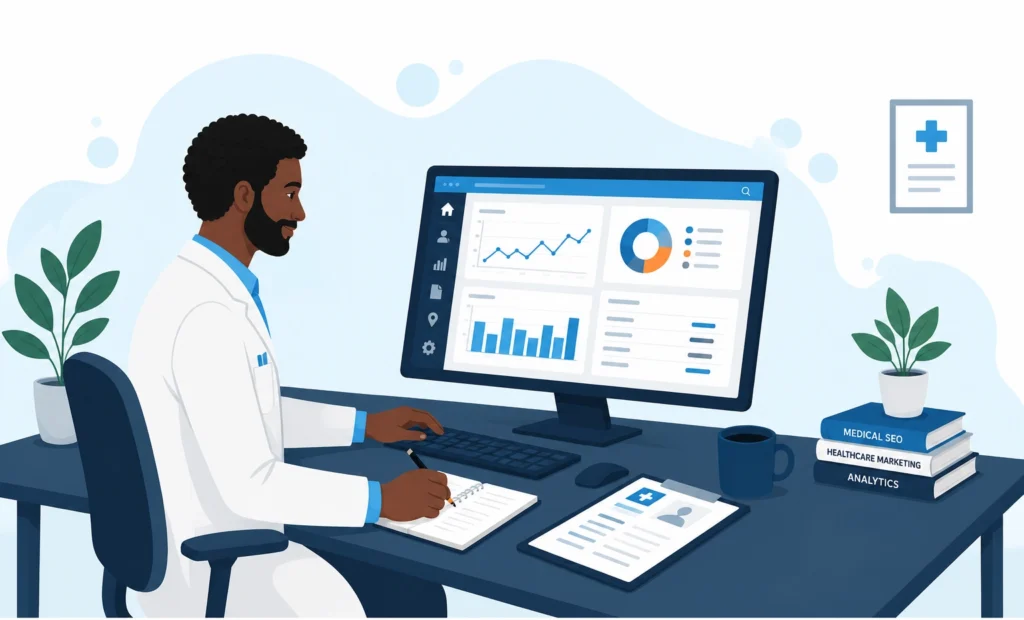
Healthcare groups can grow organic traffic and patient leads by matching useful pages to real searches. These searches may include “pediatrician near me” or “symptoms of plantar fasciitis.” Healthcare marketing SEO combines keyword research, trusted medical content, local search work, site fixes, and clear contact paths.
30 Healthcare SEO Keywords: Lists, Examples, and Research
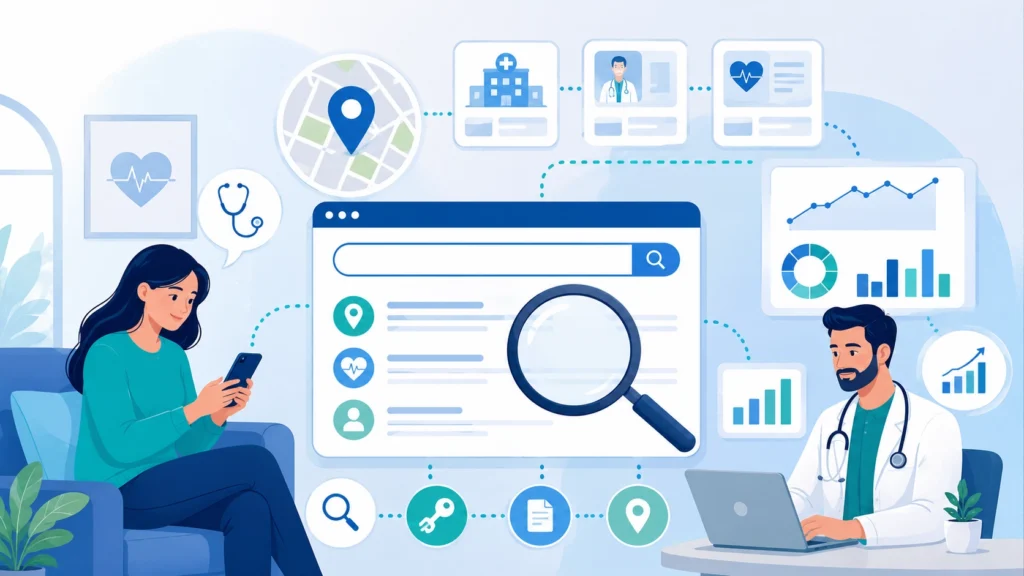
The best healthcare SEO keywords match the everyday words patients use when they search for care, not complex clinical terms. Strong lists include local and long-tail phrases such as “cardiologist in Austin” and informational searches like “symptoms of atrial fibrillation.”
Broad terms such as “cardiologist” may receive more searches, but they often face more competition and reveal less about the user’s location or needs.
Backlink Strategy for Healthcare SEO for a Medical Clinic

A strong off-page plan for a medical clinic focuses on earning relevant links from trusted medical associations, local organizations, reputable directories, universities, media outlets, and expert publications.
It should support E-E-A-T through accurate medical content, verified credentials, reliable sources, and consistent name, address, and phone number details across Google Business Profiles and local directories.