
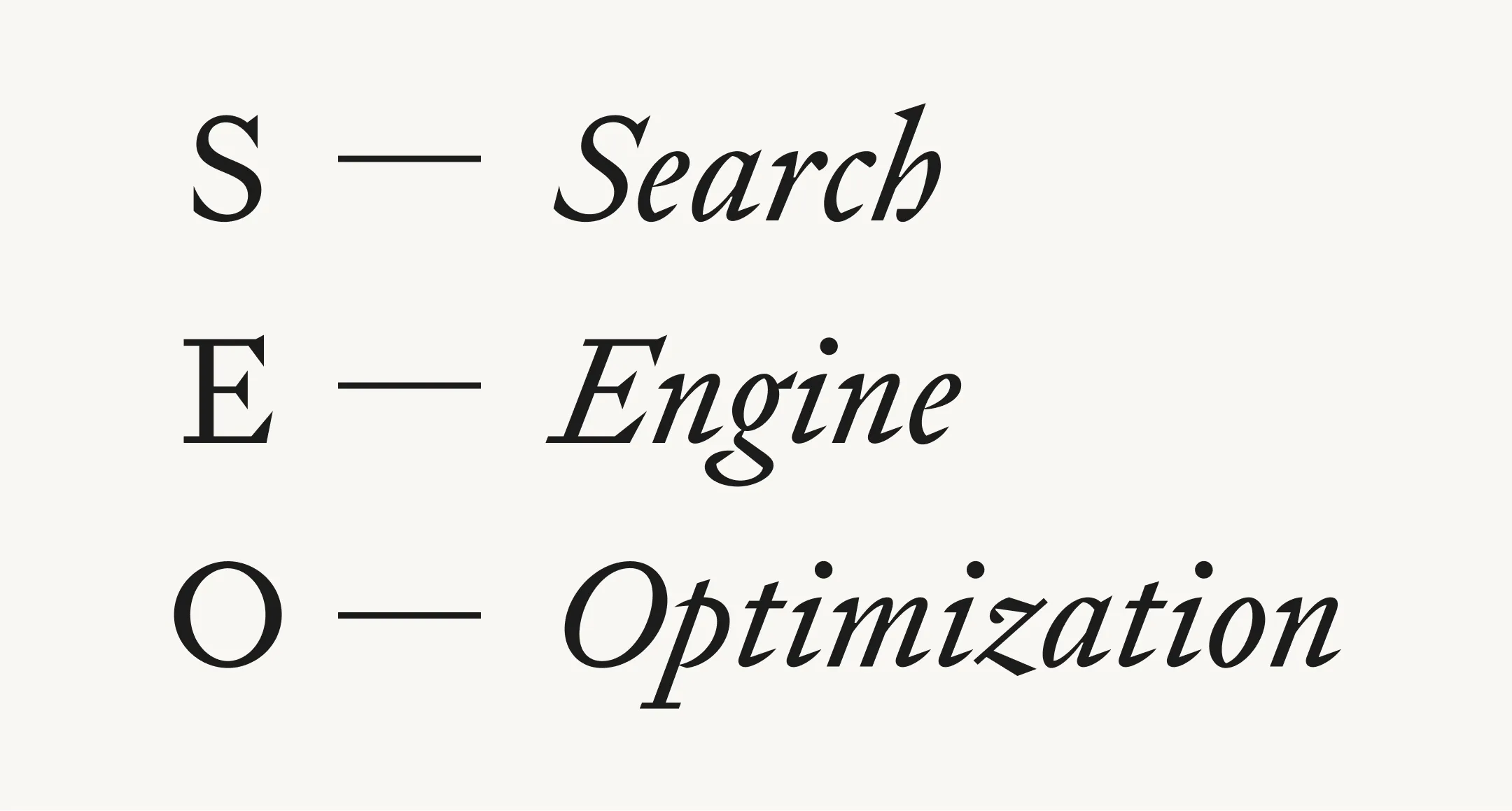
SEO abbreviations help people explain concepts like organic search results, search query data, and page SEO more quickly. At SSinvent, based in Austin, these terms are treated as basic language for anyone working with search systems.
When you understand SEO abbreviations, you can better use tools like Google Search Console, track website traffic, and improve your content. The sections below explain what these terms mean and how they are used in real work.
In many cases, SEO work depends on clear communication between teams. Developers, marketers, and analysts all use the same terms to describe different parts of a process. If one term is misunderstood, it can affect decisions about a landing page, a blog post, or a content marketing plan. This is why learning these terms early improves accuracy and reduces mistakes.
Key Takeaways
- SEO abbreviations and SEO acronyms are short terms that simplify how professionals describe processes, metrics, and elements within search engine optimization.
- Understanding these terms helps you read tools like Google Search Console, interpret search query data, and analyze performance in organic search results.
- SEO terms are used across technical, marketing, business, and finance contexts, so their meaning can change depending on how and where they are applied.
- Learning common SEO abbreviations improves communication, reduces errors in reports, and supports better decisions when optimizing a website or landing page.
- Using SEO acronyms in real-world workflows, such as analyzing CTR or updating meta descriptions, helps connect data to practical actions that improve user experience and website traffic.
What Are SEO Abbreviations And SEO Acronyms?
SEO abbreviations are short versions of longer terms used in search engine optimization. SEO acronyms are a type of abbreviation made from the first letters of words, such as CTR for click-through rate. These terms make communication easier between teams. They also help people explain ideas about organic searches and how a search engine crawler works.
Many SEO abbreviations describe parts of a website or its performance. For example, HTML stands for hypertext markup language, which builds the structure of a page. Other terms show results such as CTR or impressions. When you know each SEO term, you can better understand the results pages and improve the user experience.
These terms also appear in documentation, dashboards, and reports. A user may see abbreviations without context, especially when reviewing data in analytics tools. Knowing their meaning helps avoid errors when interpreting metrics or planning changes.
What SEO Is And How It Works
SEO (search engine optimization) is the process of helping a website appear in organic search results. A search engine crawler scans pages, reads content, and stores it in an index. The system checks things like the title tag, meta descriptions, and links. These elements affect how pages appear in a search engine results page.
SEO works by matching content with a search query. When a user types a query, the system shows the most relevant result pages. Pages that are clear and useful have a better chance of ranking. This is why strong structure and clear anchor text matter.
Another key part of SEO is how pages connect to each other. Internal or Contextual links in SEO help guide both users and search engines through a site. Clear structure improves navigation and supports better indexing.
SEO Meaning in Marketing, Business, And Finance
SEO can mean different things depending on the context. In marketing, the focus is on gaining more visibility in organic search. In business, it helps attract users and increase website traffic. In finance, it is used to measure the performance of digital efforts.
Knowing these meanings helps avoid confusion. Rodrigo César and Christopher Cáceres often explain that context is key when reading SEO data. The same term can mean different things in different reports. A clear understanding leads to better decisions.
In practice, teams from different areas often review the same data. Marketing teams look at traffic growth, while finance teams focus on cost and return. Using the same SEO acronyms ensures that all teams interpret the data consistently.
What Is SEO in Digital Marketing?
In digital marketing, SEO helps a site appear in organic search results. The goal is to match content with what users search for. This includes improving landing pages, writing clear meta descriptions, and aiming for a featured snippet. These steps help attract the right website traffic.
SEO also supports long-term content visibility, especially when paired with advanced SEO services that improve technical structure and content quality. A well-structured blog post can continue to attract users over time. This makes SEO a key part of content marketing strategies.
SEO also works with paid advertisement campaigns. Paid ads give quick results, while SEO builds long-term traffic. Both require knowledge of marketing terms, such as SEO, to read performance data.
What Is SEO in Business Terms?
In business, SEO helps bring users to a website. It supports growth by increasing visibility on result pages. Companies use SEO acronyms to track metrics such as traffic and conversions.
SEO also shapes how a business builds its site. A clear landing page can improve user experiences and guide visitors. This makes SEO part of daily operations, not just a technical task.
It also supports decision-making. Businesses use SEO data to understand customer behavior and improve digital strategies. This helps align content with real demand. For teams that need outside support, this also helps explain why hiring an SEO company becomes a practical business question rather than just a marketing decision.
What Does SEO Mean in Finance?
In finance, SEO is used to measure digital results. Teams use SEO abbreviations to track performance and return on investment. They look at traffic, conversions, and cost.
Tools like Google Search Console help confirm this data. These insights show whether content marketing efforts are working. Clear use of SEO acronyms helps teams report results correctly.
Finance teams also compare SEO performance with other channels. This helps decide where to invest resources. Clear metrics support more accurate planning.
SEO in Economics And Entrepreneurship
In economics, SEO reflects how supply and demand work online. A search query shows demand, and content answers that demand. This affects how pages rank in a search engine result page.
Entrepreneurs use SEO to test ideas. They study search behavior to see what people want. This helps them choose topics for a blog post or new product.
This approach reduces risk. By analyzing search data, businesses can validate ideas before investing in them.
Common SEO Abbreviations List
SEO includes many abbreviations from different areas. These include technical, marketing, and data terms. Grouping them helps make them easier to learn.
Each group has a clear purpose. Technical terms focus on how a site works. Marketing terms focus on visibility. Data terms focus on results.
This structure allows users to learn step by step. Instead of memorizing all terms at once, they can focus on one category at a time.
Quick SEO Abbreviations List
Below is a quick list of common SEO abbreviations used in daily work. These terms often appear in reports, tools, and strategy discussions.
- SEO – Search engine optimization
- SERP – Search engine result page
- CTR – Click-through rate
- CPC – Cost per click
- ROI – Return on investment
- KPI – Key performance indicator
- URL – Web page address
- HTML – Hypertext markup language
- XML – Sitemap format for search engines
- GA – Google Analytics
Technical SEO Acronyms
Technical SEO acronyms describe how a website is built. They also explain how search engines read it. These terms are key to making a site easy to index.
Examples include:
- HTML – Hypertext Markup Language, builds page structure
- XML – Used for sitemaps that guide search engines
- URL – The address of a web page
These factors affect how pages appear in organic search results. If the structure is weak, the content may not rank well.
Technical terms also include elements like robots.txt and canonical tags. These help control how search engines access and index pages.
Marketing And PPC Terms
SEO marketing terms explain how visibility is gained. These include both organic and paid strategies. They help teams understand performance.
Examples include:
- CTR – Click-through rate, shows how often users click
- CPC – Cost per click, used in paid advertisement
- SERP – Search engine result page, where results appear
These terms connect SEO with content marketing. They help compare organic searches with paid campaigns.
They also support campaign planning. Marketers use these terms to adjust targeting and improve results.
Analytics And Data Terms
Analytics terms show how users behave on a site. These terms help measure success. They are used in reports and dashboards.
Examples include:
- KPI – Key performance indicator
- ROI – Return on investment
- GA – Google Analytics
These terms help track website traffic and performance. They support better decision-making.
They also help identify trends. For example, changes in traffic can show how users respond to content updates.
SEO Abbreviations in Marketing And Business
SEO abbreviations are often used in marketing and business work. They help teams explain plans and results. Clear use of these terms improves teamwork.
These abbreviations appear in reports and dashboards. They link data to business goals. This makes them useful for both analysts and managers.
They also support communication between technical and non-technical teams. This ensures that everyone understands key data points.
SEO Abbreviation Business Examples
Business terms focus on growth and performance. They show how SEO affects results. These terms are used in planning and reporting.
Examples include:
- CLV – Customer lifetime value
- CAC – Customer acquisition cost
- LTV – Lifetime value
These terms connect SEO with financial results. They help measure the value of content marketing.
They also help compare different strategies. Businesses can use these metrics to decide which channels perform best.
SEO Acronym Marketing Explained
SEO acronym marketing refers to using short acronyms in marketing. These terms make reports easier to read. They also help teams stay aligned.

For example, a report may include CTR and conversion rate. Each term shows a part of the performance. Understanding them helps teams act on data.
This approach reduces confusion. Clear terms make it easier to share insights across teams.
SEO Abbreviation Finance Terms
Finance terms connect SEO to money and results. They show how well a strategy works. These terms are used in budgets and reports.
Examples include ROI and CPA. These metrics show if SEO efforts are worth the cost. A clear understanding leads to better choices.
They also support long-term planning. Businesses can use these metrics to forecast future performance.
Most Important SEO Abbreviations to Know
Some SEO abbreviations are used more often than others. These are key for daily work. Learning them first makes SEO easier to understand.
These terms help users read reports and use tools. They also make it easier to apply SEO strategies. Focusing on these terms reduces the learning curve by allowing users to build confidence quickly.
Beginner Essential Terms
Beginner terms are the most common SEO abbreviations. They appear in many tools and reports. They are the first step in learning SEO.
Examples include:
- SEO – Search engine optimization
- SERP – Search engine result page
- CTR – Click-through rate
These terms explain how search works. They help users understand basic data.
They also appear in most dashboards. This makes them essential for daily tasks.
Advanced SEO Acronyms
Advanced terms are used in deeper analysis. These terms need more knowledge to understand. They are used by experienced professionals.
Examples include:
- TF-IDF – A method to measure term importance
- LSI – A method to find related terms
These help improve content relevance. Professionals like Rodrigo César and Christopher Cáceres use them in advanced analysis.
They are often used in technical audits. These terms support deeper optimization work.
How to Learn SEO Abbreviations Faster
Learning SEO abbreviations becomes easier with regular use. The best approach is to connect each term with a real example.
Start by reviewing data in tools like Google Search Console. Look at metrics such as CTR, impressions, and clicks. Then match each term with what it represents.
Another method is to apply terms while working on a blog post or landing page. For example, update a title tag and track its impact on organic search results.
Over time, repeated use helps you remember each seo term. This makes it easier to read reports and make decisions.
How SEO Acronyms Are Used
SEO acronyms are used in tools, reports, and planning. They help teams share ideas quickly. This makes work faster and clearer.
Knowing how these terms are used helps you apply them. It also helps you read data without confusion.
They also improve workflow efficiency. Teams can share insights without long explanations.
In SEO Tools And Reports
Tools like Google Search Console show data using SEO abbreviations. These include clicks, impressions, and search query data. Users rely on these terms to track results.
Reports use abbreviations to save space. Terms like CTR and impressions appear often. Understanding them helps you read reports correctly.
These tools also provide insights into indexing and performance. This helps identify issues and opportunities.
In Marketing Strategy
SEO acronyms help guide strategy. Teams use them to plan and improve campaigns. They connect data with actions.
For example, low CTR may mean the title tag needs improvement, which is why understanding CTR in SEO is useful when reviewing performance data. Better meta descriptions can also help. These changes improve organic search results and user experiences.
They also support testing. Teams can adjust elements and measure results using these metrics.
Common Mistakes When Using SEO Acronyms
Many users misunderstand SEO abbreviations when they first start. This can lead to wrong decisions or confusion when reading reports.
One common mistake is mixing similar terms. For example, users may confuse impressions with clicks. Another mistake is focusing on one metric without context.
Some users also misread data from tools like Google Search Console. They may assume that more traffic always means better performance, even if the user experience is poor.
To avoid these issues, it is important to understand each term clearly. Always review metrics together instead of in isolation.

Why SEO Abbreviations Matter
SEO abbreviations make communication simple. They help teams explain ideas clearly, which reduces confusion.
They also help with decisions. When you understand SEO acronyms, you can use data more effectively, leading to smarter actions. They also improve efficiency, as teams can work faster when they share a common language.
Improve Communication
Clear language helps teams work better. SEO abbreviations create a shared system. This makes collaboration easier. Using terms like SERP or CTR avoids long explanations. Everyone understands the same idea quickly. This is important in large teams as clear communication reduces errors and saves time.
Better Marketing Decisions
SEO abbreviations help you read data. They show what works and what does not, helping improve strategy. For example, you can adjust anchor text or update a blog post. You can also improve page SEO. These actions increase performance.
Better decisions lead to better results, and understanding data helps teams act with confidence.
SEO Abbreviations FAQs
What Does SEO Stand For?
SEO stands for search engine optimization. It means improving a website to rank in organic search results. This includes content, structure, and technical setup.
What Is CTR in SEO?
CTR means click-through rate. It shows how many users click a result after seeing it. It helps measure the quality of title tags and meta descriptions.
What Is SERP in SEO?
SERP means search engine result page. It shows results for a search query. It includes organic search results, paid advertisement listings, and featured snippet sections.