

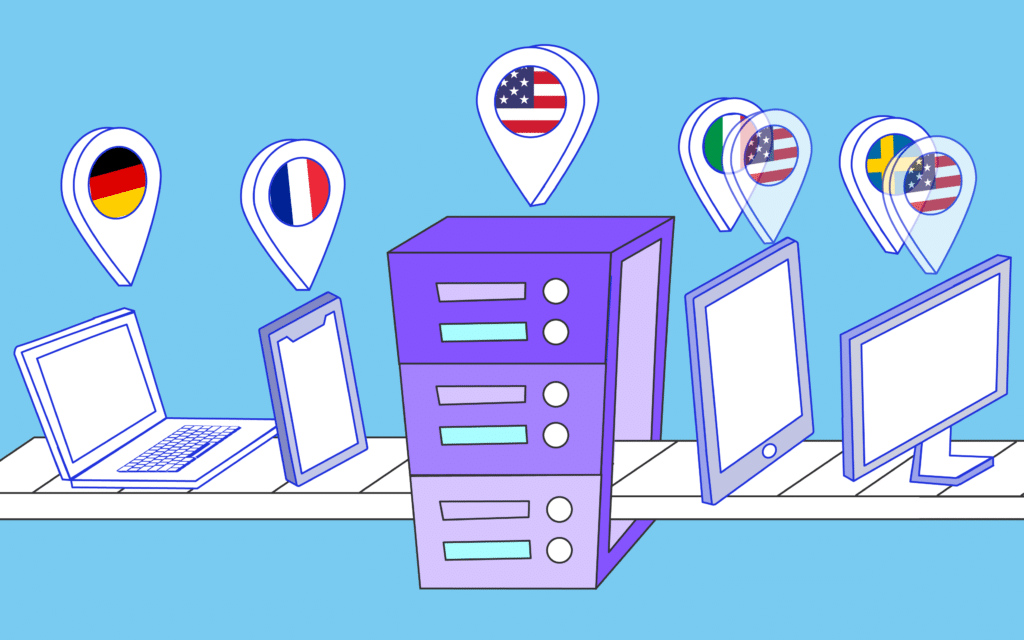
SEO proxies hide your real IP address and use a pool of IP addresses to avoid blocks. This helps with tasks like keyword research, rank tracking, and data scraping.
At SSinvent, this method is part of technical SEO work used to study search engine results pages across locations. Understanding how proxies work helps you use them in search engine optimization tasks.
Key Takeaways
- Proxies SEO route requests through different IP addresses, which helps collect SERP data, perform keyword research, and run SEO tasks without exposing the real IP address.
- Different proxy types, such as residential, datacenter, and mobile proxies, serve specific use cases depending on the need for speed, scale, or lower detection risk.
- SEO proxies support key activities such as web scraping, rank tracking, and competitor analysis by enabling access to search engine results pages from multiple locations.
- Choosing dedicated SEO proxies requires evaluating speed, IP pool size, location coverage, and reliability to match the scale and complexity of your SEO workflows.
- Proper setup, ethical use, and controlled request rates are essential to avoid blocks, ensure data accuracy, and maintain compliance with platform terms.
Core Concepts
What SEO Proxies Are and How They Work
SEO proxies act as a middle layer between you and a website. Instead of sending a request directly, the proxy sends it for you. This hides your real IP address and reduces the chance of being blocked. A proxy service uses many IPs to spread requests. This is called a pool of IP addresses. It helps you collect data without limits. This setup supports stable data collection in SEO tasks.
Proxies Example in SEO
One example is checking keyword rankings in different countries. You can send searches through proxies with location settings. This shows how your site ranks in each place. Another example is data scraping from search engine results pages. Tools use rotating residential proxies to collect SERP data. This helps track changes over time.
Types of Proxies for SEO
There are different proxy type options used in SEO. The main ones are residential proxies, datacenter proxies, and mobile proxies. Each one works differently. Residential proxies use real user IPs. Datacenter proxies use server IPs. Mobile proxies use mobile networks. Each type fits a different SEO need.
Residential vs Datacenter Proxies
Residential proxies use real IP addresses from home users. They look like normal traffic. This lowers the risk of being blocked during web scraping. Datacenter proxies are faster and cheaper. They offer high speed and work well for large data scraping tasks. But they can be easier to detect.
Rotating vs Static Proxies
Rotating proxies change IP addresses frequently. This helps avoid blocks when sending many requests. Rotating residential proxies are common for data collection. Static proxies keep the same IP address. They work well for stable sessions. This is useful when logging into accounts.
Use Cases of Proxies for SEO
Why Use Proxies for SEO
SEO proxies help you run multiple tasks at once. They let you access search engine results pages without limits. This makes SEO work more stable. They also help automate SEO tasks. Tools can collect data and run checks without stopping. This saves time and effort.
Web Scraping and Data Collection
Web scraping collects data from websites and search engines. It helps with keyword research and competitor tracking. Proxies spread requests across many IPs. This avoids blocks and keeps data collection running. It also improves access to large data sets.
Rank Tracking and Geo Results
Rank tracking shows where your site appears in search results. Proxies let you check results from many locations. This helps you see real keyword rankings in each country. It also shows changes in search engine ranking over time.
Competitor Analysis and Ad Verification
Proxies help you study competitor sites. You can see their rankings without location bias. This gives clear insights. They also help check ads in different regions. This is called ad verification. It shows if ads appear as planned.
Proxy for Social Media and Twitter
A proxy for social media helps manage many accounts and reduces the risk of bans. On platforms such as Twitter, proxies show content from different regions. This helps study trends and user behavior.
Key Benefits of Proxies SEO
Avoid IP Blocks and Captchas
Proxies distribute requests across multiple IPs, which reduces the risk of being blocked. It also reduces captchas. Private proxies and rotating residential setups work best as they make traffic look more natural.
Improve Data Accuracy
Proxies remove personal search bias by hiding your real IP address. This gives cleaner SERP data. Accurate data helps improve SEO strategies and supports better decisions in search engine optimization.
Access Results by Proxy Country
Proxies let you choose a proxy country, which shows results from that region. This helps you understand local search behavior and also improves global SEO planning.
How to Use Proxies for SEO
Set Up Proxies with SEO Tools
Most SEO tools support proxy service setup, so you can enter proxy details in the tool settings. This allows tools to run tasks like data scraping and rank tracking, and it helps automate work. Rodrigo César and Christopher Cáceres note that the correct setup is key for valid data.
Choose Rotation and Locations
Choose a rotation based on your task: rotating proxies work best for scraping, and static proxies help with stable sessions. Select locations to match your target market, as this ensures correct data on search engine results pages.
Avoid Blocks and Detection
Do not send too many requests at once, as this can trigger blocks. Use steady request speeds and high-speed proxies. This keeps your workflow stable and safe.
How to Choose Dedicated SEO Proxies
Best SEO Proxies vs Free SEO Proxies
Free proxies often have limits. They can be slow and unreliable, which affects SEO tasks. Dedicated SEO proxies offer better speed and control, and they are more stable for long-term use.
Here are real examples to clarify the difference:
Free SEO proxies (public sources):
- Public proxy lists like Free Proxy List, HideMy.name, or Spys.one
- Open proxies shared in forums or GitHub repositories
- Temporary browser-based proxy tools
How they perform in practice:
- Many IPs are already flagged by search engines
- High failure rate during web scraping or data scraping
- Slow response times, which affect keyword research and SERP data collection
- No control over proxy country or IP rotation
Dedicated SEO proxies (paid providers):
- Services like Blazing SEO, Webshare, Smartproxy, or Bright Data
- Private proxies with access to a controlled pool of IP addresses
- Options for residential, datacenter proxies, and rotating residential networks
How they perform in practice:
- Stable access to search engine results pages with fewer blocks
- High-speed connections that support large-scale data collection
- Control over location, rotation, and proxy type
- Better support for tasks like tracking keyword rankings and running automated SEO tools
Simple comparison:
- Free proxies → low cost, low reliability, limited control
- Dedicated SEO proxies → higher cost, high stability, full control
If your goal is basic testing, free proxies can work for short tasks. If you need consistent results for search engine optimization, dedicated SEO proxies are the safer option.

Proxy Location and Coverage
A large pool of IP addresses gives better coverage, as it allows access to more regions. Webshare proxy location options help expand reach. This supports detailed analysis.
Speed, Rotation, and Reliability
High-speed proxies allow faster data collection, which is important for large tasks. Reliable rotation keeps your requests active, and it reduces downtime and errors.
Security and Anonymity
Proxies protect your real IP address, which keeps your activity private. They also reduce tracking and detection, supporting safe SEO work.
Risks and Legal Considerations
Are Proxy Sites Illegal
Using proxies is not always illegal. It depends on how you use them. Breaking site rules can cause issues, so always follow the terms of service.
Terms of Service and Ethical Use
Many sites limit automated access, and ignoring rules can lead to bans. Christopher Cáceres explains that ethical use is key, as it helps avoid long-term problems.
Blocked IPs and Detection
Proxies can still get blocked, especially with high traffic or a poor setup. Use rotating residential proxies to reduce risk, as they make traffic look more real.
Cost vs Performance Tradeoffs
Better proxies cost more. Dedicated SEO proxies offer stronger performance. You need to balance cost and needs, and choose based on your workload.
Tools and Monetization
SEO Tools That Use Proxies
SEO tools use proxies for keyword research and data scraping. They help automate work. These tools also collect SERP data at scale, which supports better analysis.
Proxy Affiliate Program Options
Some providers offer affiliate programs, where you earn by sharing their proxy service. This can add income while using proxies, which is common in SEO workflows.
Webshare Affiliate Program Overview
The Webshare affiliate program combines proxy use with referrals. It offers access to proxy tools and rewards. This links SEO work with business use. It adds value beyond data collection.