

Page authority in SEO is a metric that estimates how well a specific web page can rank on search engine results pages based on its link profile and content relevance. It focuses on the ranking potential of an individual page rather than the entire domain, helping compare pages within the same site or against competitors.
This concept is widely used in SEO metrics, although it is not an official signal used by search engines. At SSinvent, this metric is analyzed with other authority metrics to understand how a single page contributes to visibility and search results, often within broader advanced SEO services.
Key Takeaways
- Page authority in SEO is a predictive metric that estimates how well a specific web page can rank based on its link profile, content relevance, and authority signals.
- Page authority is not a direct Google ranking factor, but it helps analyze ranking potential and compare pages within the same competitive context.
- A good page authority score is relative to the industry and should be evaluated against similar pages rather than treated as an absolute benchmark.
- Improving page authority depends on building high-quality backlinks, strengthening internal linking, and maintaining relevant content.
- Using page authority checker tools consistently helps track performance and identify opportunities to improve visibility in search results.
What Is Page Authority in SEO?
Page Authority Meaning
Page authority is a score that predicts how likely a web page is to rank on search engine results pages (SERPs). It uses data from linking domains, content signals, and the link profile. The score applies to a single page, not the entire site.
Page authority (PA) is measured on a scale from 1 to 100, where higher values indicate stronger ranking potential. The number and quality of backlinks are key inputs. Pages with more relevant linking domains tend to perform better. This makes it useful for comparing pages within the same niche.
Moz Page Authority Explained
Moz introduced page authority as part of its SEO metrics. It uses models to estimate how a web page may perform in search results. The score changes over time as the link profile and content data evolve. It reflects relative strength, not fixed performance.
Other tools also provide authority metrics, but each uses different data. This means scores can vary across platforms. Comparisons should be made within the same tool. This prevents misinterpretation of SEO page authority.
What Is Authority in SEO?
Authority in SEO refers to the credibility and relevance of a page or domain. It depends on backlinks, content quality, and trust signals. Authority metrics try to measure this, but they are not direct ranking factors.
A strong web page authority score often reflects a page with useful content and a solid link profile. This helps explain differences in search results. Authority supports analysis, not ranking decisions.
How Page Authority Works and Is Evaluated
What Influences Web Page Authority
Backlinks are a main factor in web page authority. The number and quality of linking domains affect how a page is evaluated. Links from trusted sites carry more weight. This strengthens the link profile.
Content also affects authority. Clear and relevant pages attract links and engagement. Internal linking distributes authority across pages, especially when using contextual links in SEO to connect related content. These elements shape ranking potential.
How Page Authority Is Calculated
Page authority is calculated using models that analyze multiple SEO metrics. These models evaluate a web page’s link profile, including linking domains and content signals. They also consider patterns in search engine result pages. The goal is to estimate ranking potential.
Each tool uses its own dataset and method. This means PA scores can vary. The score is relative, not absolute. It changes as new data enters the system.
Why Page Authority Changes Over Time
Page authority changes when new data appears. Gains or losses in backlinks affect the score. Competitor changes also shift relative positioning. This makes authority dynamic.
Tool updates can also change how scores are calculated. Even without page changes, scores may shift. Understanding this helps interpret fluctuations.
Is Page Authority a Google Ranking Factor?
Page authority is not a Google ranking factor. It is a third-party metric used to estimate performance. Search engines use their own systems to evaluate page ranking.
Even so, page authority helps compare pages and estimate ranking potential. It simplifies analysis when used with other SEO metrics. Rodrigo César and Christopher Cáceres treat it as one input among many.
What to Evaluate First
Start with the link profile. Review the number and quality of backlinks and linking domains. Check relevance and trust. This shows the page’s authority base.
Then review content relevance and structure. A page that meets user intent supports engagement. Internal links should connect related content. These factors strengthen authority.
How to Track Performance Over Time
Track page authority using the same tool for consistency. Record scores to identify trends. This helps detect improvement or decline.
Compare results with competitors for context. Monitor search results to see alignment with authority. This supports a data-driven SEO strategy.
Page Authority vs Domain Authority
Should I Focus on DA or DR?
Domain authority (DA) measures the strength of a domain, while page authority measures a single page. Domain Rating (DR) is another similar metric. Each serves a different purpose.
Use page authority for an individual page. Use domain authority for site-level analysis. Combining both gives a broader view of SEO performance.
Key Differences That Matter
Page authority applies to a single page, while domain authority applies to the full domain. A page can have strong authority even if the domain is weaker. This distinction matters in SEO strategy.
Page authority can change quickly with new links or updates. Domain authority changes more slowly. This helps interpret authority metrics correctly.
Page Authority vs Domain Rating vs Other Metrics
Page authority, domain authority (DA), and domain rating are authority metrics used to estimate ranking potential. Page authority evaluates a single page, while domain authority and domain rating assess a domain.
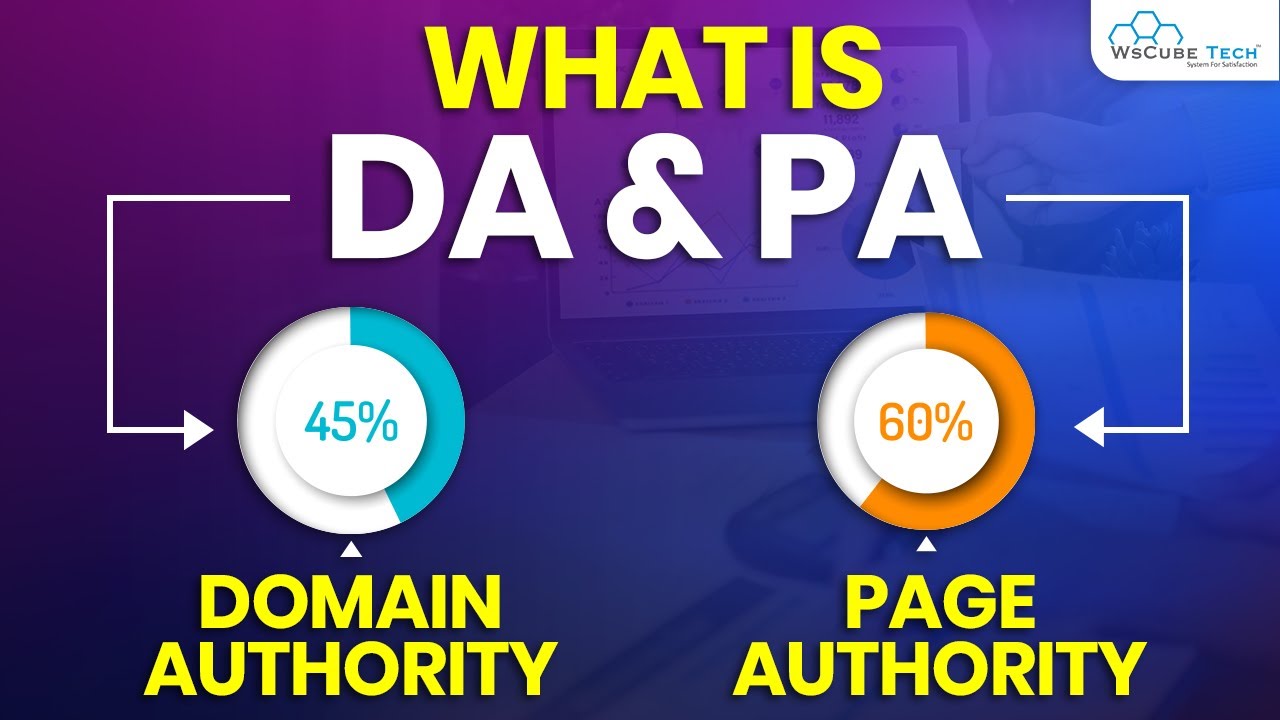
These metrics use different data and methods, so scores are not directly comparable. A page may have high page authority but a lower domain rating. Using multiple authority metrics provides a fuller view.
What Is a Good Page Authority Score
How Page Authority Is Measured
A good page authority score varies by industry. Scores are relative and should be compared within similar niches. A strong score in one area may be average in another.
Tools calculate scores using link profile data, including the number and quality of linking domains. The result reflects ranking potential. This helps estimate performance in search results.
Page Authority SEO Example
Two pages target the same keyword. One has more backlinks and stronger content. It will likely have higher page authority and rank better on search engine results pages (SERPs).
The other page has fewer links and lower authority. Even with the same keyword, results differ. This shows how authority metrics explain ranking gaps.
How to Increase Page Authority
Build High-Quality Backlinks
Backlinks are key to improving page authority. Focus on links from relevant and trusted sites. Quality matters more than quantity.
Avoid low-quality links that harm the link profile. Create content that attracts links naturally. This supports long-term growth.
Strengthen Internal Linking
Internal linking distributes authority across pages. It improves navigation and helps search engines understand the structure. This supports visibility.
Use clear anchor text to connect pages. This improves context and relevance. Strong internal linking supports SEO performance.
Improve Content Relevance
Content quality affects page authority. Pages that meet user intent attract more engagement and links. Clear content supports authority.
Updating content keeps it relevant and improves performance in search engine result pages, especially when focusing on content freshness in SEO. Rodrigo César highlights clarity as a key factor.

Common Mistakes When Improving Page Authority
Focusing only on the number of backlinks is a common mistake. Low-quality links weaken the link profile. Fewer high-quality links are more effective.
Ignoring internal linking also limits the distribution of authority. Weak structure affects ranking potential. Content quality must also be maintained to support long-term results.
Page Authority Checker Tools
Best Page Authority Checker Options
Page authority checker tools measure a web page’s authority based on its link profile. They often include both page authority and domain authority metrics.
Use the same tool to track changes. Different tools use different datasets. Consistency ensures accurate comparison.
Page Authority and Domain Authority Checker
Some tools combine page authority and domain authority checker features. This allows analysis of both page-level and domain-level performance.
These tools simplify evaluation and support better decision-making. Christopher Cáceres emphasizes the importance of consistent measurement when using authority metrics.
Why Page Authority Matters in SEO
Impact on Rankings
Page authority estimates how likely a page is to rank on search engine result pages. It reflects signals such as backlinks and content.
It does not guarantee results. Other factors like relevance and user experience also affect rankings. Page authority should be used with other SEO metrics.
When Page Authority Does Not Improve Rankings
A higher page authority score does not always improve rankings. Search engines consider many factors beyond authority metrics. Relevance and intent still matter.
Competition and technical issues can limit performance. Even strong pages may not rank higher in competitive search results. A balanced SEO approach is required.
Role in SEO Strategy
Page authority helps identify strong and weak pages. It supports decisions on link building and content updates.
It also helps analyze competitors and find opportunities. This supports long-term SEO planning.