

Finding local keywords requires identifying search terms with geographic intent, analyzing search intent and competition, and applying those terms to content that matches what users search for in a specific area.
Keyword research for local SEO helps businesses find location-based search terms that match how people search for services in a specific area. It improves visibility for relevant local queries and helps connect a business with nearby users who are more likely to take action. This process involves identifying local keyword variations, checking search intent, and applying those terms to pages that match user needs.
The goal is to identify relevant keyword variations that reflect real local queries.
Key Takeaways
- Keyword research for local SEO focuses on identifying search terms with geographic intent and aligning them with user needs and business offerings.
- A structured process combines keyword research tools, real search engine data, and search intent analysis to build a relevant and accurate keyword list.
- Using tools like Google Keyword Planner and Google Trends helps estimate local search volume, but results should be validated through actual search results.
- Selecting the right keywords requires balancing relevance, competition, and intent, with an emphasis on long tail keyword variations for more precise targeting.
- Applying keyword research by location involves optimizing content, improving Google Business Profile data, and aligning pages with local queries to support visibility.
How to Do Keyword Research for Local SEO
Local SEO keyword research starts with understanding how people search within a specific location. Users often include city names, neighborhoods, or “near me” modifiers in their search terms. These location-specific keywords help search engines connect queries with nearby businesses. The goal is to identify relevant keyword variations that reflect real local queries.
The process of finding keywords involves combining data from keyword research tools with real search engine observations. Tools can provide keyword ideas, but they do not fully capture user behavior. Reviewing autocomplete suggestions and related searches helps expand a list of keywords that reflect how people search in practice. This step ensures that the keyword list aligns with actual demand.
Follow this process to find and validate local keywords:
- Define products or services offered
- Identify core local SEO keyword variations
- Expand into long tail keyword options
- Validate keywords using search engine results
This approach ensures that each keyword is grounded in both data and context.
Find Local Keywords for SEO
Start by identifying core services and pairing them with geographic modifiers. For example, a local business may combine a service with a city name or neighborhood. This creates initial keyword ideas that reflect local search behavior. These combinations form the base of a keyword list.
Long-tail keyword variations convey more specific intent and often indicate higher relevance. These keywords include multiple terms, such as service type, location, and user need. They help capture local queries that are more likely to convert into actions. Including these variations improves coverage across different user intents.
Here are a couple of examples:
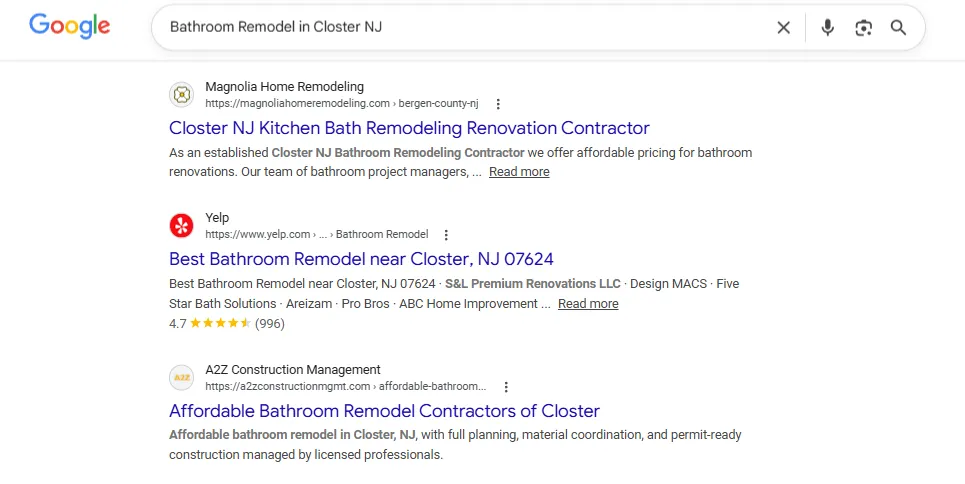
Our client, A2Z Construction Management, is a general contractor who serves all of Bergen County, NJ. So our main priorities with them were establishing their core services (general contractor, bathroom remodeling, kitchen remodeling, basement remodeling), tying them to the entire county and relevant areas.
If you search for “Bergen County contractor,” they will appear twice on the first page, within the spots on the map, as well as on the SERPs below.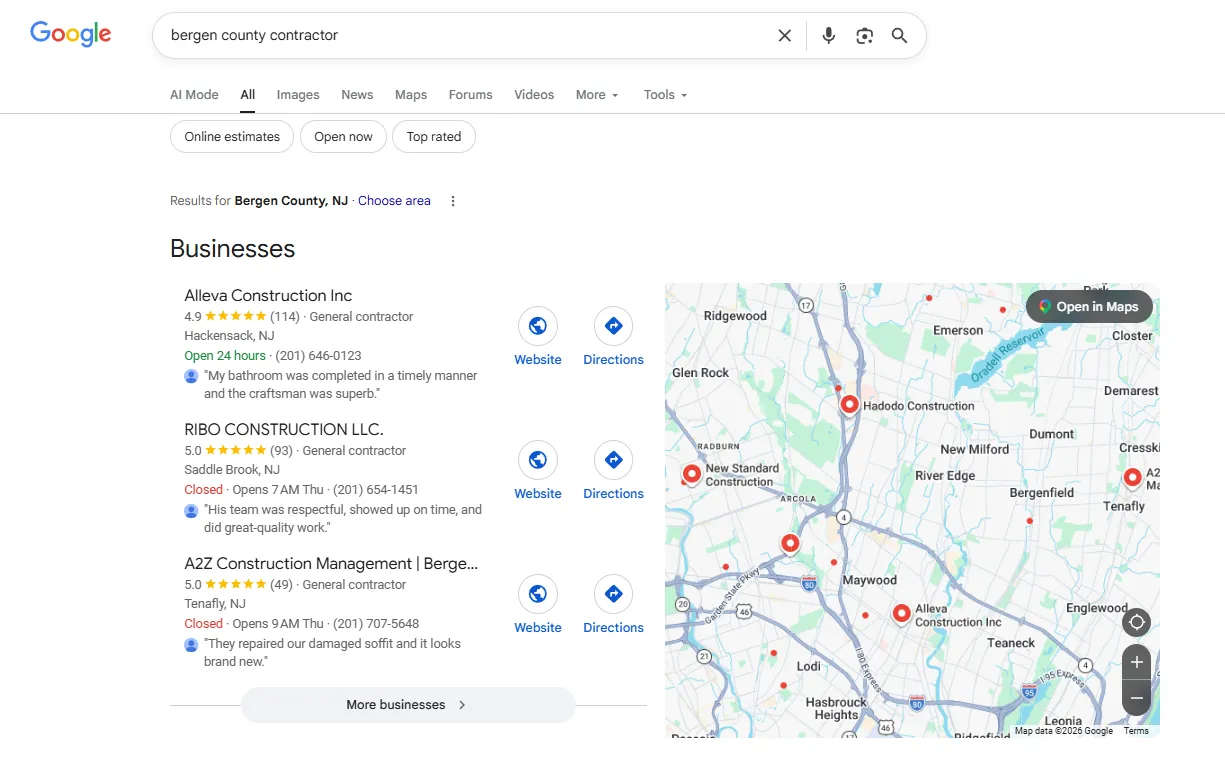
“Bathroom Remodel in Closter NJ” brings them up in thrid place on the first page:
Use Google Keyword Planner and Google Trends
Google Keyword Planner is a common tool for estimating local search volume and generating keyword ideas. It helps identify how often users search for specific terms in a defined location. This data supports decisions when selecting keywords to target. It also helps compare variations within the same market.

Google Trends complements this by showing changes in search interest over time. It helps identify seasonal patterns or shifts in user behavior. Combining both tools provides a clearer view of demand and timing. This improves the accuracy of local SEO keyword research.
Use Local Keyword Research Tools
Local keyword research tools such as those from ahrefs or Semrush provide additional data on keyword difficulty and competition. These tools help evaluate how hard it is to rank for a specific local SEO keyword. They also provide insights into competitor rankings and SERP features.
Using multiple keyword research tools allows cross-validation of data. Each tool may present different keyword ideas or search volume estimates. Comparing results helps refine the list of keywords and improves reliability. This reduces the risk of relying on a single data source.
Analyze Competitors by Location
Analyzing competitors helps identify which keywords already drive visibility in a local market. This involves reviewing pages that rank for target search terms and evaluating their content. It also includes identifying gaps where competitors do not fully cover certain topics.
To analyze competitors effectively, review the top-ranking local pages, study the keywords in their titles and headings, compare their Google Business Profile categories and services, and identify gaps in location coverage or service detail.
This process helps refine keywords to target and uncover opportunities within the same location.
Identify Search Intent by Location
Search intent determines what users expect when they enter a query. In local SEO, intent often falls into categories such as informational or transactional. For example, some users search for general information, while others look for immediate services.
Matching keywords with search intent ensures that content aligns with user expectations. A relevant keyword should reflect both the query and the user’s goal. This alignment improves the usefulness of the content and supports better visibility in search results.
Use Free and Paid Keyword Research Methods
Free methods include using Google Autocomplete, related searches, and manual SERP review. These approaches provide insight into real user behavior without relying on paid tools. They are useful for building an initial keyword list.
Paid tools, like Semrush, offer deeper data, such as keyword difficulty and competitor insights. They help refine keyword ideas and prioritize efforts. Combining both approaches creates a balanced and complete keyword research process.
What Is Keyword Research for Local SEO?
Keyword research for local SEO is the process of identifying and analyzing search terms that include geographic intent. These terms help search engines connect users with businesses in a specific location. The goal is to align content with local queries that reflect user needs.
This process involves building a list of keywords that represent services, locations, and user intent. Each keyword should be relevant to what the business offers. The keyword list should also reflect variations in how users search within a given area.
Local SEO keyword research differs from general keyword research because it focuses on proximity and location relevance. It considers factors such as local search volume and geographic modifiers. This makes it more specific and context-driven.
How to Choose the Right Local Keywords
Choosing the right keywords requires evaluating multiple factors beyond search volume. A keyword must be relevant, achievable, and aligned with user intent. Selecting the right keywords to target improves the effectiveness of the strategy.
Evaluate Search Volume and Difficulty
Search volume indicates how often a keyword is searched within a location. Higher volume suggests greater demand, but it may also indicate higher competition. Keyword difficulty reflects how challenging it is to rank for a term.
Balancing these two factors is important. A relevant keyword with moderate competition may be more effective than a highly competitive one. This approach helps prioritize keywords that are both practical and valuable.
Prioritize High-Intent Local Searches
High intent keywords often include clear signals of user action, such as booking or contacting a service. These keywords reflect users who are closer to making a decision. Targeting them can improve alignment with user needs.
Examples include terms such as “plumber in Miami,” “electrician near me,” or “bathroom remodel Bergen County NJ,” each of which reflects a service combined with local intent.
How to Apply Keyword Research by Location
Applying location-based keyword research involves integrating selected keywords into content and local profiles. This ensures that search engines understand the geographic relevance of the content. It also improves visibility for local queries.
Optimize Pages With Local Keywords
Each page should focus on a specific set of relevant keyword variations. This includes incorporating keywords naturally into titles, headings, and body content. The goal is to maintain clarity while signaling relevance.
Content should reflect the products or services offered and the location served. This helps search engines match pages with appropriate queries. Clear structure supports better interpretation by algorithms.
Improve Google Business Profile Visibility
A Google Business Profile plays a central role in local SEO. It helps businesses appear in map-based results and local listings. Including accurate information and relevant keywords improves visibility.
Updating categories, descriptions, and services ensures consistency. This helps search engines connect the profile with local queries. It also supports better alignment with user expectations.
Target Local Pack and “Near Me” Searches
Local pack results often appear for queries with strong geographic intent. These results highlight businesses that match proximity and relevance. Optimizing for these queries requires consistent keyword usage and accurate business information.
“Near me” searches rely on location signals rather than explicit keywords. However, content should still reflect local relevance. This helps search engines associate the business with nearby users.
Common Local SEO Keyword Research Mistakes
Mistakes in keyword research can reduce the effectiveness of a strategy. Identifying these issues helps improve accuracy and results. Avoiding common errors ensures a more reliable process.
Ignoring Search Intent
Focusing only on search volume without considering search intent can lead to mismatched content. Users may not find the information they expect. This reduces the page’s usefulness.
Relying Only on Tools
Keyword research tools provide valuable data, but they do not capture all user behavior. Relying only on tools may result in incomplete keyword ideas. Combining tool data with manual research improves accuracy.
Targeting Broad Keywords Only
Broad keywords often have high competition and unclear intent. They may not reflect specific user needs. Including long-tail keyword variations helps address more specific queries.

Local Keyword Research Examples and Use Cases
Examples help illustrate how keyword research works in practice. They show how keywords connect with real user queries and business goals. This improves understanding of the process.
Real Local Keyword Examples
A local business may target combinations of service and location. For example, adding a city name to a service creates a relevant keyword. Expanding into variations helps build a complete keyword list.
How Keywords Drive Local Rankings
Keywords help search engines understand a page’s relevance. When content matches local queries, it is more likely to appear in results. This connection supports visibility and user access to information.
Professionals such as Rodrigo César and Christopher Cáceres often emphasize the importance of aligning keyword selection with real user behavior. Their work highlights the role of structured data and intent in SEO processes.
FAQs About Local Keyword Research
What Are Local Keywords for SEO?
Local keywords are search terms that include geographic intent. They help connect users with businesses in a specific location. These keywords often include city names or location modifiers.
How to Find Local Keywords?
Finding local keywords involves combining keyword research tools with manual SERP review, autocomplete suggestions, related searches, and service-location combinations that reflect real local demand.
Which Tools Are Best for Local SEO?
Common tools include Google Keyword Planner and other keyword research tools that provide search volume and competition data. Each tool offers different insights. Using multiple tools improves accuracy.
Is Local Keyword Research Free?
Some methods are free, such as using search engine features and manual analysis. Paid tools provide additional data and insights. Combining both approaches creates a more complete process.