
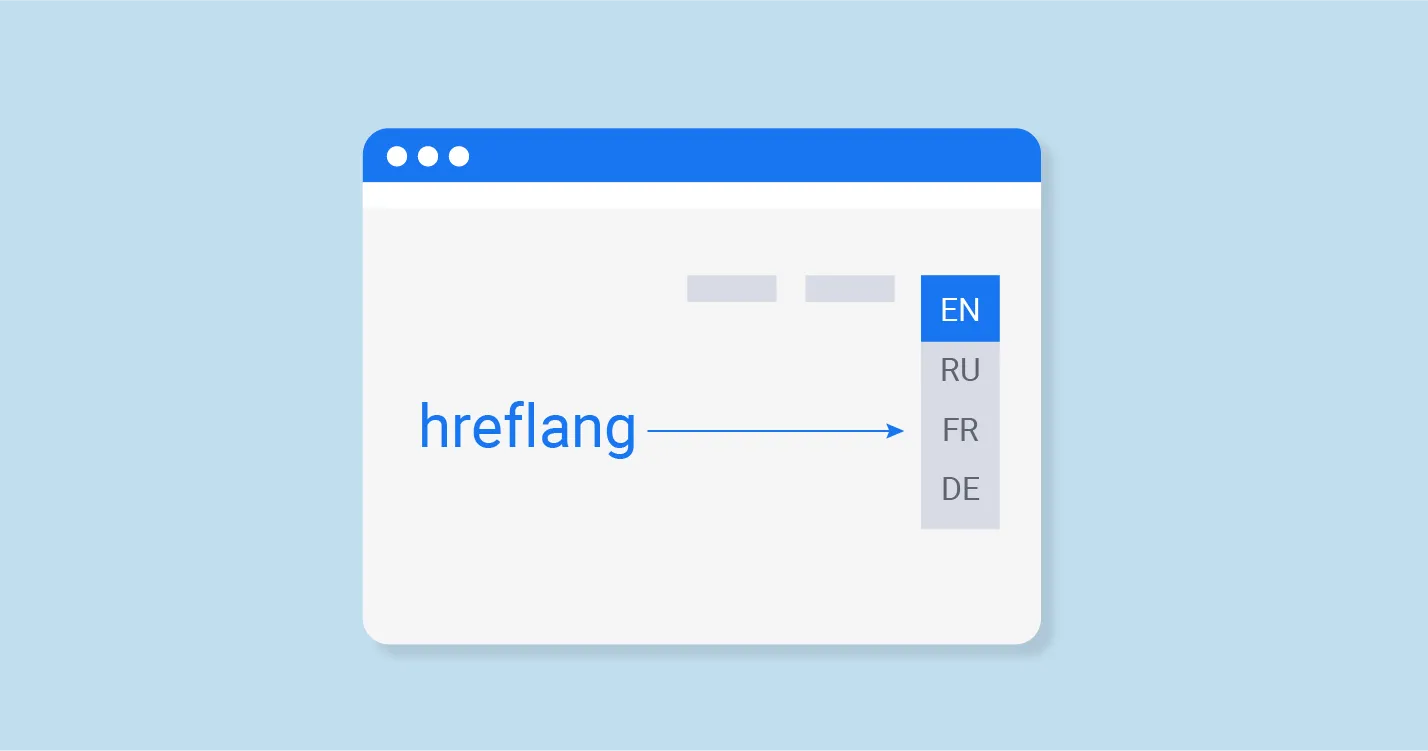
International websites often publish content in multiple languages. Hreflang tags in SEO help search engines identify which language or regional version of a page should appear in search results. These tags connect related pages so users reach the correct version of a page based on language or location.
At SSinvent, this topic often appears in technical SEO discussions about international websites. This guide explains what hreflang does, how it works, and how to implement it correctly.


Schedule a call or request a free site audit so we can help with your international strategy.
Key Takeaways
- Hreflang tags in SEO help search engines identify the correct language or regional version of a page so users see the most relevant content in search results.
- Proper hreflang implementation connects language versions of the page using HTML link elements, XML sitemap annotations, or HTTP header signals.
- Search engines rely on hreflang attributes and language codes to reduce duplicate content issues and improve user experience on multilingual websites.
- Each version of the page must reference all other versions through alternate hreflang links so search engines understand the relationship between pages.
- Testing with hreflang tag generators or validation tools helps detect configuration errors such as missing return links, incorrect language codes, or broken URLs.
What Are Hreflang Tags In SEO
Hreflang tags are HTML attributes that indicate a page’s language or region. They help search engines select the correct version of your site for each user. When a website has multiple language versions, hreflang attributes clarify how those pages relate. These tags appear as a link element inside the head sections of a webpage. Each tag connects another version of a page and identifies its language. A website may include an English, Spanish, and French version of the same page.Hreflang Full Form And Meaning
The term hreflang combines “href” and “language.” It is an attribute of a link element that identifies the language of a page version. The hreflang annotation indicates that several pages belong to the same content group. This structure helps search engines treat those pages as related rather than duplicate content. Without hreflang attributes, search engines may struggle to determine which version of your site should appear in search results.How Search Engines Interpret Hreflang
Search engines read hreflang attributes as signals that connect language versions of the page. When a user performs a search, the system evaluates language preferences and location. It then selects the most relevant version of a page. For example, a user in the United Kingdom may see the English version with code en-gb. A user in France may see a page linked through rel=alternate hreflang=”fr”. This process improves search results and user experience.Why Hreflang Matters For International SEO
Many websites serve users across several countries. These websites often publish similar content in different languages. Without hreflang attributes, search engines may treat these pages as duplicate content. Hreflang attributes help search engines understand that each page targets a specific audience. This clarification supports accurate indexing and ensures the correct version of a page appears in search results.When To Use The Hreflang Attribute
Hreflang should be used when a site offers several language versions of the same page. A business may publish an English version for the United States and another English version for the United Kingdom. Each version of a page may include different currency, spelling, or regional details. Search engines depend on hreflang implementation to connect these versions correctly. Rodrigo César, a technical SEO specialist, has noted that clear language signals help search engines interpret multilingual websites.Preventing Duplicate Content Across Languages
Duplicate content appears when multiple pages contain similar text, a topic explored further in this guide on duplicate product descriptions SEO. This situation is common on multilingual websites because translated pages often share the same structure. Hreflang attributes clarify that these pages represent language versions. When search engines detect alternate hreflang links, they treat the pages as related rather than as duplicates. This prevents ranking conflicts between versions of the page.How Search Engines Choose The Correct Language Version
Search engines analyze several signals to determine which language version should appear. These signals include the user’s interface language, geographic location, and hreflang attributes on the site. If several language versions exist, the algorithm selects the page whose hreflang annotation best matches the user’s settings. For example, a user in France with French-language preferences will likely see the page linked via rel=alternate hreflang= “fr”. If no exact match exists, search engines may use the hreflang x default tag as a fallback. This ensures users still reach a relevant version of the page.How To Implement Hreflang Tags
There are several ways to configure hreflang attributes. Each method links the language versions of a page so that search engines understand the relationship between them. The most common methods include HTML tags, XML sitemap entries, and HTTP header configuration. Each page must reference all versions of the page, including itself. This creates a complete hreflang annotation network.HTML Head Implementation
The most common hreflang implementation uses link elements inside the head sections of a page. Each tag identifies the language code and URL of another version of the page. The tag usually includes the rel alternate hreflang attribute followed by the language code. For example, a page may contain rel=”alternate” hreflang=”fr” or rel=”alternate” hreflang=”de”. These tags indicate that the page has French and German versions.XML Sitemap Implementation
Another method is to place hreflang annotations in an XML sitemap. This approach works well for large websites with many language versions. Each page entry includes the main URL and its alternate-language URLs. The sitemap may include elements such as URL loc and hreflang annotations. These entries connect each version of the page in a structured format.HTTP Header Implementation
Hreflang attributes can also appear in a webpage’s HTTP header. This method is useful for files that lack an HTML head section, such as PDFs. The server sends hreflang signals within the header response. This configuration allows search engines to identify language versions even when standard HTML tags are unavailable.
Hreflang For International Targeting
Hreflang attributes rely on standardized language and region codes. These codes help search engines determine which version of your site matches a user’s language or location. Correct international targeting ensures search engines deliver the most relevant page. Christopher Cáceres, who studies multilingual search systems, has emphasized the importance of accurate language signals.Language And Country Codes Explained
Language codes follow ISO standards. The code “en” identifies the English version of a page, while “en-gb” identifies English for the United Kingdom. These codes help search engines distinguish between language variations. A typical code example may appear in a tag similar to loc xhtml link rel alternate hreflang en gb href https.Using Hreflang X Default Correctly
The hreflang x default attribute identifies a fallback page. This page appears when a user’s language does not match any available language versions. For example, a global homepage may serve as the default page when no specific language match exists.What Is Alternate Hreflang
Alternate hreflang describes the relationship between multiple language pages. Each page includes hreflang attributes linking to other versions of the page. These links create a structured network of URLs. When search engines detect this network, they understand the pages belong to a multilingual group.Hreflang And Canonical Tags In Technical SEO
Search engines use several signals to understand how pages relate to one another. Hreflang attributes and canonical tags are two important signals. Each serves a different purpose in technical SEO. Hreflang tags connect language versions of the page. Canonical tags identify the preferred URL when duplicate or similar pages exist, as explained in this guide on canonical SEO. Each language page should typically use a canonical tag that points to itself while referencing alternate hreflang versions. Conflicts between canonical tags and hreflang attributes can confuse search engines. Consistent signals help ensure every version of a page is indexed correctly.Hreflang Tag SEO Examples
Examples help clarify how hreflang works. They demonstrate how language versions connect through tags or structured data. Each version of a page must reference all other language versions.Language And Country Hreflang Example
A website may include an English page and a French page. Each page contains hreflang tags that point to the other version. This configuration helps search engines understand the page’s versions and display the correct one in search results.HTML Hreflang Tag Code Example
A typical HTML example contains several link elements. Each tag includes the hreflang attribute and the URL of another language version. Search engines read these tags to identify language versions of the page.XML Sitemap Hreflang Example
In an XML sitemap example, each page entry includes hreflang annotations that link to alternate-language URLs. This method helps large websites manage hreflang annotations from one central location.Adding Hreflang Tags In WordPress
WordPress websites can implement hreflang tags through plugins or manual configuration. Many SEO plugins provide built-in tools that manage language annotations. Plugins allow site owners to connect language versions without editing code.Using SEO Plugins For Hreflang
SEO plugins allow administrators to set language targeting in the dashboard. The plugin then automatically inserts the required link element tags. This approach simplifies hreflang implementation.Manual WordPress Hreflang Setup
Manual configuration requires editing theme files or page templates. Developers must insert hreflang attributes into the head sections of each page. Although manual setup offers control, it requires careful testing.Hreflang Tag Generator And Testing Tools
Tools can help generate and verify hreflang tags. These tools simplify configuration and identify possible errors. Generators create correct syntax for hreflang attributes.Using an Hreflang Tag Generator
A hreflang tag generator produces tags based on language URLs. Users enter URLs for each language version of a page. The generator then outputs the proper HTML or sitemap annotations. This process reduces syntax errors during hreflang implementation.Hreflang Tags Testing Tool Options
Testing tools analyze a website to confirm that hreflang attributes function correctly. They verify that each page links to the correct versions. They also detect missing tags, invalid language codes, and incorrect URLs.Common Hreflang Errors And Fixes
Incorrect hreflang configuration can create indexing issues. Understanding common errors helps maintain accurate language targeting. Technical SEO audits often review hreflang signals.How Search Engines Process Hreflang Signals
During crawling and indexing, search engines evaluate hreflang attributes to map relationships between versions of the page. Each page must reference all alternate URLs. If one page is missing from the network, search engines may ignore the annotation.Missing Return Links
Return links occur when two pages reference each other through hreflang attributes. If one page links to another, but the second page does not return the link, the signal may fail. Each version must contain matching annotations.Invalid Language Codes
Language codes must follow recognized standards. Incorrect codes prevent search engines from interpreting hreflang attributes. Valid ISO codes ensure proper functionality.Incorrect Alternate URLs
Sometimes the URL in the hreflang attribute does not match the real page. This breaks the connection between language versions. Testing helps identify and fix these issues. Hreflang Tag SEO Best Practices
Correct hreflang implementation requires consistency. Each page should reference all versions of the page, including itself. Technical SEO specialists often verify hreflang configuration during international site audits as part of broader advanced SEO services.Maintain Consistent Alternate Hreflang
Every page should contain a complete list of language versions. Missing tags can break the hreflang network.Use Canonical Tags Correctly
Canonical tags should align with hreflang attributes. Conflicts between these signals may affect indexing.Verify International Targeting
Websites evolve over time. New languages or URLs may require updated hreflang annotations. Regular testing ensures accurate international targeting.Schedule a call or request a free site audit so we can help with your international strategy.